Before a movie could be streamed at home, a night’s entertainment in Hooper meant going somewhere together. People gathered at Tilson’s Opera House for plays, dances, concerts, parties, and school events. Later, the Amusu Theatre brought film programs to Main Street. By the early 1950s, the Hooper Commercial Club was helping keep a local cinema open because its members believed the community should still have one. [1][6]
These places were linked by the audiences they served, but they were not the same building. The opera house stood west of Main Street; the moving-picture business later occupied a building at Main and Maple. Following their separate histories explains how Hooper’s entertainment changed without turning every remembered show into an event at a single theatre. [1]
1886: Tilson’s Opera House opens
The centennial history credits M. W. Tilson with opening the opera house in 1886. Its account describes a room seating roughly three to four hundred people, a stage equipped with scenery and drops, and a curtain carrying advertisements for local businesses. A hardwood floor made room for dancing. Porcelain doorknobs and Victorian fixtures helped make an evening there feel like an occasion. [1]
“Opera house” did not mean that only opera was presented. The same local history lists vaudeville, orchestras, social meetings, and parties among its uses. It also remembers school graduations, basketball games, and other school functions taking place there when Hooper needed a large indoor gathering space. Electric wiring and, later, fans were among the improvements made during its years of use. [1]
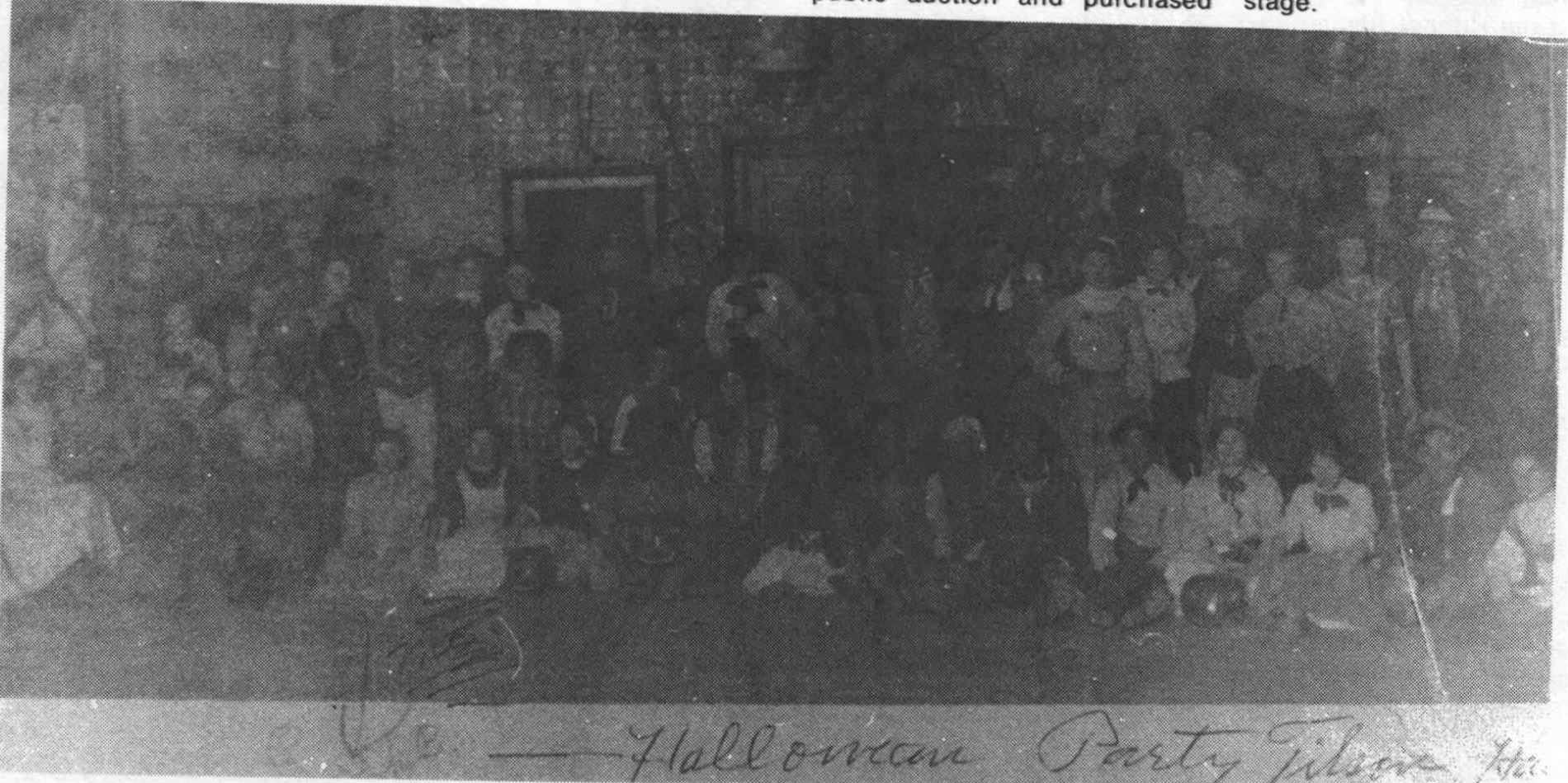
An undated photograph preserves a Halloween gathering at Tilson’s. Partygoers are arranged across the room in the dark image, which the centennial history includes among its records of the opera house’s social affairs and dances. [1]
1901: a concert with a sense of humor
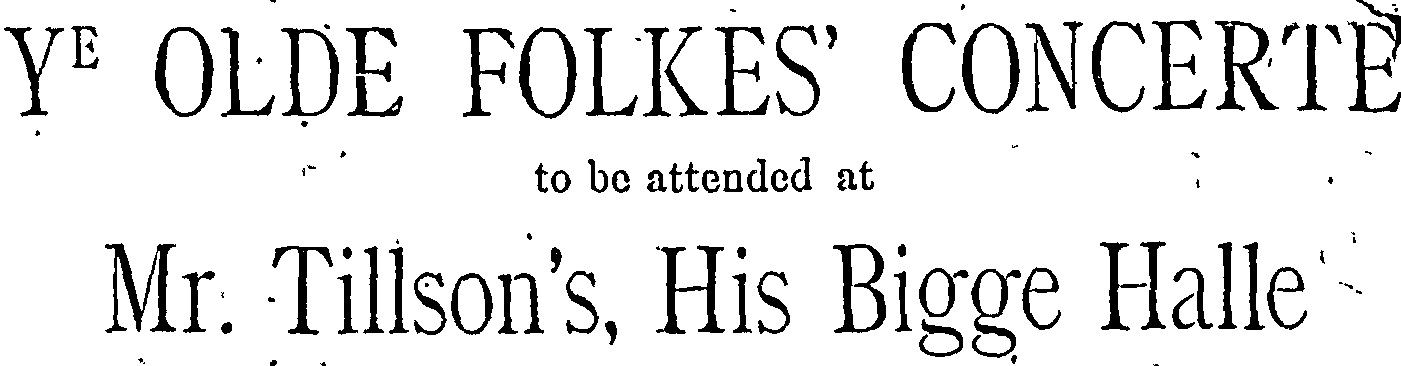
An original newspaper program shows the hall in use well before moving pictures became a permanent business. The August 29, 1901 Hooper Sentinel advertised a September 4 concert at Tilson’s hall. The notice used deliberately old-fashioned spelling, promised group singing and comic turns, and listed a peasant wedding march and a finale with the entire company. Admission was twenty-five cents. [3]
The organizers promised an evening of community performance and amusement. The same hall that hosted graduations and formal occasions could also accommodate comic turns, group singing, and a deliberately lighthearted program. [3]
1907–1911: moving pictures find a home
Films first reached local audiences as events rather than as a familiar weekly schedule. The centennial history records a traveling electric moving-picture show advertised in Hooper in 1907, with thousands of feet of film and illustrated songs. It places a locally owned moving-picture show at Tilson’s on February 11, 1909, advertised as the Electric Show. [1]
By the following year, Harry J. Vlasek and C. C. Cushman had obtained the Hartung building at Main and Maple for a theatre. Improvements recorded for 1911 included a new motion-picture machine, an elevated platform for it, cleaning and redecorating, and approximately 175 seats. Electric fans were planned for the summer. These were the practical changes that helped turn a screen show into a regular public venue. [1]
The centennial account also preserves one small mishap. In 1910, Monroe Zellers fell asleep during a show and was overlooked at closing. When he woke around 11:30, he tried to get out through the transom. Someone searching for him heard the attempt, obtained a key, and released him. The anecdote gives the early cinema a scale that grander histories sometimes miss: a small town, a locked door, and people noticing that a boy had not come home. [1]
1919–1929: the R & S becomes the Amusu
By 1919, the movie business was known as the R & S Theatre. The centennial history describes plans to extend the building toward the alley, increase seating, and improve the interior with an inclined floor and a lobby across the front. After the February 1919 fire at Hooper’s light plant, the theatre arranged temporary power so that audiences could still see Tarzan of the Apes. [1]
The Amusu name arrived in November 1919 after extensive remodeling. The book records four nights of shows each week, beginning at 7:30. Movies also prompted public decisions. In April 1924, Hooper voters considered Sunday screenings; the centennial account gives 118 votes in favor and 121 against. That narrow defeat shows that the theatre’s schedule could become a matter for the entire village. [1]
Technology and distribution continued changing. A 1929 truck service between Omaha and Sioux City made daily delivery of film and accessories possible. The centennial chronology then records sound equipment installed at the Amusu in November 1929. Silent pictures had given way to talkies, but the audience still had to come into town and take a seat. [1]
The 1930s: movies and meetings
The Amusu also served as a meeting place. The Scribner Rustler reported on August 17, 1933 that twenty-seven representatives of Scribner’s business community had accepted an invitation from the Hooper Commercial Club. Hooper’s hosts met them at the Amusu, druggist Mr. Hauser welcomed the visitors, and a movie program was followed by food and visiting. The account treated the evening as a way to build goodwill between neighboring towns. [4]
A July 20, 1939 advertisement supplies a snapshot of ordinary moviegoing. Shows began at 7:30 p.m., with advertised admission of ten or twenty-five cents. The week’s features included The Story of Alexander Graham Bell, starring Don Ameche, Loretta Young, and Henry Fonda; Lucky Night, with Myrna Loy and Robert Taylor; and Midnight, with Claudette Colbert and Don Ameche. Short subjects and news were part of the advertised offerings. [5]
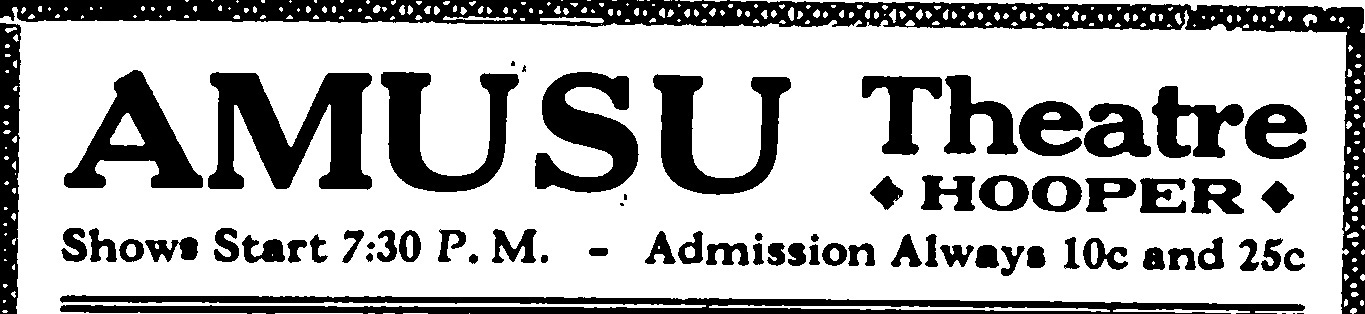
That program helps explain the attraction of a local cinema. An evening could include a feature, music or comedy, and news, with another bill following a few days later. The theatre connected a small Nebraska town with nationally distributed entertainment while remaining a business dependent on its own local audience. [5]
The centennial chronology records Roy E. Bott’s management beginning in 1932 and remembers his wife at the ticket window. [1]
The 1940s: owners, closures, and reopening
Bott sold the theatre in 1941 to H. G. “Homer” Fairchild of Osmond. By November, Fairchild was closing because attendance did not make the operation pay. C. H. Dahl then arranged to reopen the Amusu later that month. The changes show how precarious a small-town entertainment business could be even when people wanted it to survive. [1]
The book records another opening under Mr. and Mrs. Bott in 1943 and a lengthy repair and renovation closure from June 11 to September 29, 1944. The reopening brought more widely spaced rows, a changed aisle arrangement, and new cushioned seating. I Love a Soldier, with Paulette Goddard and Sonny Tufts, was selected for the opening bill. A new schedule paired Friday and Saturday presentations, with additional changes for Sunday and Wednesday and Sunday matinees. [1]
1952–1953: the Commercial Club’s final effort
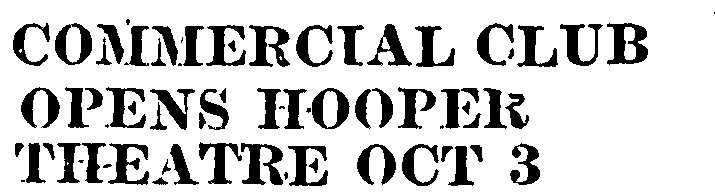
An October 2, 1952 Sentinel report documents the Commercial Club’s plan to open the Hooper Theatre the next day. The club had booked films from four major studios. Friday, Saturday, Sunday, and Tuesday screenings were planned, and monthly programs would be mailed. The opening feature was We’re Not Married, with Ginger Rogers, Victor Moore, and Fred Allen. The article directly appealed to residents to support the venture. [6]
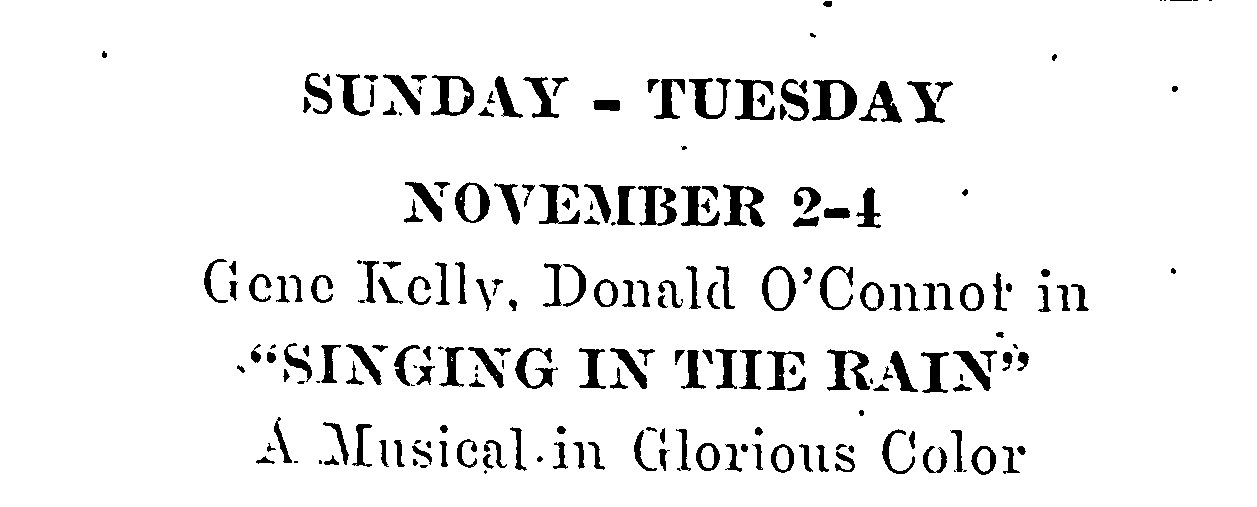
The October 30 advertisement shows that the plan became a working schedule. Caribbean was listed for October 31 and November 1, followed by the Gene Kelly and Donald O’Connor musical Singin’ in the Rain on November 2 and 4. The advertisement explicitly named the Hooper Commercial Club as sponsor. [7]
That effort ended the following spring. The June 4, 1953 Sentinel announced that the Commercial Club was discontinuing theatre operation effective May 30. Its stated reason was insufficient patronage. [8]
The centennial history records the building’s next use: Mr. and Mrs. John Malloy purchased it and remodeled it for their paint and wallpaper store. The former movie house became part of Main Street’s commercial life in a different way. [1]
1953: the last part of Tilson’s comes down
The old opera house had a different ending. On November 12, 1953, the Sentinel reported that Guy Tilson’s former residence and the surviving opera-house stage were being razed. Lawrence Moser had acquired the property at the estate auction and sold the buildings to a Fremont man for removal. [2]
Most of the opera house had already been removed in the 1920s, leaving only the stage. The newspaper connected the earlier decline with movies and changing entertainment habits. In November 1953, the remaining stage was coming down, with removal of the buildings planned before the new year. [2]

Taken together, the party photograph, programs, film advertisements, and closing notices show successive generations making places to gather. Tilson’s offered space for people to perform and celebrate. The Amusu brought moving pictures and hosted neighbors from other towns. The Commercial Club’s theatre venture carried that effort into the 1950s. Each left a different trace in Hooper’s record. [1][2][4][6][8]
If you have a ticket, program, photograph, or a family memory of either venue, please share it with info@celebratehooper.com. A date, a person’s name, or the original photographer’s credit can help connect another piece of Hooper’s entertainment history.
More Hooper stories
- Hooper’s Railroad and Depot: Passengers, Freight and a Vanished Landmark
- When Hooper Took to the Road: Monnich, Tunberg & Reetz and Smida Garage
- Inside the Harms Store: A Family and Nearly Eighty Years of Hooper Shopping
- The Hooper Sentinel: The People Who Put a Town in Print
- Hooper’s Post Office: The People Who Carried the Mail