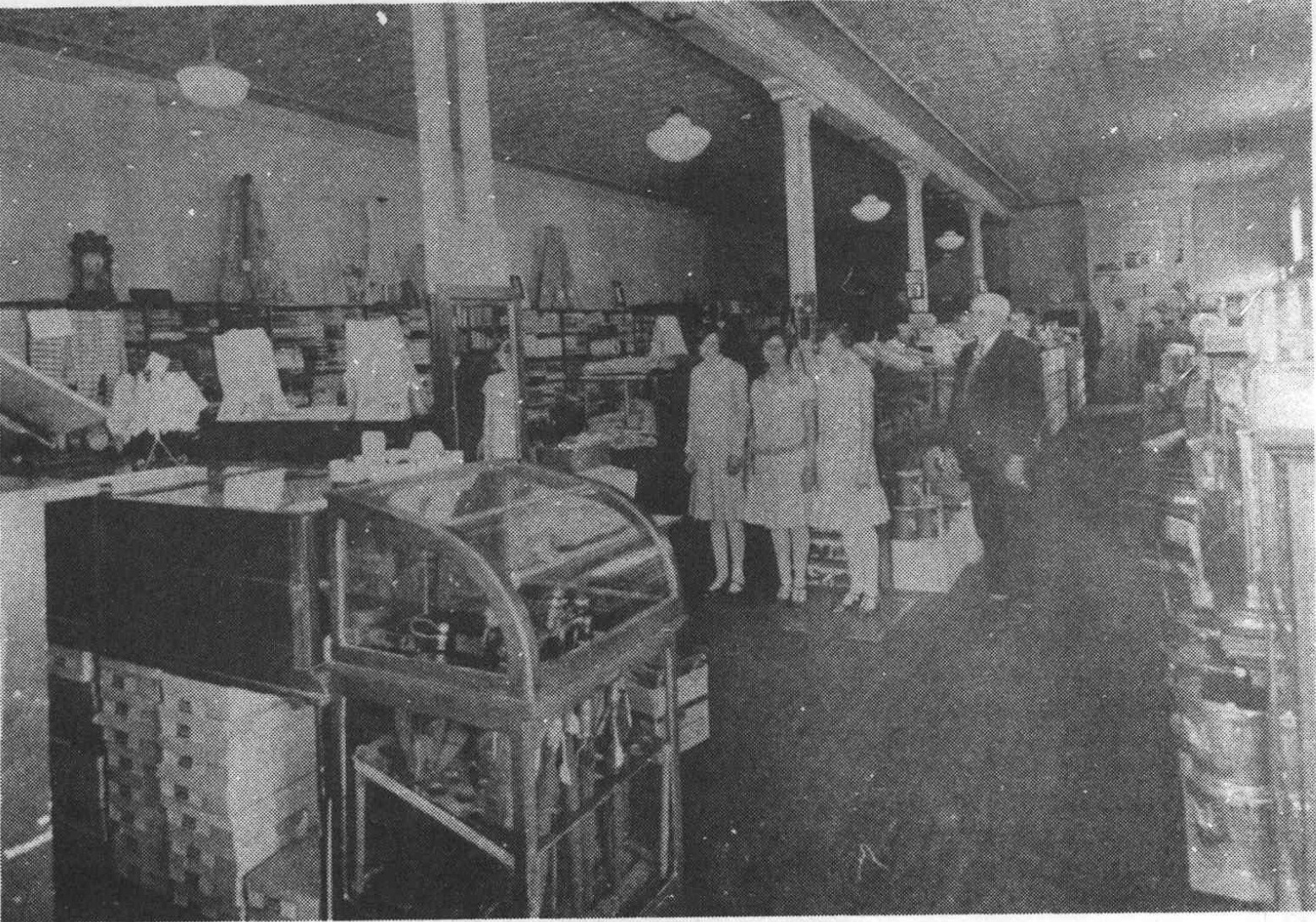
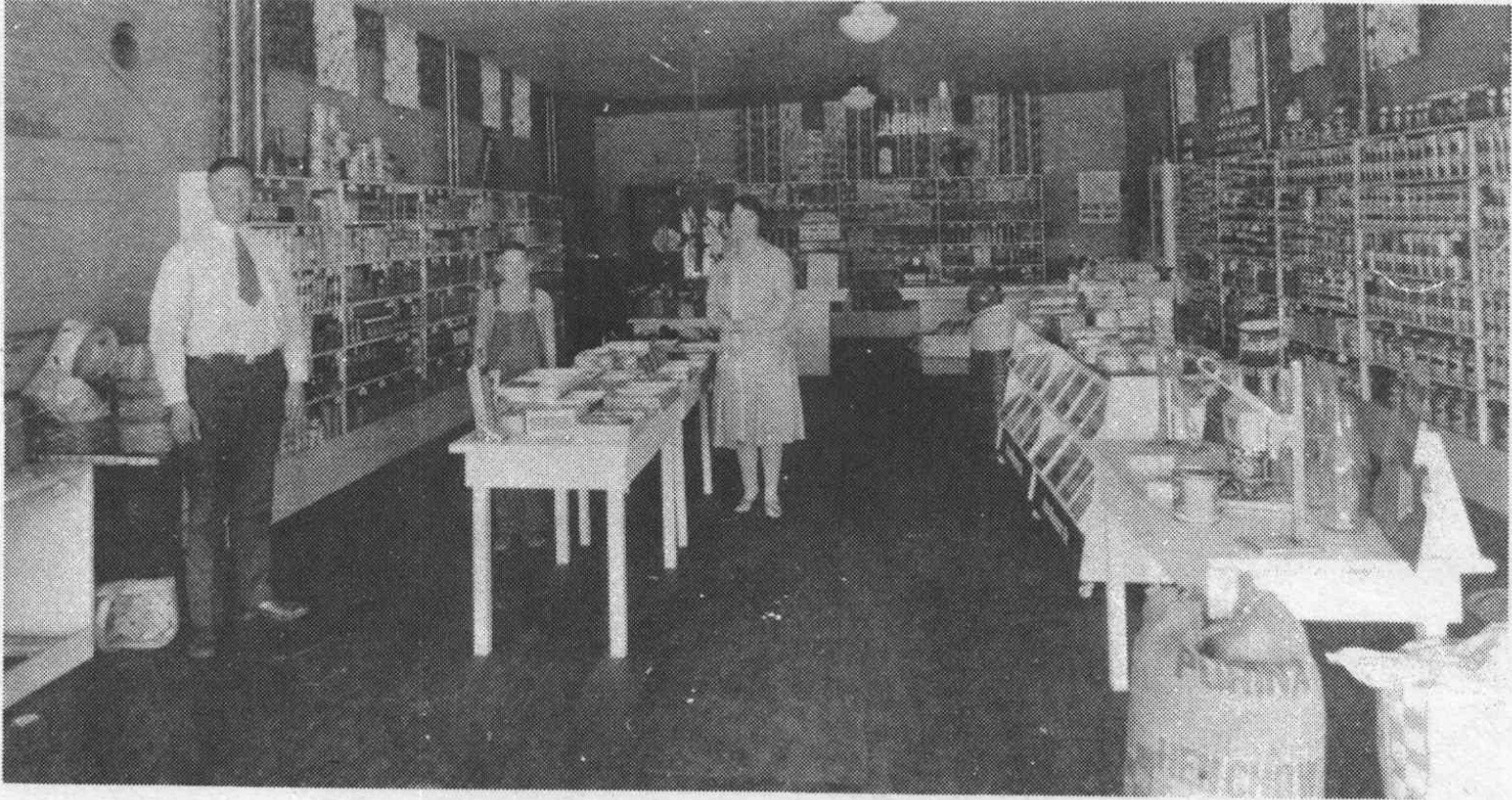
Look closely at the photographs of the Harms store and an entire shopping trip begins to take shape. Shoes fill shelves, glass cases hold smaller goods, and stoves stand beside counters crowded with household merchandise. In one June 1929 photograph, August H. Harms poses with two clerks and a customer in the dry-goods department. In another, his son Jerome stands in a grocery that would become known as the Red and White Store. These were different parts of a family business woven into Hooper’s everyday life. [1]
The story began with a small shoe store in 1878. It ended in stages, as the next generation separated the grocery from the department store and eventually retired. The photographs preserve that long transition: from frame storefronts and wooden walks to brick business blocks, from a founder behind the counter to the daughters who carried on after his death. [1]
1878: a shoe store grows with the town
August H. Harms was born in Oldenburg, Germany, on April 5, 1856. Hooper’s centennial history says he came to this country at fourteen with his parents, Mr. and Mrs. Gerhard Harms, who settled on a farm in the Oldenburg community. [1]
When Harms opened his shoe business in 1878, he started with a frame building measuring just sixteen by twenty-four feet. Groceries followed, and additional merchandise transformed the modest shop into a general store. The centennial account describes a business that eventually occupied three lots. It also remembers Harms choosing a site one block north of the earliest business strip beside the railroad, along the street that became the town’s main commercial route. [1]
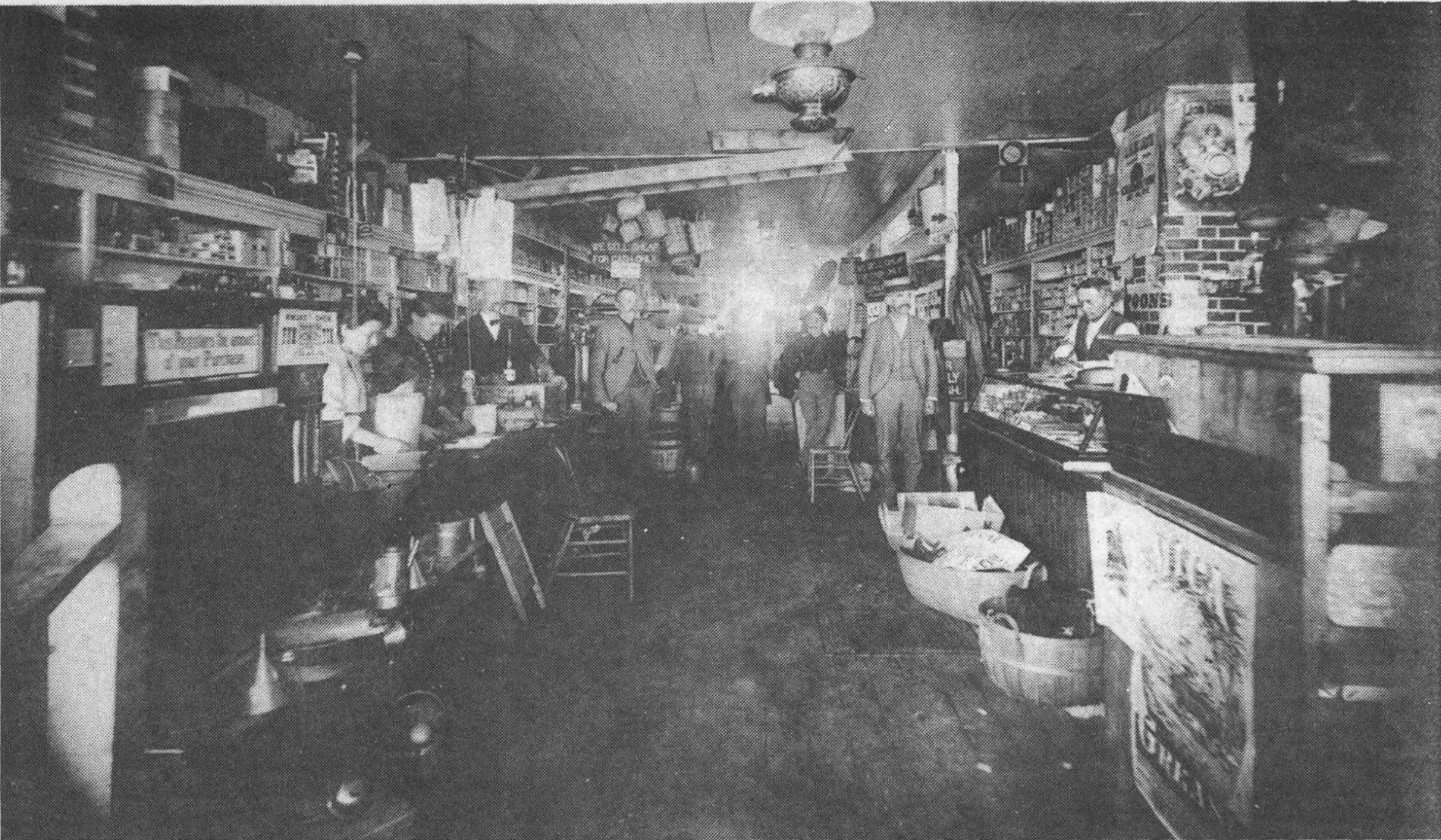
That expansion is visible in the surviving photographs. The frame store shown in an 1898 picture carries large signs for boots and shoes and for hardware. A smaller sign above the roofline identifies the Harms Cheap Cash Store. The photograph is useful precisely because it shows what the business wanted a passerby to notice: practical goods for a household, a farm, or a day’s work. [1]
1898: a second building and a broader range of goods
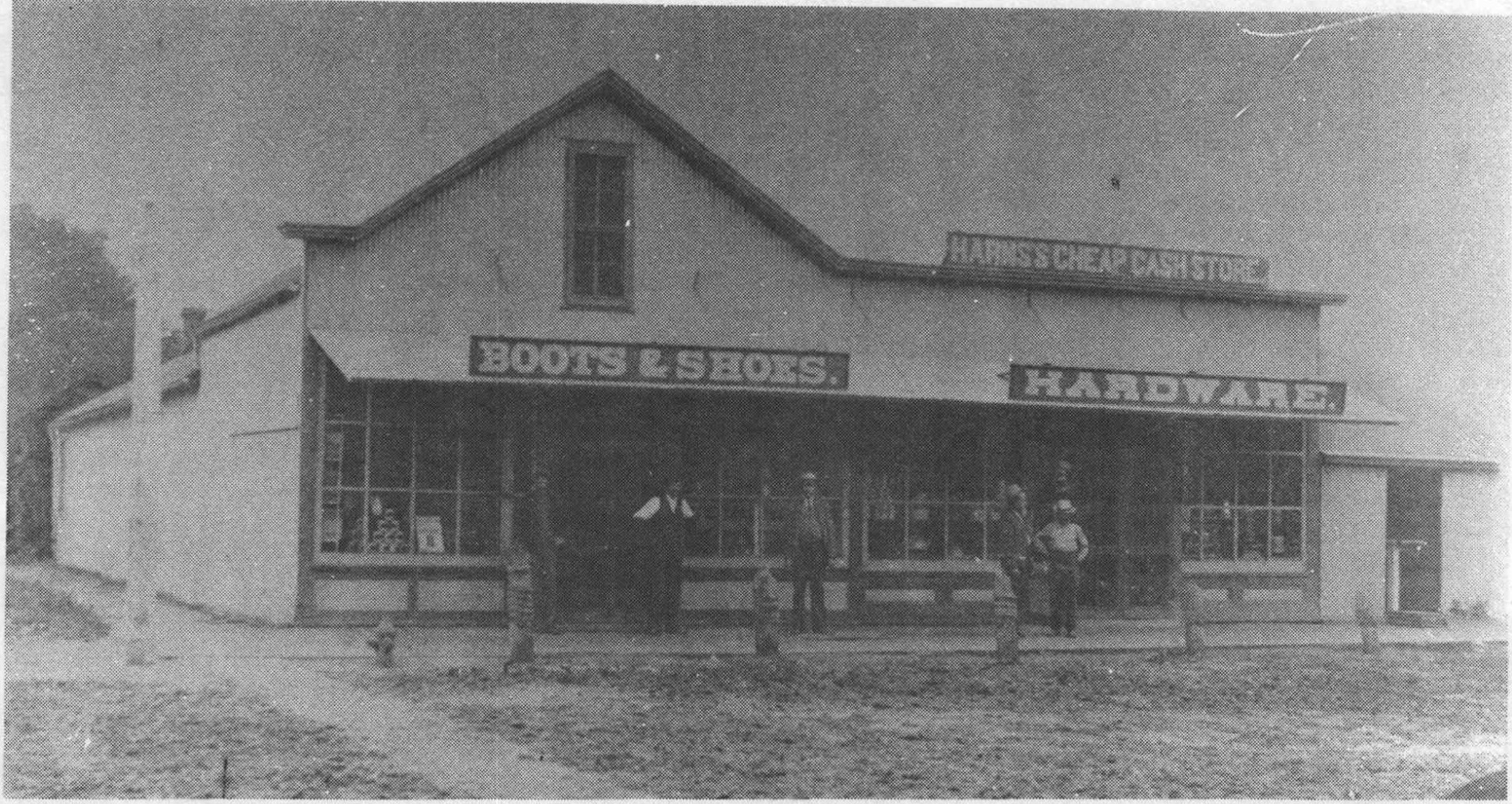
In 1898, Harms purchased the two-story brick building on the opposite corner to the north and moved the dry-goods and clothing departments into it. He continued to operate both locations. The familiar brick-store photograph has A. H. Harms painted across its corner and dry-goods and clothing lettering along the upper facade. The centennial book identifies Ed Weikhorst holding two flowerpots, August H. Harms beside him, and Fred Harms farther left. [1]
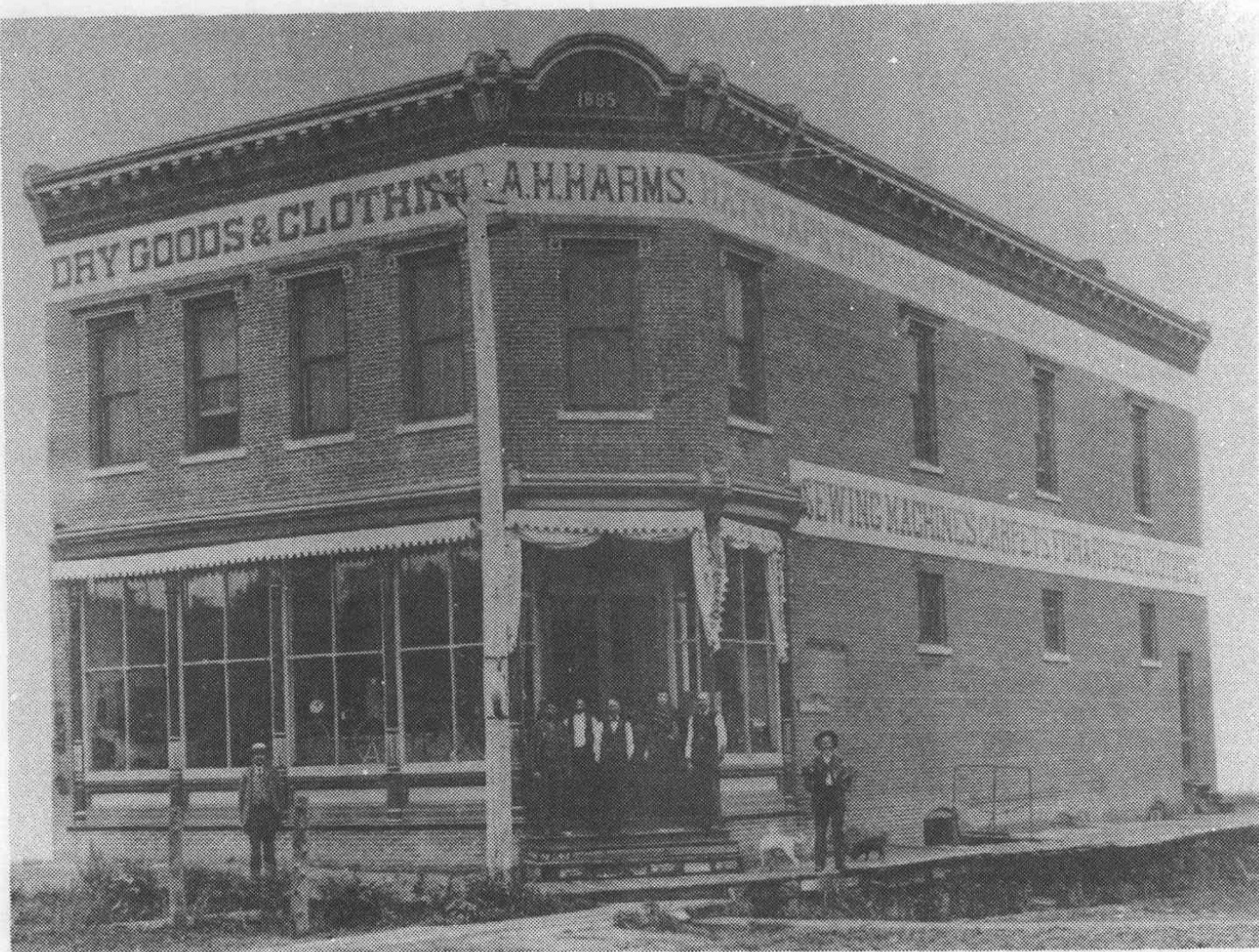
This was more than a larger version of the original shoe shop. Its departments met several kinds of needs at once. The 1902 grocery photograph shows shelves packed with containers, long service counters, and cases arranged along the central aisle. The September 1903 hardware view shows another crowded interior. Its caption identifies clerk Eric Ericson, Anna Harms as the customer, and eleven-year-old Barbara Harms—the child who would later spend decades working in the family business. [1]
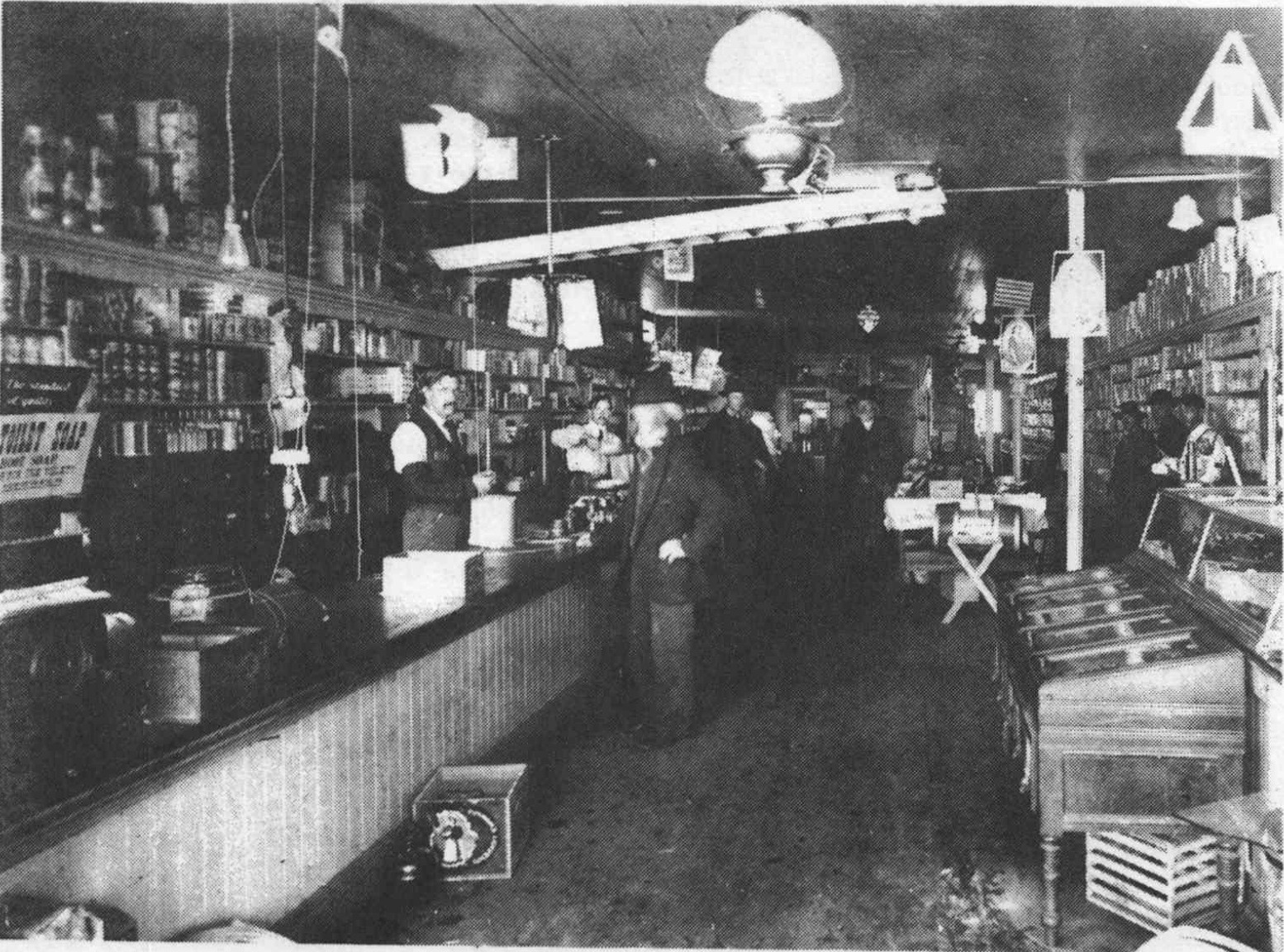
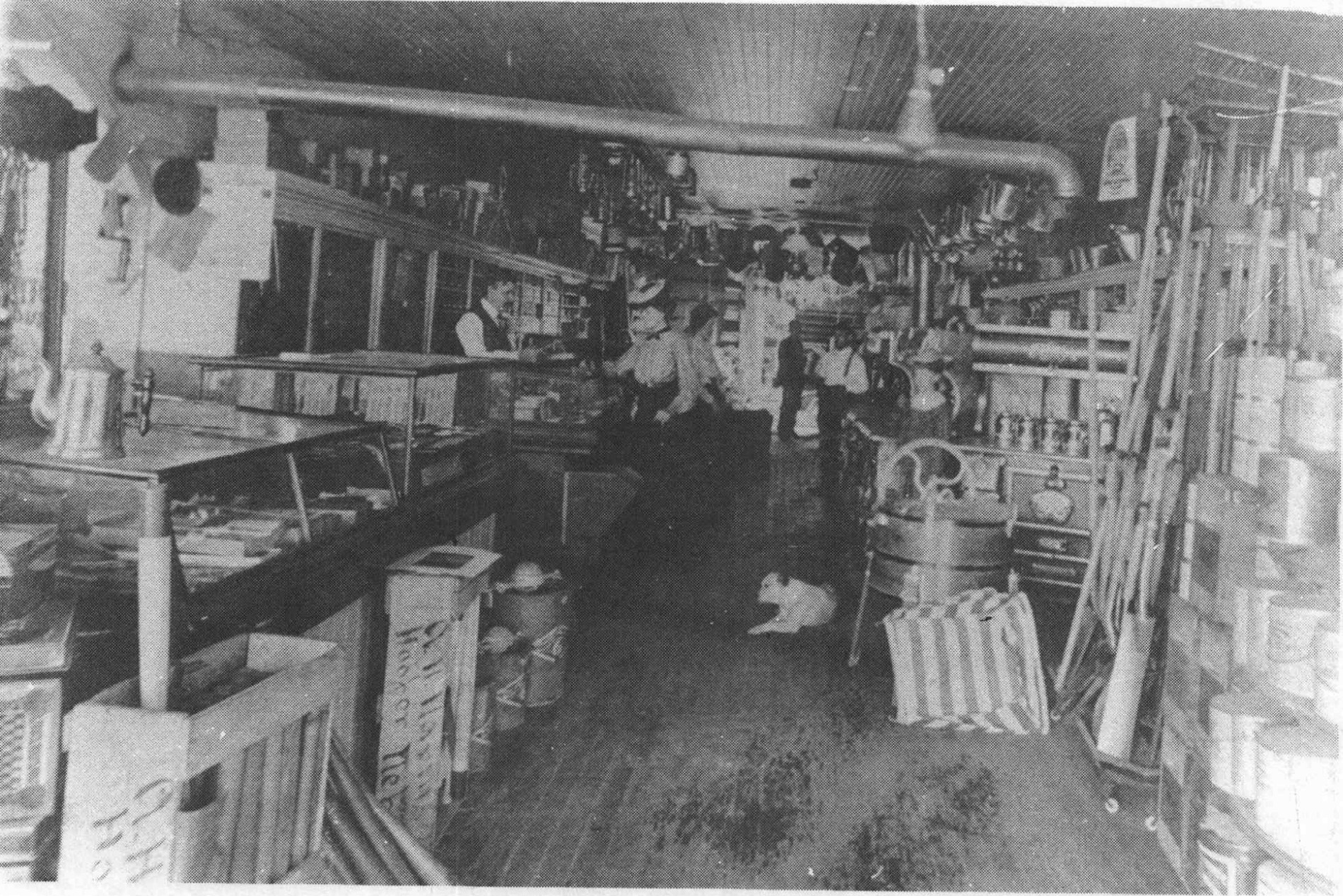
What a trip to Harms could include
Newspaper notices add details that the photographs cannot. On August 29, 1901, the Hooper Sentinel announced that an optician named Hukill would visit Harms’ store on September 12. The store was a convenient place for a visiting specialist to meet local customers. [2]
A November 11, 1909 page carried two substantial advertisements under the Harms name. One promoted Maish comforters in several coverings, including sateen and silk. Another offered De Laval cream separators and a product catalogue. Side by side, they connect the store to both household comfort and the work of dairy farming. [3]
Keeping such departments stocked also connected Harms with business beyond the village. In February 1910, the Sentinel reported his return from Lincoln after attending the retail hardware dealers’ association gathering. The brief item gives a glimpse of the work behind the counters: the proprietor was taking part in the wider trade as well as selling locally. [4]
The centennial history names some of the people who kept the store operating. In 1914, Mr. Andersen managed and bought for the clothing and men’s furnishing department. Minnie Wagner was remembered as an experienced clerk. Henry Schroeder, Charles Basler, and Aage Henningsen were also associated with the business. Henningsen later established a tin shop but continued helping with work such as gutters, roofs, and furnace installations. These names show how retailing and skilled trades could overlap. [1]
A family behind the counters
August married Barbara Bodewig in Fremont on March 26, 1883. Their family and the store grew together. The centennial account names daughters Anna and Barbara and sons August and Jerome among the children who assisted him. Its photographs put faces to that record: J. P. Harms appears amid hardware and stoves in 1914, and again inside the store in 1917. [1]
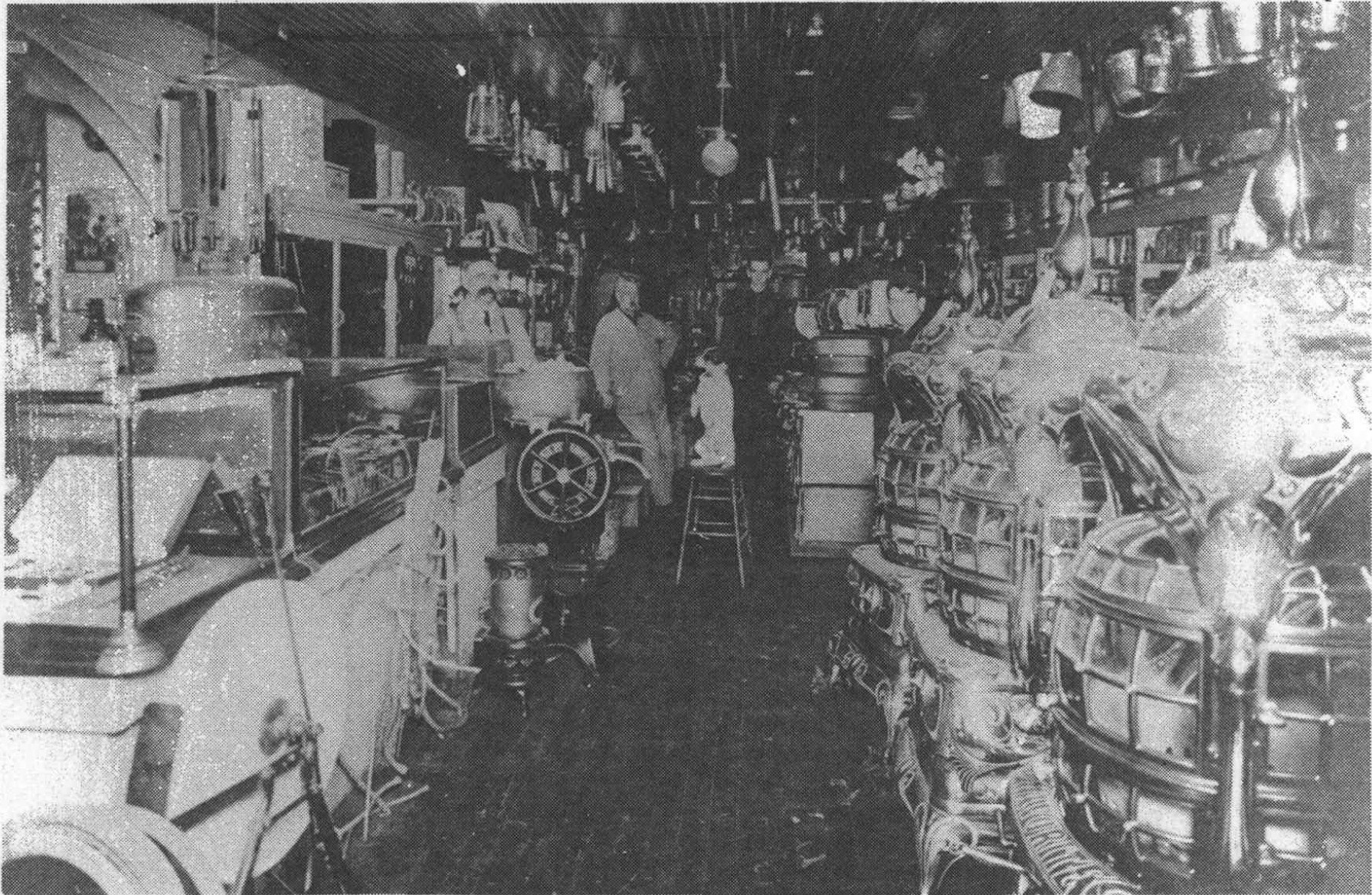
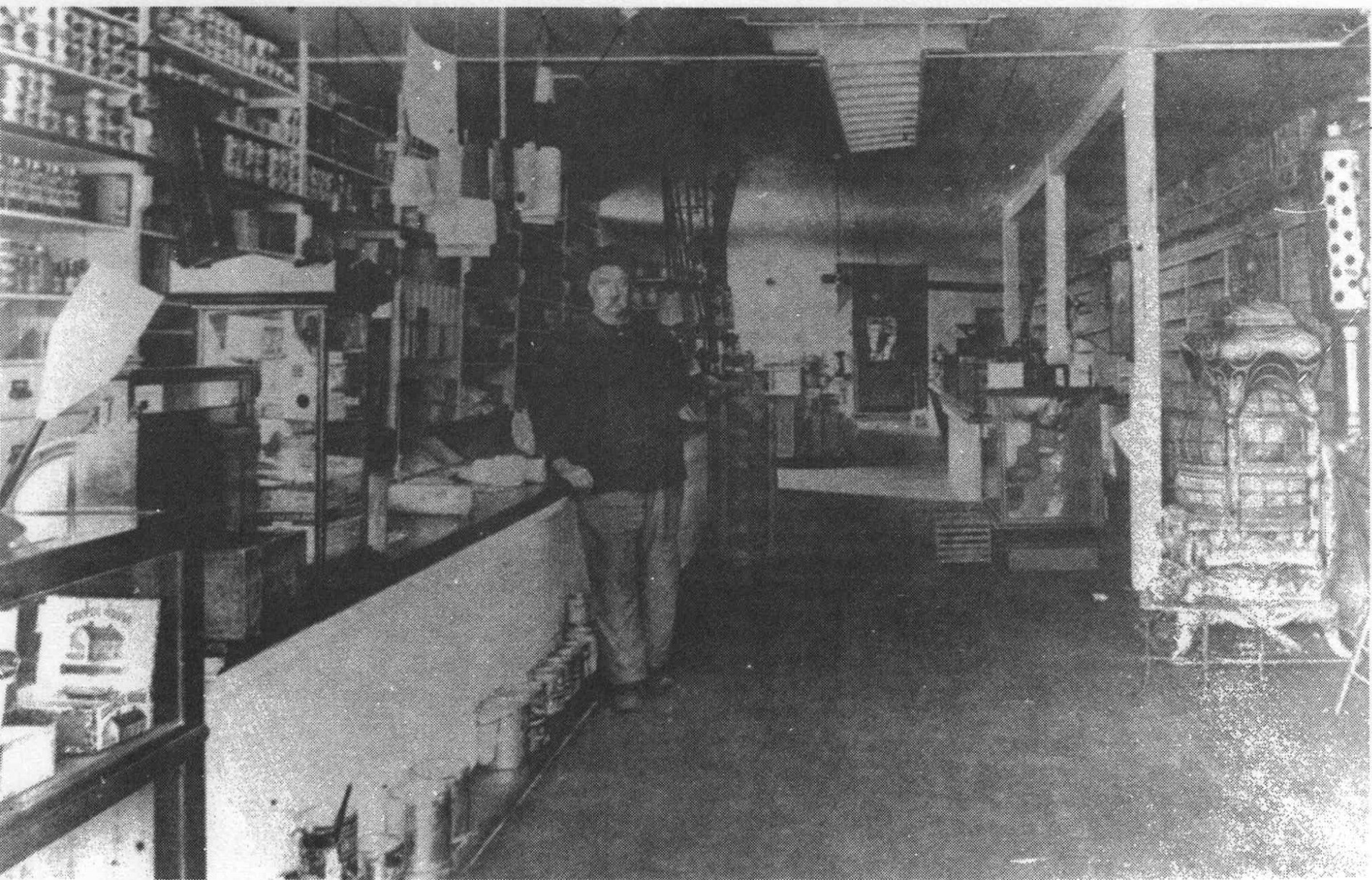
The family’s work continued through changes in the business. Harms sold the hardware department in 1918 and consolidated other departments in the brick building. In 1928, Jerome P. Harms purchased the grocery stock in the old building and built a new brick store on that lot. The centennial history follows his grocery business through his retirement in 1958. [1]
The two June 1929 photographs are especially valuable because they distinguish the branches of the family enterprise. The dry-goods picture identifies August H. Harms with clerks Audrey Rabbas and Rosa May and a customer. The grocery picture identifies Jerome, Mrs. J. P. Harms, and Harlan Fauss. [1]
1936–1957: Barbara and Coletta carry on
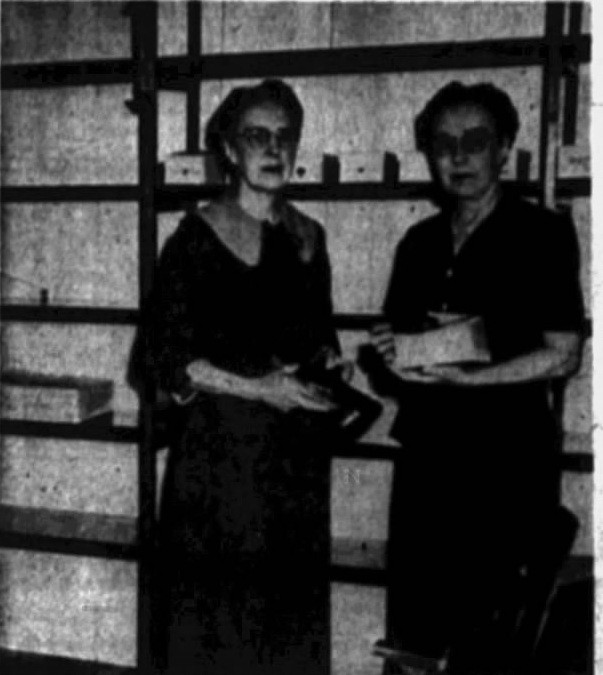
August H. Harms died at home in Hooper on December 8, 1936, after nearly six decades in business. His daughter Barbara continued the department store with her sister Coletta Hoskinson. Their work carried a business begun in the 1870s into the postwar years. [1]
When the department store finally closed, it made the front page of the Fremont Guide and Tribune. The May 13, 1957 report said its last day had been Saturday—May 11. Customers had come from Hooper, Fremont, Scribner, and the surrounding area for the closing sale and their goodbyes. Barbara would have completed forty-seven years in the store that June 1. The sisters wanted time for travel and their yard. [5]
The report’s continuation preserves the store’s place in community memory. It recalled new arrivals from overseas being welcomed at the Harms home and credit extended to residents during the Depression. It also described the credit Chicago wholesalers had once extended to the young shopkeeper. Former customers and employees sent letters after the closing. [6]
The department-store closing did not mean every Harms business closed that same day. The 1957 newspaper separately noted that Mr. and Mrs. Jerome Harms operated the Red and White Store. His 1958 retirement, recorded in the centennial history, belongs to the grocery’s later chapter. [1][6]
The store in the photographs
A history of Harms is also a history of the people who stocked shelves, bought clothing, compared shoes, arranged display windows, and served their neighbors. The pictures let us see that work at several moments across more than seventy years. The 1957 portrait of Barbara and Coletta beside empty shelves brings the sequence to a human conclusion: the merchandise was gone, but the people who had made the store familiar were still there. [1][5]
If your family has a Harms receipt, advertisement, photograph, or memory that can be dated, please share it with info@celebratehooper.com so the record can continue to grow.
More Hooper stories
- Hooper’s Railroad and Depot: Passengers, Freight and a Vanished Landmark
- When Hooper Took to the Road: Monnich, Tunberg & Reetz and Smida Garage
- When Hooper Went to the Show: Tilson’s Opera House and the Amusu Theatre
- The Hooper Sentinel: The People Who Put a Town in Print
- Hooper’s Post Office: The People Who Carried the Mail