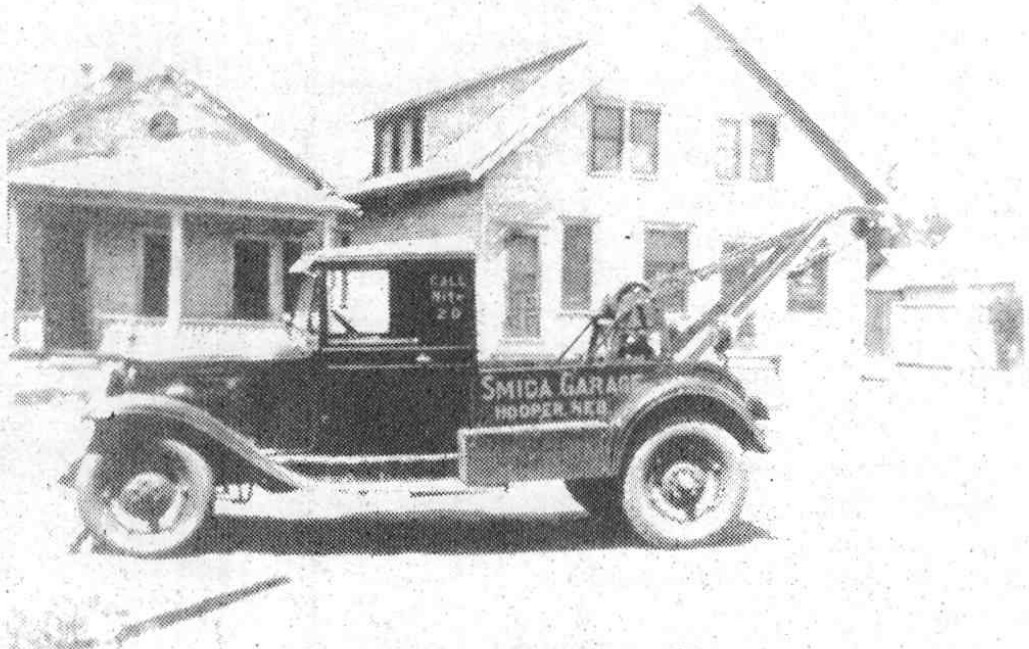
When automobiles arrived in Hooper, they became more than a new way to get somewhere. Local firms sold them, repaired them, brought them in by the carload and turned them into a reason for a parade. The photographs in Hooper’s centennial history show the change at street level: open cars crowded with passengers, a garage advertising Buicks, mechanics at work and a tow truck with the Smida name painted on its side. [1]
The story runs from Monnich & Monnich’s early premises to the growth of Tunberg & Reetz and the long working life of Smida Garage. Contemporary newspaper reports add firm dates, explain how the shops developed and preserve an important detail about the 1944 flood: Smida moved into a former Buick garage whose first floor had escaped the water. [2][3][6][11]
Horses and automobiles shared the town
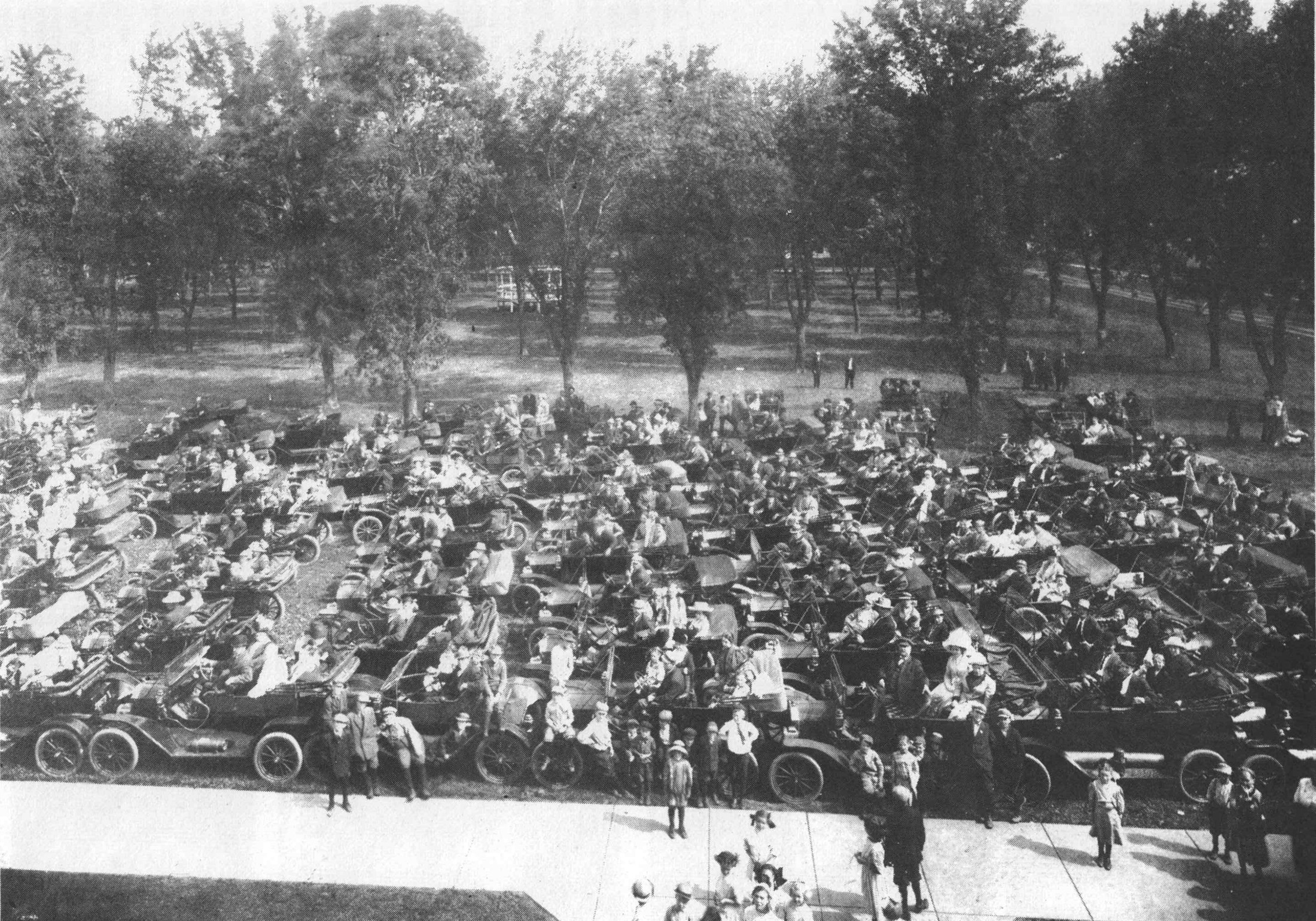
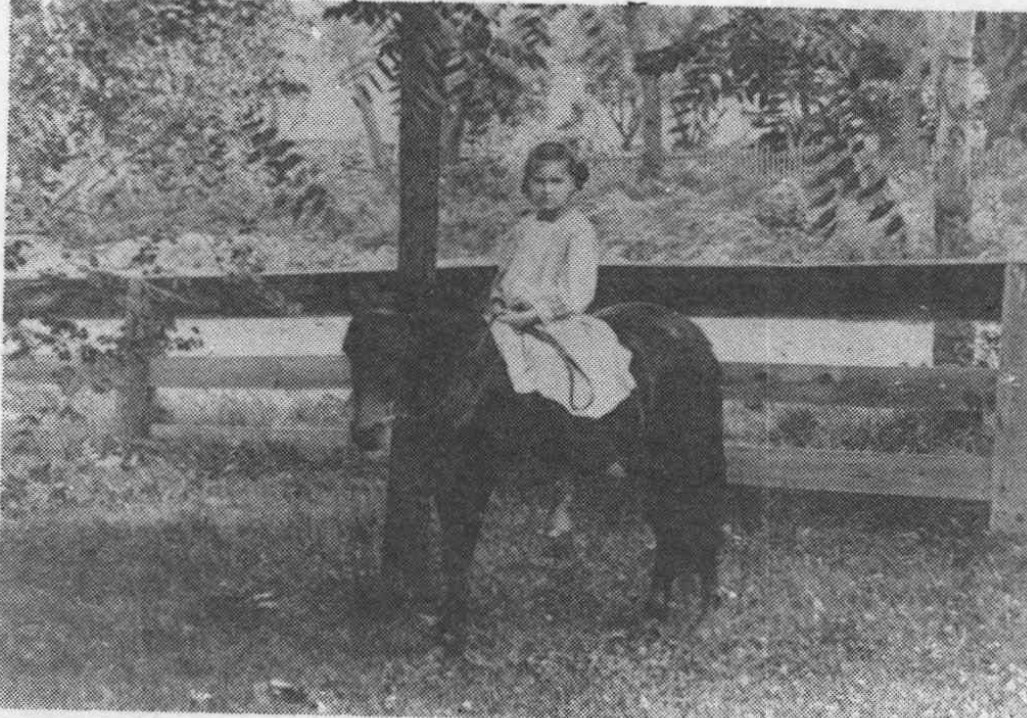
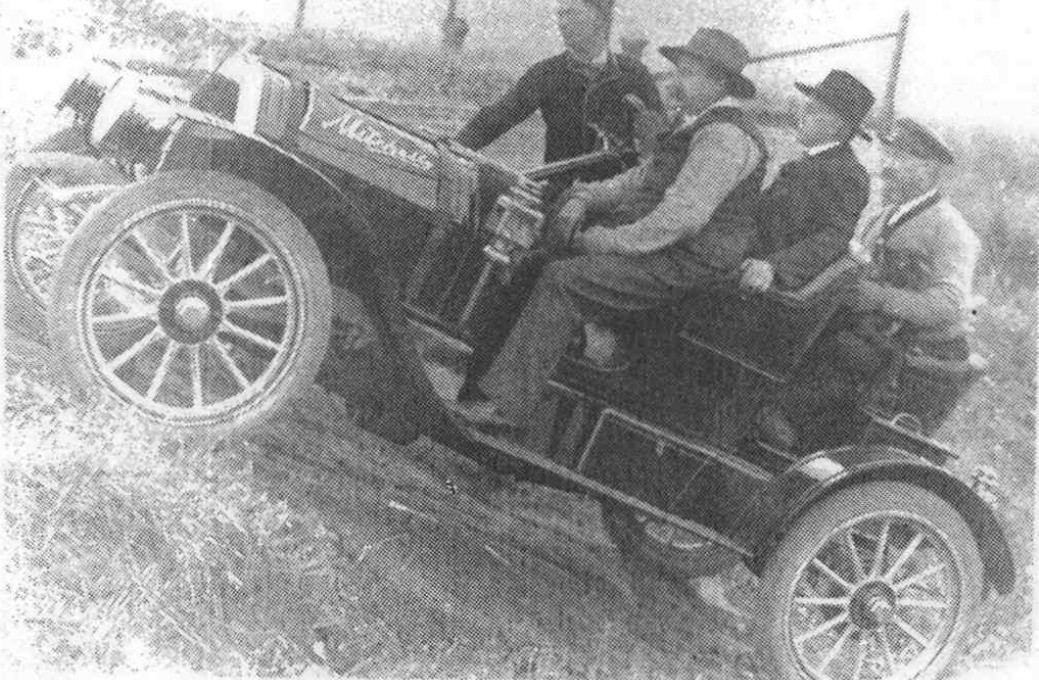
The centennial history’s transportation pages begin with sleighs, buggies and horses. One photograph shows Verona Hecker on a Shetland pony about 1907; the caption recalls her giving rides to other children. Nearby are pictures of an open Mitchell automobile and a large gathering of cars. Placed together, they show a community learning a new form of transportation while horse-drawn travel remained familiar. [1]
Bernard Monnich is credited by the centennial account with owning Hooper’s first gasoline-powered car. He brought business experience to the new field, while John N. Monnich brought mechanical experience gained in automobile factories and workshops in Michigan. The book describes their earliest operation in Dr. Zellers’ barn, followed by a move as the business needed more space. [1]
A contemporary notice supplies a definite point in that progression. On October 8, 1908, the Hooper Sentinel reported that Monnich & Monnich had leased the Cahoon building and were fitting it up as an automobile garage. An advertisement on the same page offered automobile and gasoline-engine repairs. The firm was selling mechanical knowledge and service as well as cars. [2]
1910: a garage built for a growing business
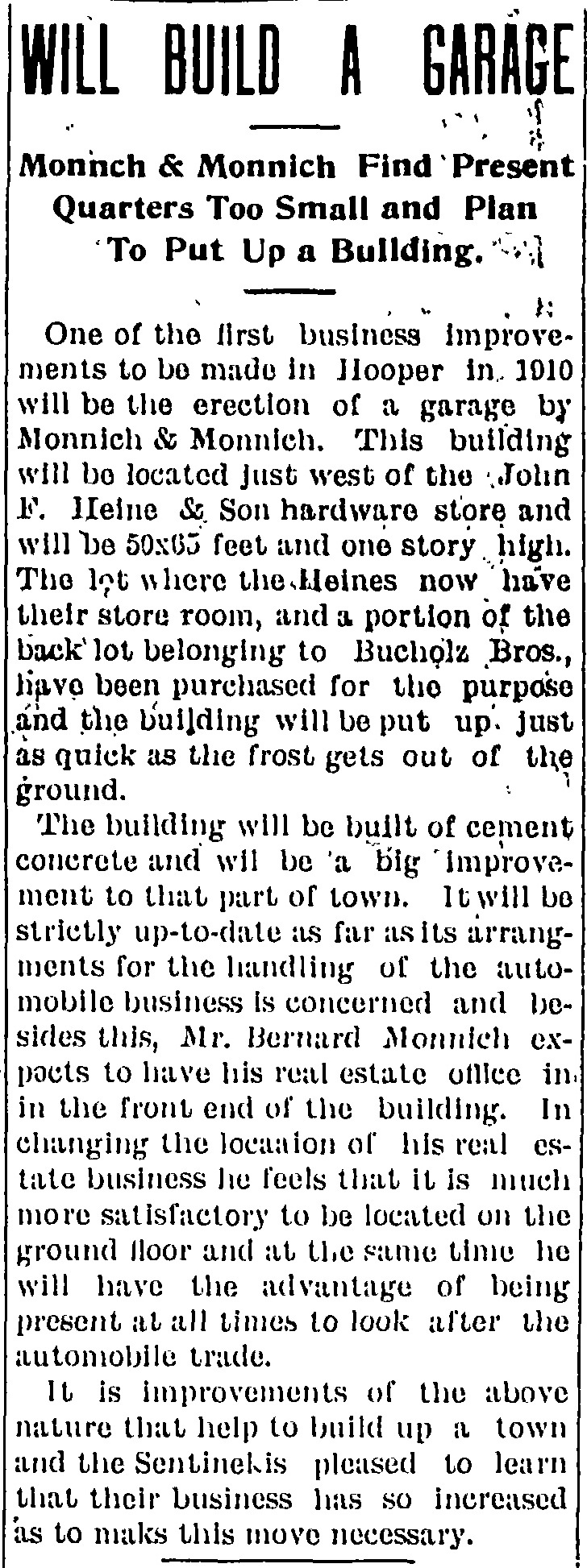
By February 1910, the Cahoon quarters had become too small. The Sentinel announced plans for a one-story, fifty-by-sixty-five-foot garage immediately west of John F. Heine & Son’s hardware store. The proposed building would use cement concrete, and Bernard Monnich planned to place his real-estate office in the front, allowing him to oversee the automobile business from the same location. [3]
The plan was becoming a building by spring. On March 31, the newspaper’s “Around the Garages” column reported that L. Stroh and his crew were putting up the walls. The column also listed recent customers of Monnich & Monnich, with Ford and Mitchell automobiles represented. Its combination of construction news, sales and observations about farmers buying cars shows how quickly motoring had become part of local business reporting. [4]
The centennial history dates the move into the new building to July 1910. It credits Louis Stroh & Son with the brickwork, Edwin Edleman with carpentry and John Thedens with painting. It also reports fifty-one automobile sales for the firm in 1910. The garage was a product of local building trades as well as a place to sell machines manufactured elsewhere. [1]
The equipment inside continued to develop. In March 1912, the Scribner News reported that Monnich & Monnich had installed a gasoline engine to fill an air-storage tank. A lathe and other machinery were being considered for later connection. This small item gives a useful view inside an early garage: it needed power, tools and a growing range of repair facilities to keep customers’ cars running. [5]
A parade decorated with corn
Hooper celebrated the automobile as well as doing business with it. The centennial history describes a forty-car parade in 1910. Catherine Rebbe won the twenty-five-dollar first prize with a car decorated in yellow corn, including kernels arranged to spell “Nebraska.” Louis Franke used corn, grains, pumpkins and garden produce on his car, with “Rambler” spelled on its windshield. [1]
Other entries brought different touches. The Monnich daughter’s car was trimmed with goldenrod, while John Monnich’s entry supplied the humor with a hunter’s outfit. The decorations made the automobile part of an agricultural community’s celebration. Corn and garden produce, already familiar materials, were used to dress up the new vehicles. The full-page parade photograph preserved in the book records the scale of a Monnich gathering, although its caption does not give a year. [1]
Tunberg & Reetz and the cars that arrived by rail
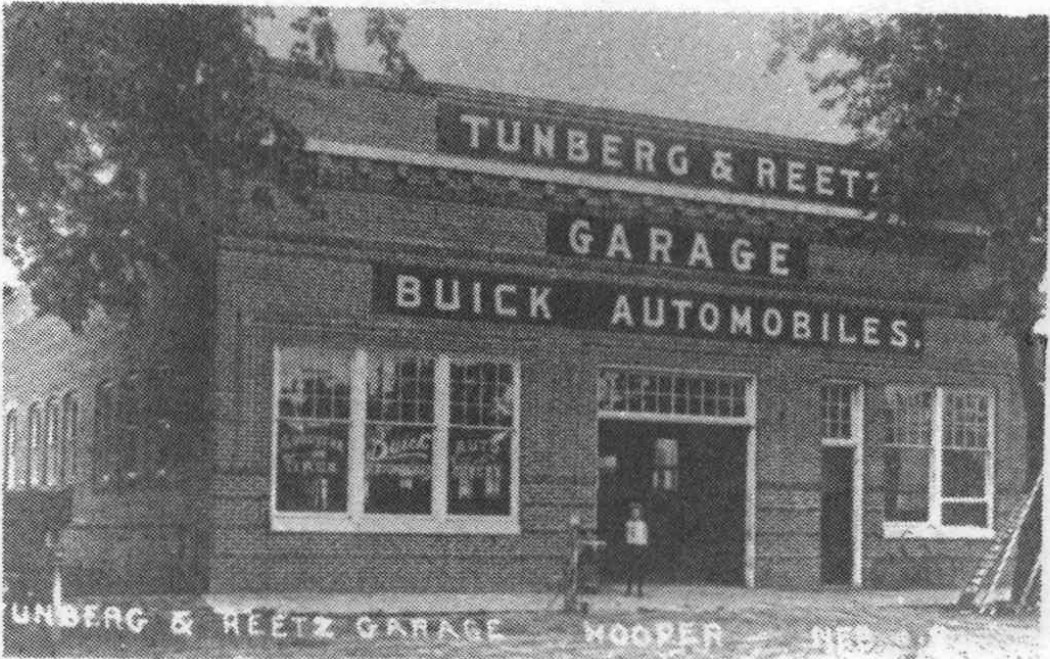
Monnich & Monnich did not have the field to themselves. Anton Tunberg entered the automobile business in 1907, according to the centennial account, and formed a partnership with E. A. Reetz in 1910. Their garage photograph makes the business easy to recognize: “Tunberg & Reetz,” “Garage” and “Buick Automobiles” appear across its brick front. [1]
Newspaper notices give the sales business a measurable scale. On April 16, 1914, the Scribner Rustler reported that Tunberg & Reetz had unloaded two carloads of Buicks and one of Fords. On November 4, 1915, it reported that thirty-five Buick cars were being received that week, with two carloads already arrived. [6][7]
The railway helped supply the businesses that were changing road travel. New cars came into Hooper in bulk, then moved from the dealers into the surrounding countryside. This was part of the larger freight business described in Hooper’s railroad and depot history.
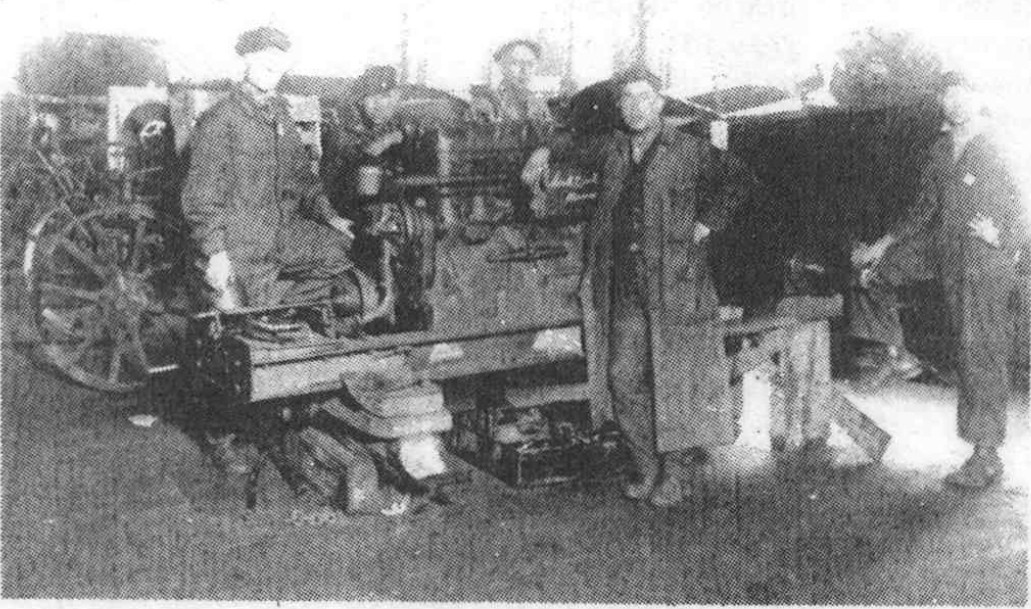
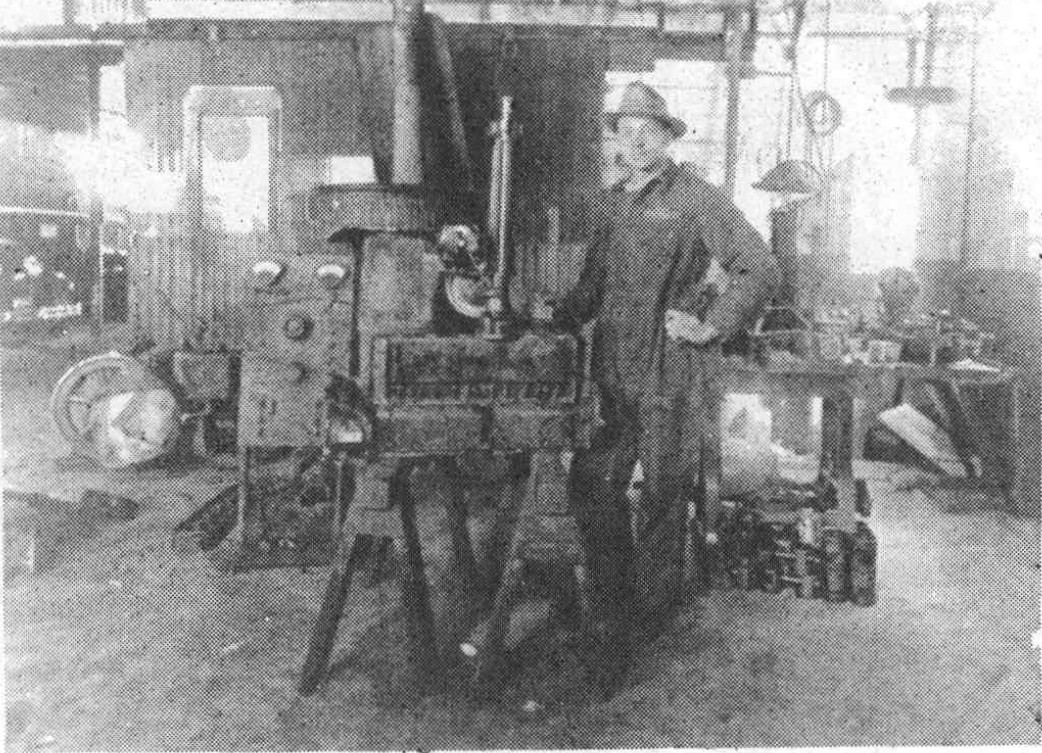
Repair work grew alongside the dealerships. The centennial history dates the formation of Muir & Ewald to March 1, 1914, and places their workshop in connection with the Tunberg & Reetz garage. It describes welding equipment, a large lathe, tire stock and general automobile repairs. A garage could therefore be a salesroom, parts supplier and machine shop under one roof. [1]
1928: Henry Smida comes to help—and stays
Henry C. Smida arrived in Hooper from Silver Lake, Minnesota, on February 23, 1928, at his brother Jerry’s request. The centennial history says he intended to help until spring and then return to his regular employment. Instead, he bought a half interest in the garage. A temporary visit became a long business career in Hooper. [1]
The brothers added equipment as automobile designs changed. Their work depended on keeping customers’ vehicles in service, but the building and stock could also become sources of risk. In April 1933, City Marshal C. E. Mack discovered an early-morning fire at Smida Garage. The Sentinel reported about four hundred dollars’ damage to the interior and stock, covered by insurance. Firefighters used water and chemicals to bring the blaze under control, and the automobiles inside were not damaged. [8]
1935: the night two Chevrolets were stolen
Two years later, Mack and the garage appeared together in a much more alarming report. The July 25, 1935 Sentinel described three men abducting the city marshal, holding him at gunpoint and breaking into Smida Garage. They took two new 1935 Chevrolets: a blue demonstrator coach and a black sedan. The account also lists stolen oil, firearms and a small amount of cash. [9]
Mack was tied beneath a bridge but freed himself and returned to town to report the crime. The newspaper followed the investigation beyond Hooper: one stolen Chevrolet was later abandoned near Fairbury, while the other was located in Council Bluffs. For the garage, the incident was a loss of valuable inventory; for the town, it was also an attack on the marshal who had discovered the shop fire two years earlier. [8][9]
1940: Studebakers in the showroom
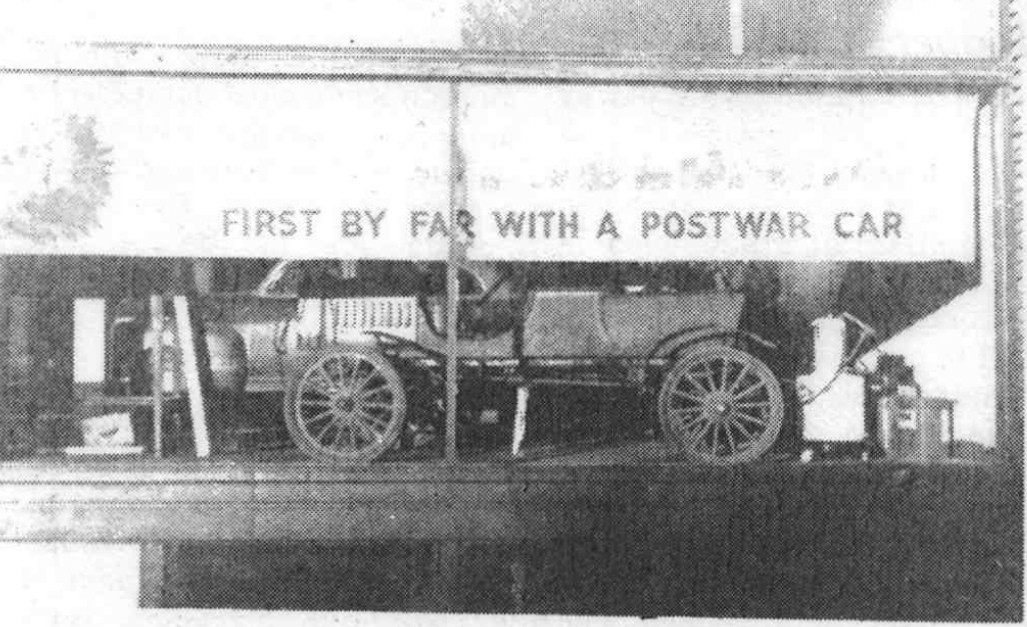
The centennial account records the brothers ending their partnership in 1940, with Henry buying the business. A direct newspaper report documents an important dealership change that June. Under the headline “Smida Takes Up Studebaker Agency,” the Sentinel announced Henry’s new agency and said Hooper’s Ford agency was closing. A caravan of Studebakers came from the Omaha distributing agency to introduce the cars locally. [1][10]
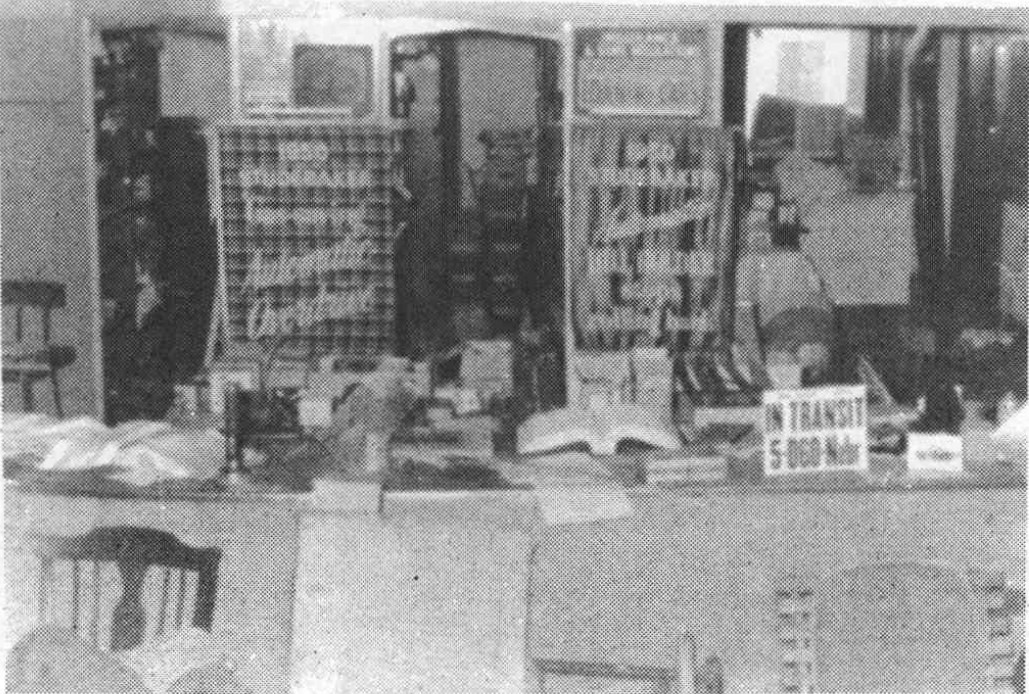
The newspaper presented the change as an effort to keep a choice of new cars available in a town of Hooper’s size. The book’s account adds the range of work behind the sales: tires, parts, engine rebuilding, bodywork, painting and a wrecker service available around the clock. The photographs of the counter, machinery and tow truck preserve those different sides of the business. [1][10]
1944: moving into the former Buick garage
The flood of June 1944 accelerated a move Henry Smida had already been preparing. The June 29 Sentinel reported that he had purchased the former Buick garage on Main Street several months earlier and had been working on it in his spare time. As he cleaned equipment from the flooded old shop, he moved it directly into the new premises. [11]
The distinction between the two buildings matters: the newspaper said the new building’s first floor was high enough to escape the floodwater. It offered clean space for the garage operation while the vacated building could be cleaned more thoroughly. Howard Parkert had purchased those old premises for his well-digging and plumbing business. [11]
The move joined two strands of Hooper’s automobile history. A building previously associated with Buick sales became Smida’s new garage, while another established shop passed to Parkert’s well and plumbing business. [11]

A business tied to community life
Smida’s work extended beyond the workshop. The centennial history records him as president of the Hooper Commercial Club in 1945 and describes his advocacy for a city park on the former Dodge County Fair grounds. It later connects his wife, Julia, with the Lions Club’s roadside-park effort. The garage was part of a wider network of businesses and residents investing in the town. [1]
The same account dates the sale of the garage building to Leon Ehlers to 1975 and identifies it as Ehlers Building Supply at the time the book was published in 1976. [1]
Across these decades, Hooper’s automobile businesses changed premises, equipment and brands. The surviving images bring the work back into focus: mechanics gathered around machinery, parts arranged behind a counter, a tow truck ready to retrieve a vehicle, and neighbors filling a street with cars. The newspaper accounts add the dates and decisions that connect those photographs to the town’s history.
More Hooper stories
- Hooper’s Railroad and Depot: Passengers, Freight and a Vanished Landmark
- Inside the Harms Store: A Family and Nearly Eighty Years of Hooper Shopping
- When Hooper Went to the Show: Tilson’s Opera House and the Amusu Theatre
- The Hooper Sentinel: The People Who Put a Town in Print
- Hooper’s Post Office: The People Who Carried the Mail