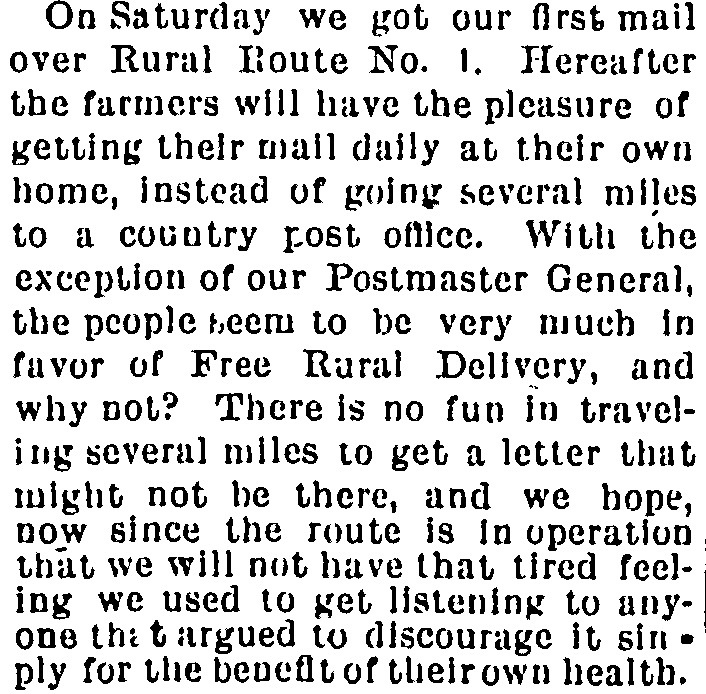
On December 20, 1900, the Hooper Sentinel’s Swaburg correspondent reported a change that farm families could feel immediately: their first mail had arrived over Rural Route No. 1 the previous Saturday. A letter could now come to the farm instead of requiring a trip of several miles to a country post office. The short report celebrates something easy to take for granted today—the arrival of a dependable connection to the outside world. [5]
Hooper’s postal story began almost thirty years earlier. It followed the railroad, moved through several downtown buildings, and depended on clerks, postmasters and rural carriers whose names became familiar across the countryside. Their history includes horse-drawn wagons, the first mail cars, flood relief, overnight trains and a community celebration for a new post office in 1969.
1871: a post office beside the railroad
The Hooper post office was established on July 11, 1871. That date appears in both the town’s centennial history and Elton A. Perkey’s published compilation of Nebraska place names for the Nebraska State Historical Society. Asa Briggs was the first postmaster. The centennial book also identifies him as the first railroad agent and says he kept a store and post office in the depot. [1][2]
The railroad and the mail were closely connected from the beginning, with Briggs dividing his duties between the post office and depot. The centennial history identifies George W. Pugh as the next postmaster, appointed in February 1872. [1]
Postal services expanded as Hooper grew. The office became a money-order office on July 1, 1877. According to the centennial account, its first money order was a $14 payment sent by Gilbert S. Peyton to Phillips Brothers in Chicago. By May 1, 1892, the office had issued 7,874 orders. These transactions made the post office a place for sending payments as well as letters. [1]
December 1900: the mail reaches the farms
The first rural route has unusually good documentation. The Postal Service’s historical list gives December 15, 1900 as the beginning of rural delivery at Hooper. An announcement in the December 13 Sentinel confirms the date and reproduces Postmaster Monnich’s instructions for the new service. The December 20 Swaburg report then confirms that the first deliveries actually arrived. [3][4][5]
The announced route started at the Hooper post office and made a twenty-eight-mile circuit north of town. Its description used roads, section lines, a cemetery and several rural schoolhouses as landmarks. School Districts 16, 60, 49 and 15 appeared along the route. The notice also stated that the Sommerville post office would be discontinued. Rural delivery was reshaping how scattered farm communities received their mail. [4]
The instructions were practical. A household had to put a suitable mailbox directly on the route where the carrier could reach it without leaving his buggy. Customers were to keep roads passable and protect their boxes from weather and damage. A red flag signaled outgoing mail. The carrier could sell stamps and postal cards and handle registered letters, but residents were warned to have their correspondence ready rather than expect him to wait while they wrote it. [4]
These details explain why the service mattered. The route brought a regular visitor and useful services to farms that had previously required a separate journey for the mail. The Swaburg correspondent’s relief in December 1900 gives the local reaction to that change. [5]
Ed Dau’s route: from a buggy to an automobile
One of the longest remembered careers belonged to Ed Dau, known as “Dewey.” The centennial history dates his start as a substitute carrier to November 1909 and his retirement to October 1950. He passed an examination for the work and began during a period when the monthly pay was $75. After about ten years, he tried other employment, then returned to the post office on January 2, 1922. [1]
Dau’s work crossed a major change in transportation. The book describes open buggies, sleds and heavy covered mail wagons, followed by automobiles. He bought his first car for the route on May 13, 1911. A car did not immediately eliminate the older equipment: in the early years, it was useful only when the roads were in sufficiently good condition. Snow and deep mud remained part of the job. [1]
Delivery routes continued to develop. The book lists four Hooper rural carriers in 1914: John Schlotfeld, A. W. Hartung, Ed Dau and H. Schemmel. It also records a petition seeking changes to Route 2 so that nearly eighty additional families southeast and southwest of Hooper could receive more convenient service. A contemporary July 9, 1914 Scribner Rustler notice reports that a postal inspector had traveled Route 2 to consider proposed changes. [1][6]
Another important expansion came with Parcel Post on January 1, 1913. The Postal Service’s history explains how the new service opened affordable package delivery to more customers, including rural households. It added another purpose to the carrier’s daily visit: purchases and supplies could travel through the mail along with personal correspondence and newspapers. [7]
Oliver Nelson and the neighbors along Route 1
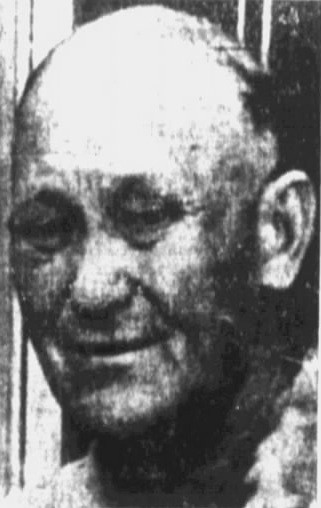
Oliver “Ollie” Nelson’s retirement made the Sentinel’s front page on November 1, 1956. The report marked the end of thirty-six years of postal service the previous day. It included his portrait and recalled a career that had begun in 1920; the article says he became the regular carrier in 1922. Over those years he worked under postmasters Christian Fritz, Henry Schemmel, George Looschen and Fred Ott. [8]
The retirement story remembered more than mileage. Children met Nelson at the mailbox because he carried gum and candy. Patrons praised his dependability, and the paper repeated their claim that they could set their watches by his arrival in normal weather. [8]
That familiarity became tangible help during the 1944 flood. The retirement account says three feet of water entered the Nelson house, ruining or carrying away possessions on the first floor and in the basement. Families along Route 1 north of Hooper brought food, clothing, shoes and furniture. The carrier who had visited their mailboxes for years now received support from the people he served. [8]
Clerks, buildings and the daily mail schedule
The post office itself changed locations as the service grew. The centennial history describes a 1902 lease for a one-story brick building on the north side of Fulton Street, between Main and Spring. It places the office in the former Hooper State Bank building from 1931 to 1946, then in another downtown location from October 1, 1946 through August 1969. The book identifies that latter building by its 1976 occupant, Farmers Mutual Home Insurance. [1]
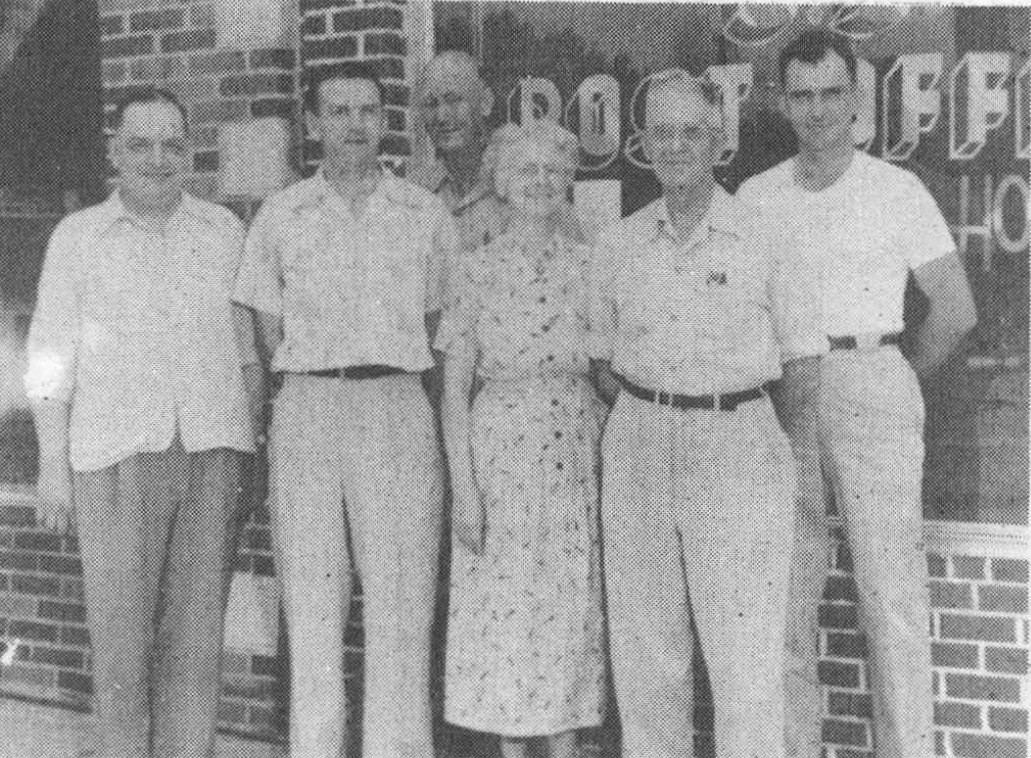
A 1953 staff photograph brings the people inside that service into view. Its caption names Harold Kallenbach, clerk; Fred Ott, postmaster; Oliver Nelson, rural carrier; Jess Bartling, clerk; and rural carriers Leland Swanson and Don Schwab. It is a reminder that sorting, counter service and rural delivery were interconnected parts of a small local operation. [1]
The January 8, 1953 Sentinel published Postmaster Ott’s detailed mailing schedule. Overnight trains handled mail at 1:27 a.m. westbound and 4:38 a.m. eastbound, with additional Star Route connections during the day. Rural carriers were to leave the office at 8:30 a.m., except on Sundays and holidays. Lock-box customers could use the lobby after the service window closed. For residents, knowing those times determined whether a letter caught the next dispatch. [9]
1969: a new facility and a public dedication
The new post office stood on the west side of Main Street between Maple and Elk streets. A September 25, 1969 Fremont Tribune report explained that it was built through the Post Office Department’s lease-construction program: private investment supplied the building, which remained privately owned and was leased to the federal government. Postmaster Clarence J. Heywood said new equipment would improve working conditions and mail handling. [10]
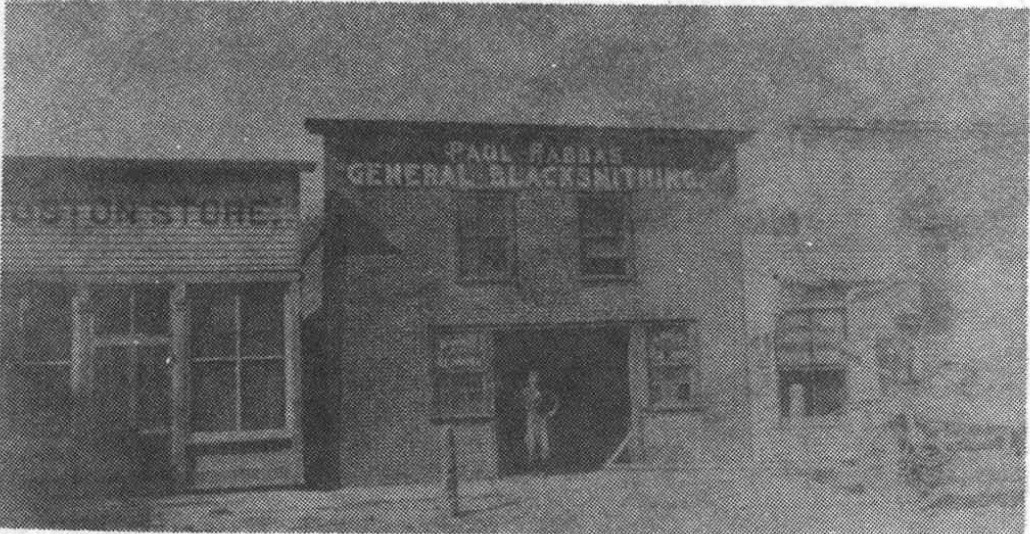
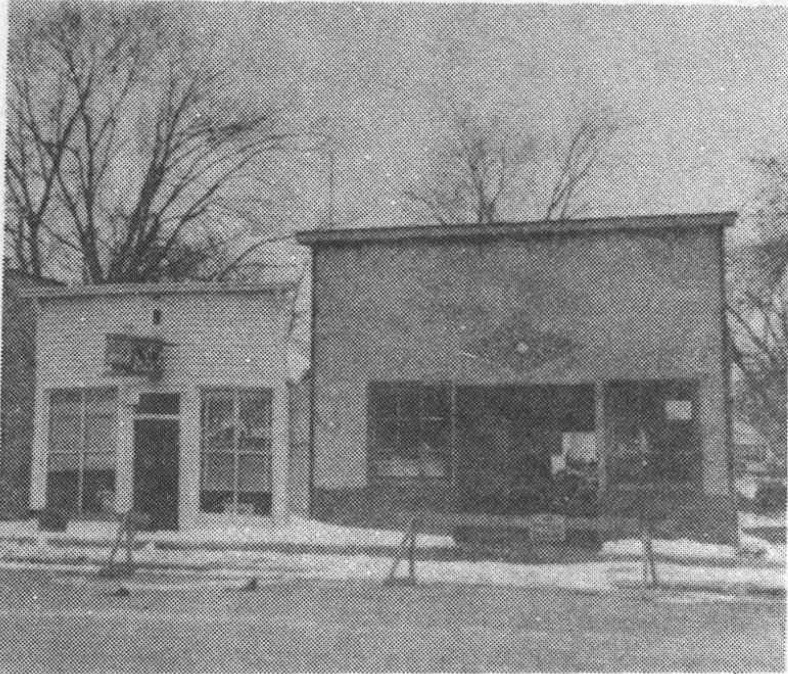
The site already had a working history. The centennial book reproduces two earlier views of a blacksmith shop and specifically identifies the remodeled building as standing on the later post-office site. Those photographs document an earlier use of the ground; they should not be mistaken for views of the post office dedicated in 1969. [13]
The dedication took place on Saturday, September 27. The Tribune’s follow-up reported about 150 people at formal ceremonies in the school auditorium and approximately 300 touring the new facility afterward. Mayor Dale Sager welcomed visitors, Donald Shaffer served as master of ceremonies, and the Rev. Edgar Wortmann gave the invocation. J. B. Braasch, an Omaha postal-service officer, delivered an address. The Logan View band and triple trio supplied music, and Legion Post 18 presented the colors. [10][11]
At that time, the staff included Heywood as postmaster, Leo F. Corbin as career clerk, Kenneth Thernes and Helen Maher as substitute clerks, Don Schwab and Denny Stecher as rural carriers, and Waldo Janssen and Marv Marreel as substitute carriers. The centennial history records these names alongside the dedication, preserving the people as well as the building. [1]
Postal people, an earlier Main Street site and original notices
Open any image for a larger view. The 1956 portrait and newspaper excerpts come from surviving newspaper scans; their clarity reflects the available originals. The blacksmith-shop photographs show an earlier building on the later post-office site.

A continuing connection with the countryside
A recent postal record connects Hooper with neighboring Winslow. A February 2025 USPS bulletin formally discontinued the Winslow post office, effective January 25, 2025, and listed Winslow as a place name under Hooper. It retained the Winslow ZIP Code, 68072, and instructed customers to continue using “Winslow, NE 68072” in their addresses. The bulletin distinguishes that administrative action from the earlier service suspension dated March 18, 2019. [12]
From the depot office of 1871 to the rural routes and the Main Street facility, the history is one of people keeping nearby communities connected. The carriers’ names, the 1953 staff photograph and the surviving notices preserve how that work was done—and how much a daily arrival at the mailbox could mean.
More Hooper stories
- Hooper’s Railroad and Depot: Passengers, Freight and a Vanished Landmark
- When Hooper Took to the Road: Monnich, Tunberg & Reetz and Smida Garage
- Inside the Harms Store: A Family and Nearly Eighty Years of Hooper Shopping
- When Hooper Went to the Show: Tilson’s Opera House and the Amusu Theatre
- The Hooper Sentinel: The People Who Put a Town in Print