
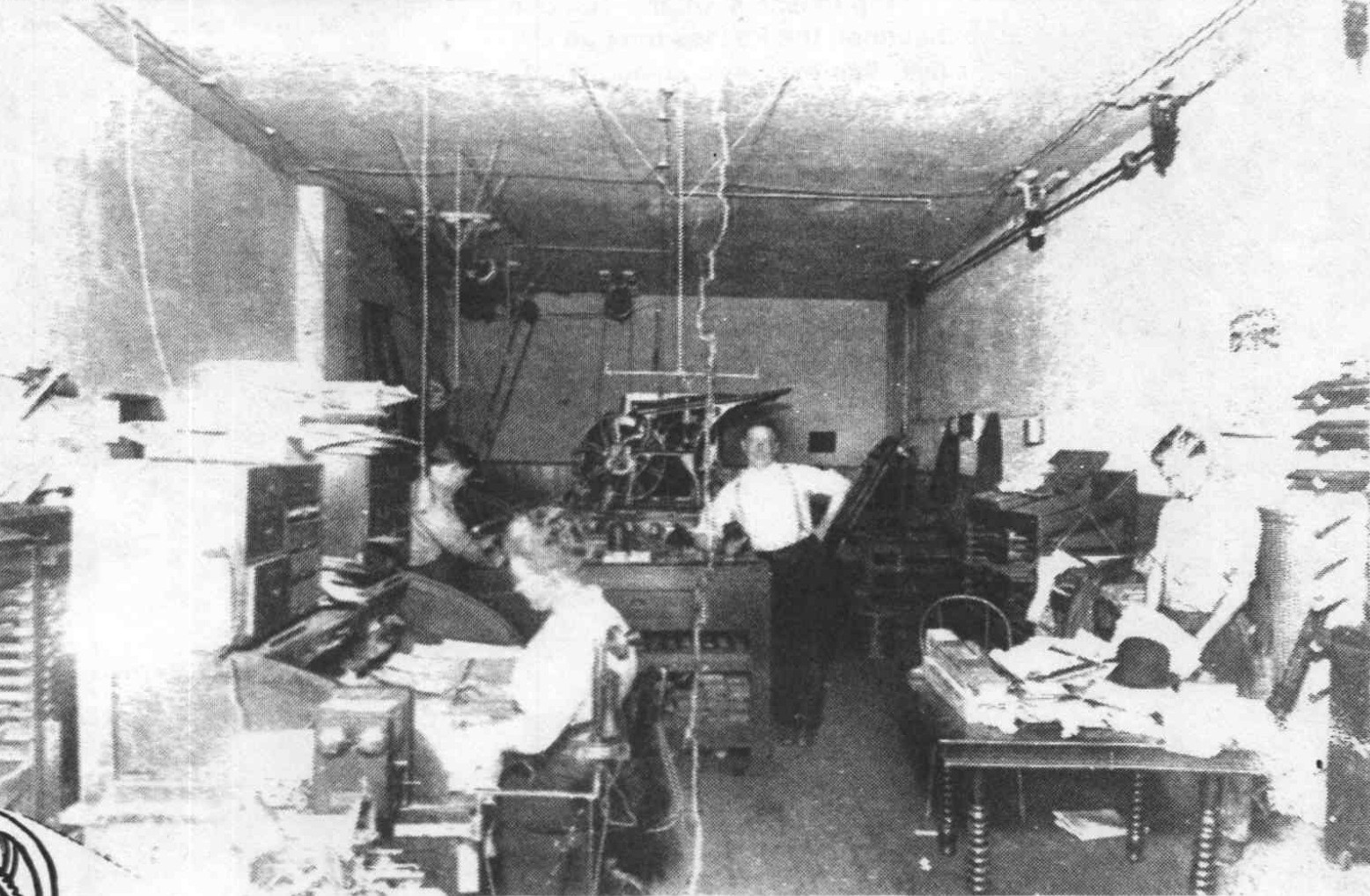
In a 1913 photograph of the Hooper Sentinel office, newspapers and supplies crowd the room. Minnette Howard sits at a worktable, Glenn Howard stands farther back, and Harold Howard works at the right. The picture puts faces to a business that preserved thousands of other people’s names: graduates, newlyweds, farmers, shopkeepers, soldiers and neighbors whose ordinary lives became Hooper’s written history. [1]
The Sentinel began in 1885. Its story includes family connections across three generations, a printer who started for fifty cents a week, a destructive fire, the change from metal type to offset printing, and a 1994 merger that joined the Hooper and Scribner newspapers. Surviving issues let us follow those changes in the words and photographs published as they happened. [1][5]
A newspaper for a growing town
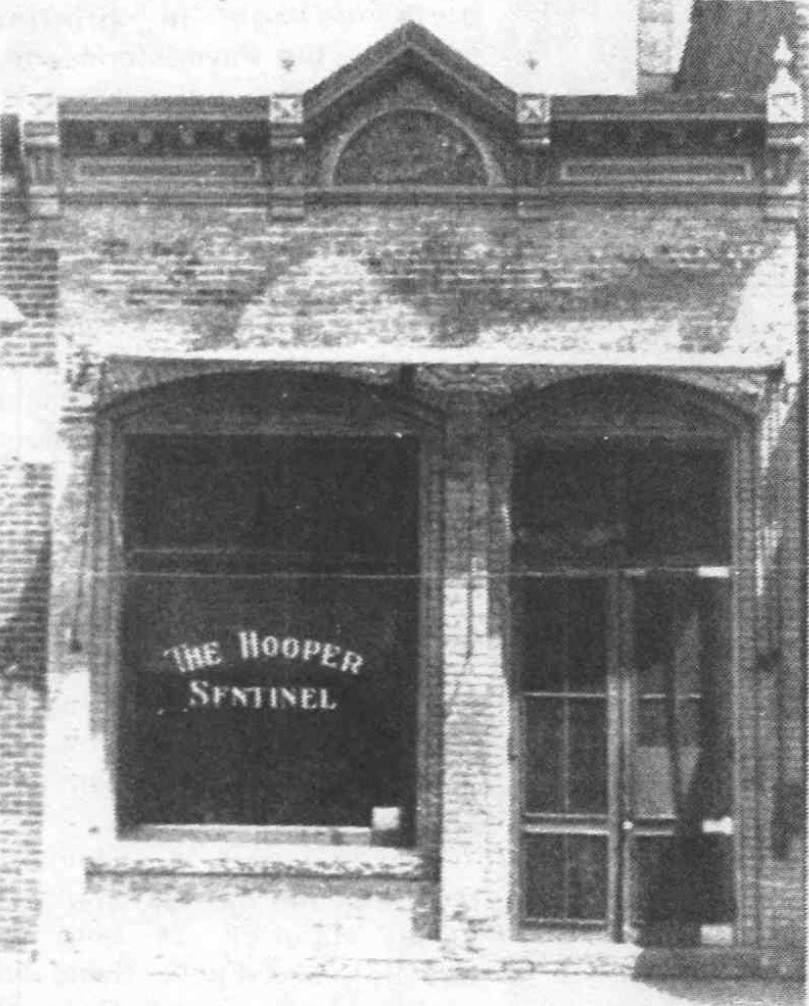
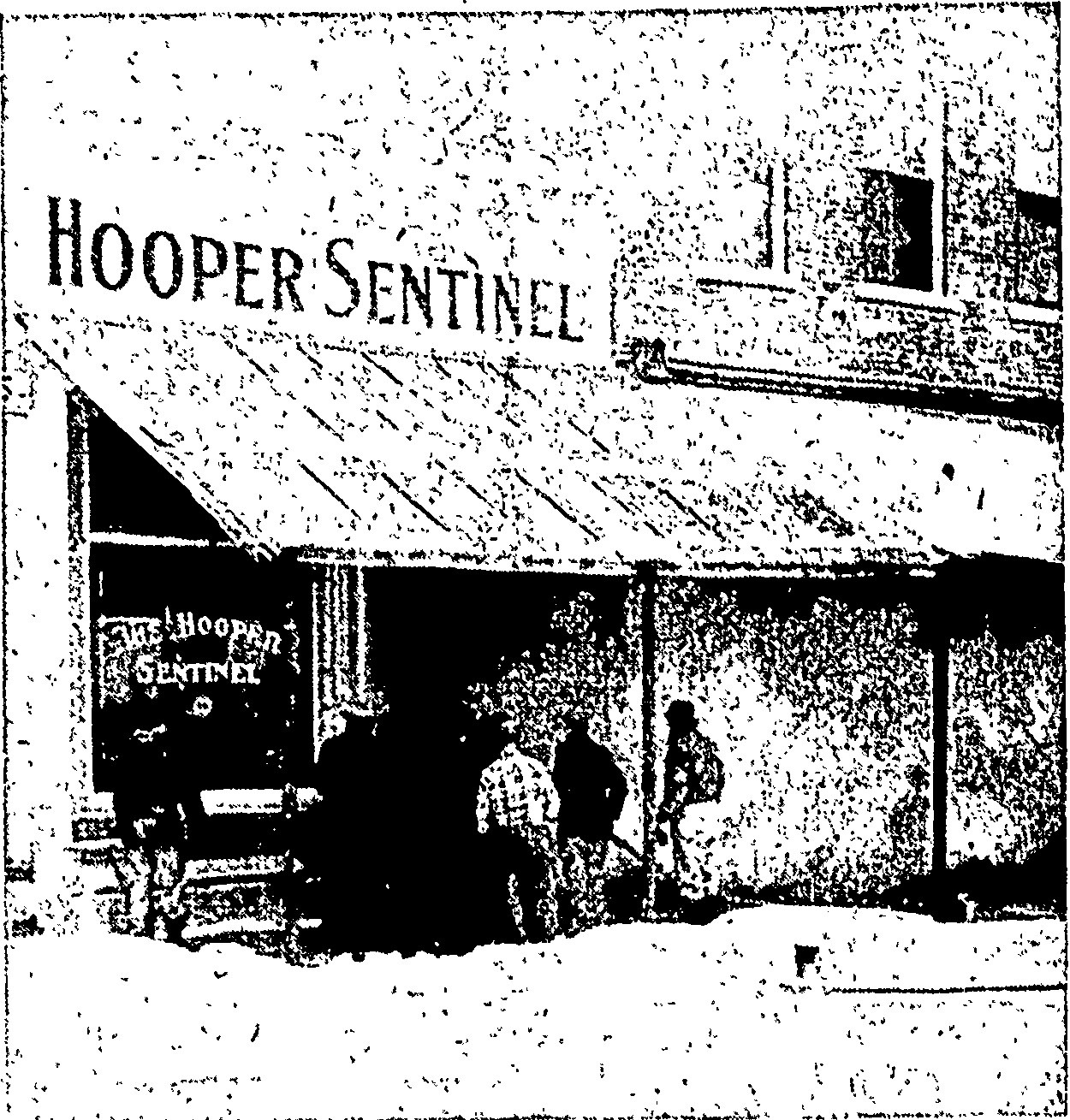
Hooper’s centennial history dates the Sentinel’s first edition to April 24, 1885. The paper’s own historical account, published when it merged with the Scribner Rustler in September 1994, gives the same date. The early publishers named in those histories include Bennet and Company, W. A. Crandall, E. W. Renkin, the Bennett brothers, Marion E. Shipley and Wilber G. Thompson. By 1909, Glenn Howard was publisher. [1][5]
The paper’s territory extended beyond the village. By the centennial year, its history described a readership in Hooper, Winslow, Nickerson and Uehling, and identified the Sentinel as the official newspaper for Logan View High School. Church reports, rural correspondence, school activities and business advertising connected those communities through a common weekly publication. [1]
The Howard family’s association with the paper would reach well beyond Glenn’s years as publisher. His daughter Dorothy later returned to Hooper with her husband, Morris Payne, to operate the Sentinel. Their daughter Marilyn and her husband, Michael Egan, eventually succeeded them. Those were three generations with a family connection to the newspaper, with the long Ring ownership between the Howard and Payne periods. [1][5]
Herbert Ring’s long apprenticeship and ownership
Herbert T. Ring graduated from Hooper High School in 1898 and began learning the printing trade in 1899. He started as a printer’s apprentice, traditionally called a “printer’s devil,” earning fifty cents a week. Recalling that work, he described setting words by hand, letter by letter, then redistributing the type for another week’s work. [1]
Ring also spent nine years assisting his father, Hooper postmaster John Ring. He returned to the Sentinel under Glenn Howard in 1913. In 1914, Ring and C. W. Sedgwick bought the paper; Ring acquired his partner’s share a year later. He remained its owner until 1946 and continued working on the staff after the sale. [1]
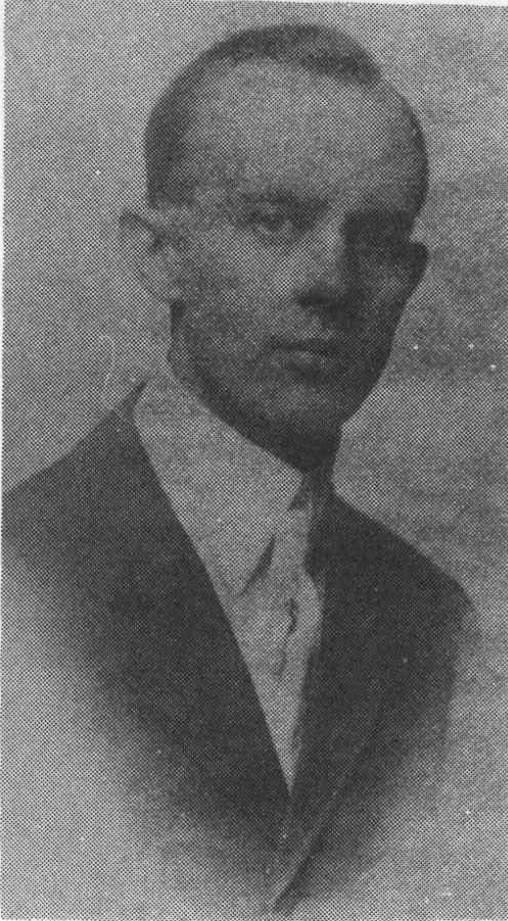
There was a deeply personal reason for the change of ownership. According to the centennial history, Herb and Elizabeth Ring had hoped their son, Lieutenant Theodore Ring, would return from military service and modernize the newspaper. His death as a pilot in the China–Burma–India theater in 1945 ended that plan. The book connects the couple’s decision to retire with that loss. [1]
Morris and Dorothy Payne take over
The Scribner Rustler announced the sale on August 15, 1946. It reported that the Rings had sold the Sentinel to Mr. and Mrs. Morris M. Payne of Perryton, Texas, and that the new owners would take charge September 1. The Rings planned to continue living in Hooper, with Herbert remaining on the newspaper staff. [2]
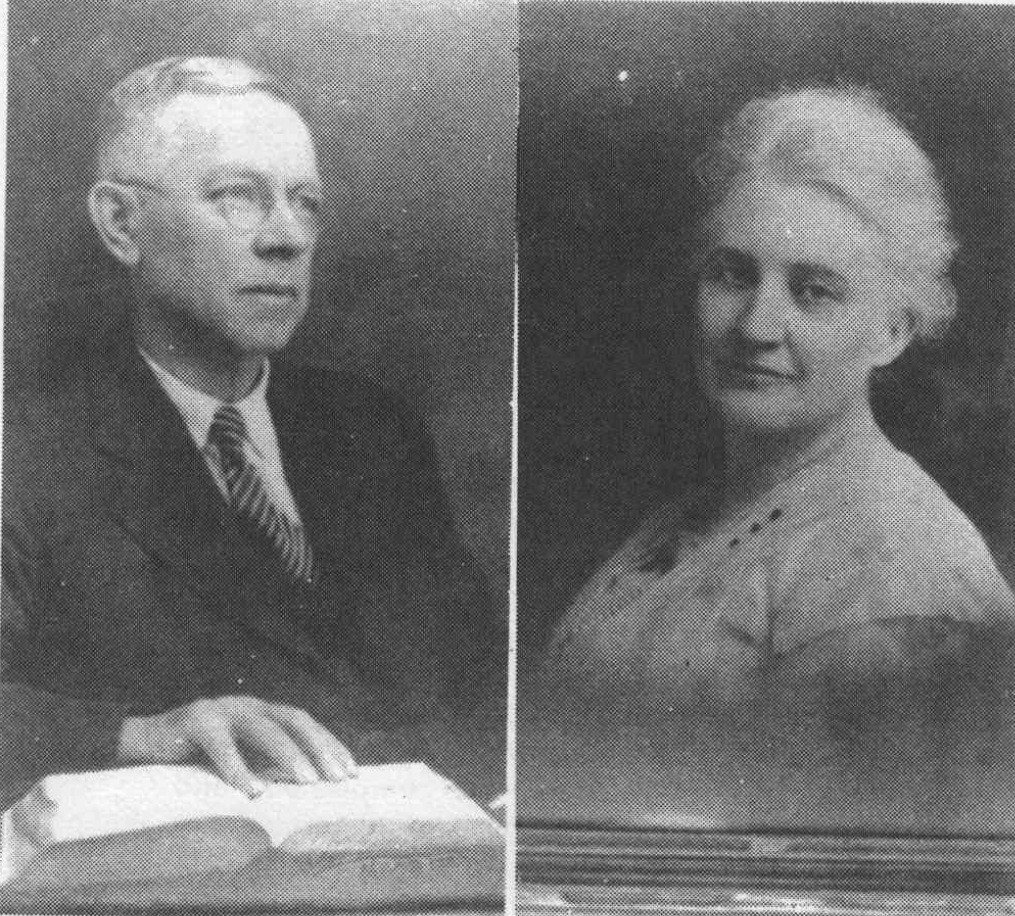
The Paynes came from the Ochiltree County Herald in Texas, where Morris had been news editor. Dorothy had grown up in a newspaper family: her parents, Glenn and Minnette Howard, were associated with the Ashland Gazette for more than thirty years after leaving Hooper. At the Sentinel, the couple bought a Model 5 Linotype, rearranged the office and equipment, and refreshed the shop. [1]
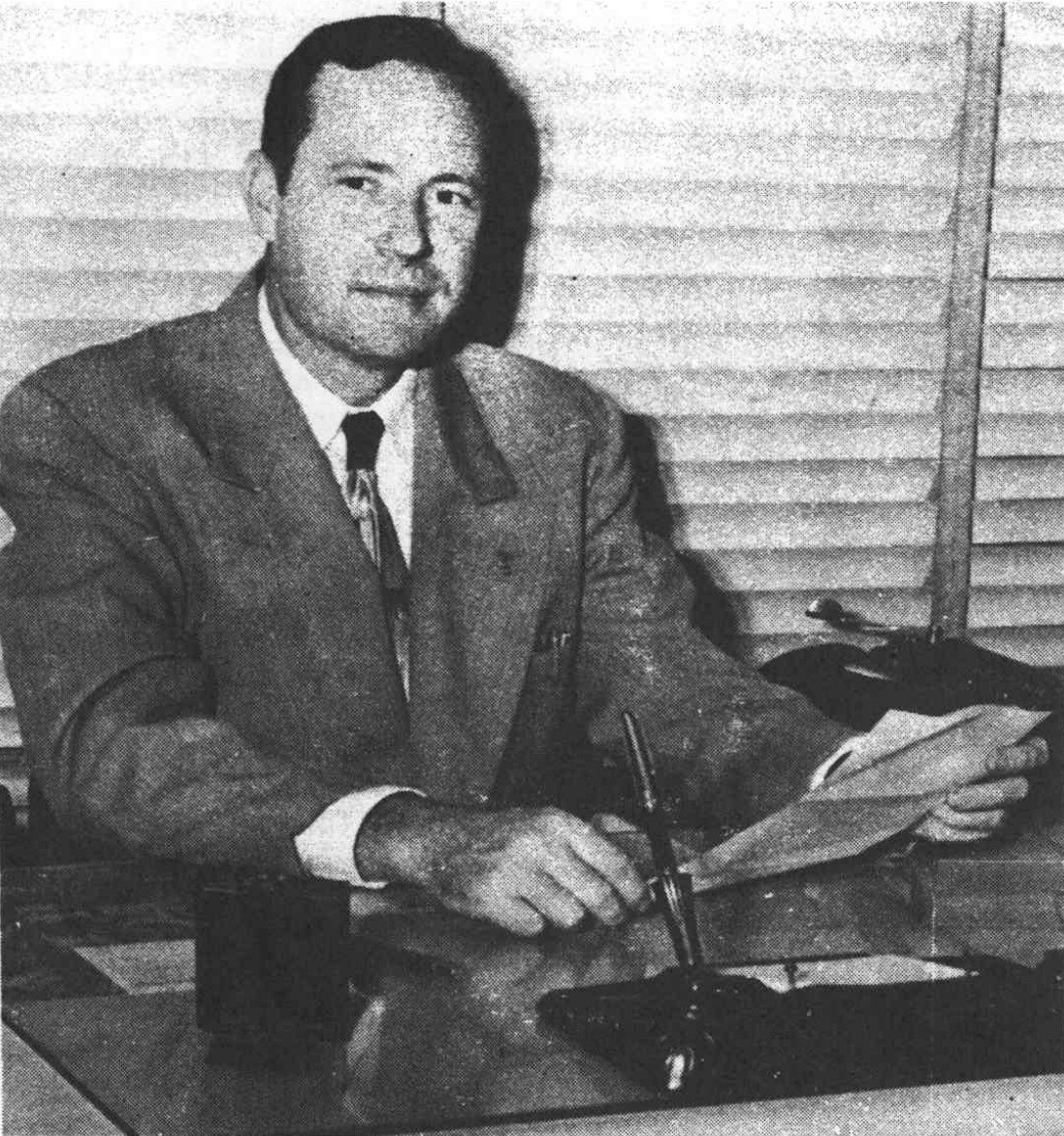
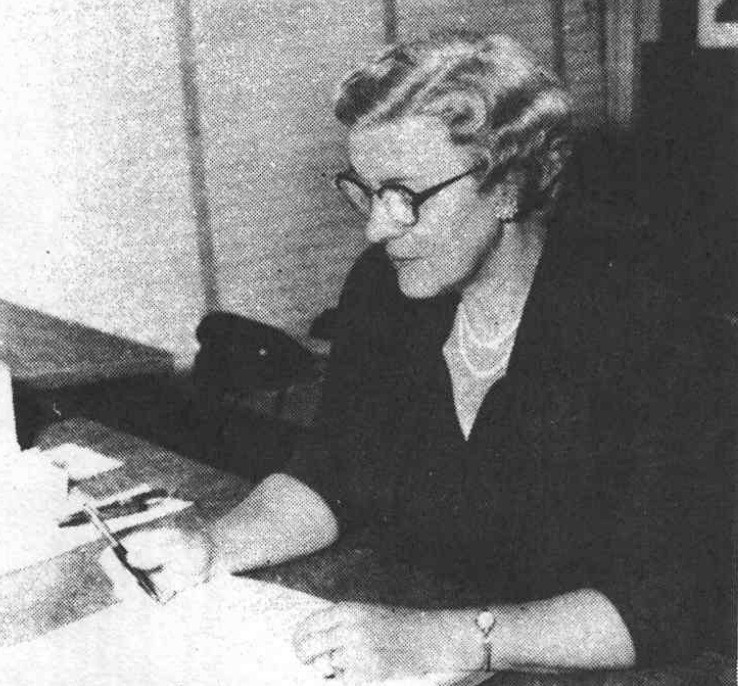
The photographs of Morris and Dorothy at work capture different parts of that shared enterprise. Morris is pictured handling papers at a desk; Dorothy works with materials spread in front of her. A weekly paper depended on both the visible finished edition and the less visible work of collecting news, preparing advertisements, keeping accounts and producing each page. The January 1953 fire report specifically identifies Dorothy’s responsibility for assembling and editing the news. [1][3]
The 1953 fire—and the publishers who helped
On Thursday, January 22, 1953, fire badly damaged the Sentinel plant. The following week’s front page carried William Robley’s photographs of firefighters at the building and the wrecked pressroom. The centennial account recalls that the week’s edition had already gone to the post office when the fire broke out. [1][3]
The newspaper still reached its readers the next week. The January 29 Sentinel explained that the Fremont Guide and Tribune had set and printed the edition. Publisher Lester Walker and his staff helped line up advertisements, while Dorothy Payne continued gathering and editing the news. After printing in Fremont, the papers came back to Hooper to be addressed and mailed. [3]
The response extended across the region. The Sentinel recorded offers of help from the Scribner Rustler, Valley Enterprise, West Point Republican, North Bend Eagle, Omaha World-Herald and printing suppliers. That account shows the practical cooperation behind the survival of a small-town paper: competing publications could also be the people who kept the next issue from being lost. [3]
Rebuilding required cleaning, repairing machinery and moving type by hand. The shop acquired steel type cases, composing units and a metal saw. An older cylinder Chicago Press remained in use; the centennial history says it had once been powered by a gasoline engine. [1]
Offset printing and another family generation
In 1971, the Paynes converted the Sentinel to offset production. The change altered the work inside the office. Instead of making up pages from Linotype-set metal type, staff typed material on IBM machines, waxed the paper and positioned it on the page layouts. The prepared pages then went to Blair Newspapers for printing on an offset press. [1]
Other people helped make the paper a continuing record of the area. The centennial history names Violet Hamrick as a Linotype operator and credits Luella Sampson with forty-nine years as a correspondent for the Swaburg area. That rural reporting mattered: a town newspaper could preserve the activities of farm neighborhoods and churches miles beyond Main Street. [1]
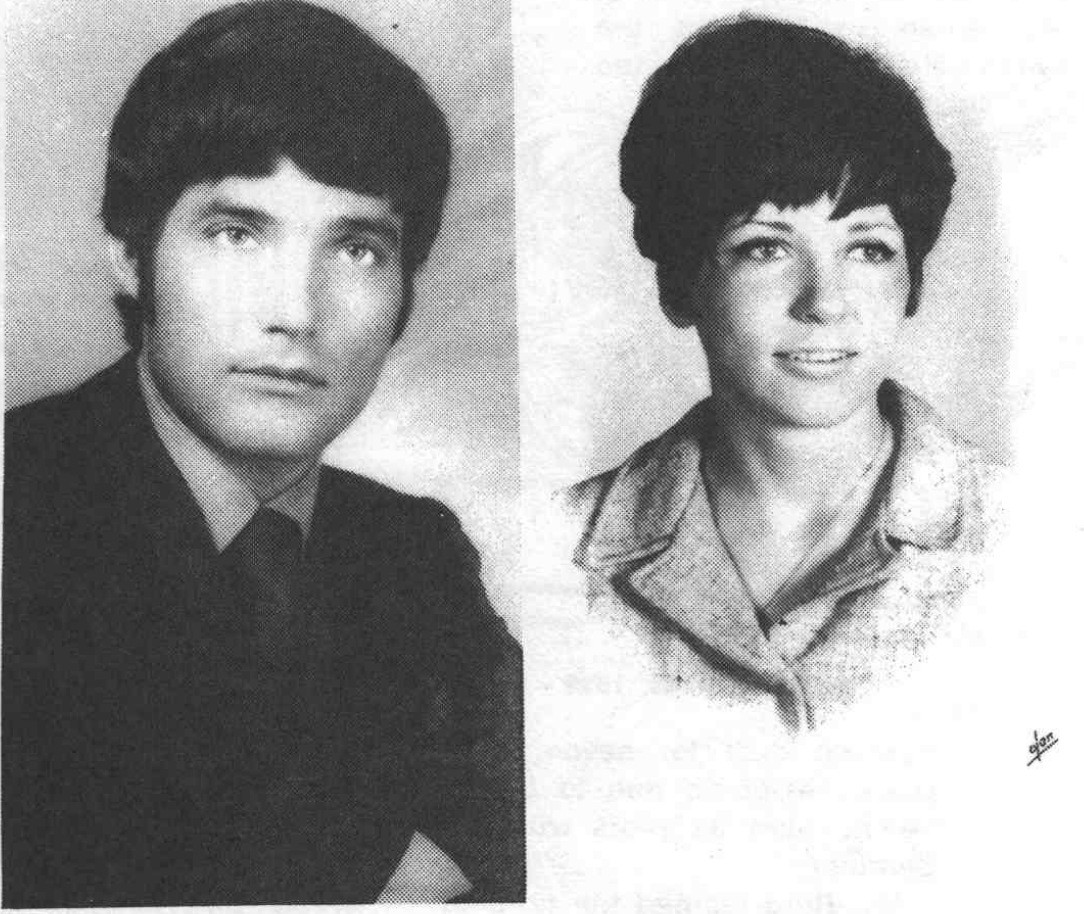
Michael and Marilyn Egan took ownership in 1973. They continued improving the plant and office, and about two hundred visitors attended the newspaper’s ninetieth-anniversary open house in 1975. The 1994 retrospective supplies the next steps: the Egans operated the paper through 1979; Fran and Duane Liston owned it from 1979 to 1989; and Dick and Gwen Lindberg took over on September 1, 1989, with Kathy Lodl as editor. [1][5]
Fran Liston’s later obituary adds another connection to Hooper’s public life. She worked for the Sentinel before becoming its owner and editor, and later served as the Hooper librarian. Her career linked two places where residents turned for local information and community memory. [8]
September 1994: the Rustler and Sentinel come together
The September 7, 1994 issue introduced the combined Rustler-Sentinel. In his front-page explanation, Dick Lindberg reported that he and Gwen had purchased the Scribner Rustler from Al and Bethel Harper. The Lindbergs already owned the Hooper Sentinel. The new paper brought together news and advertising from both towns and surrounding communities. [4]
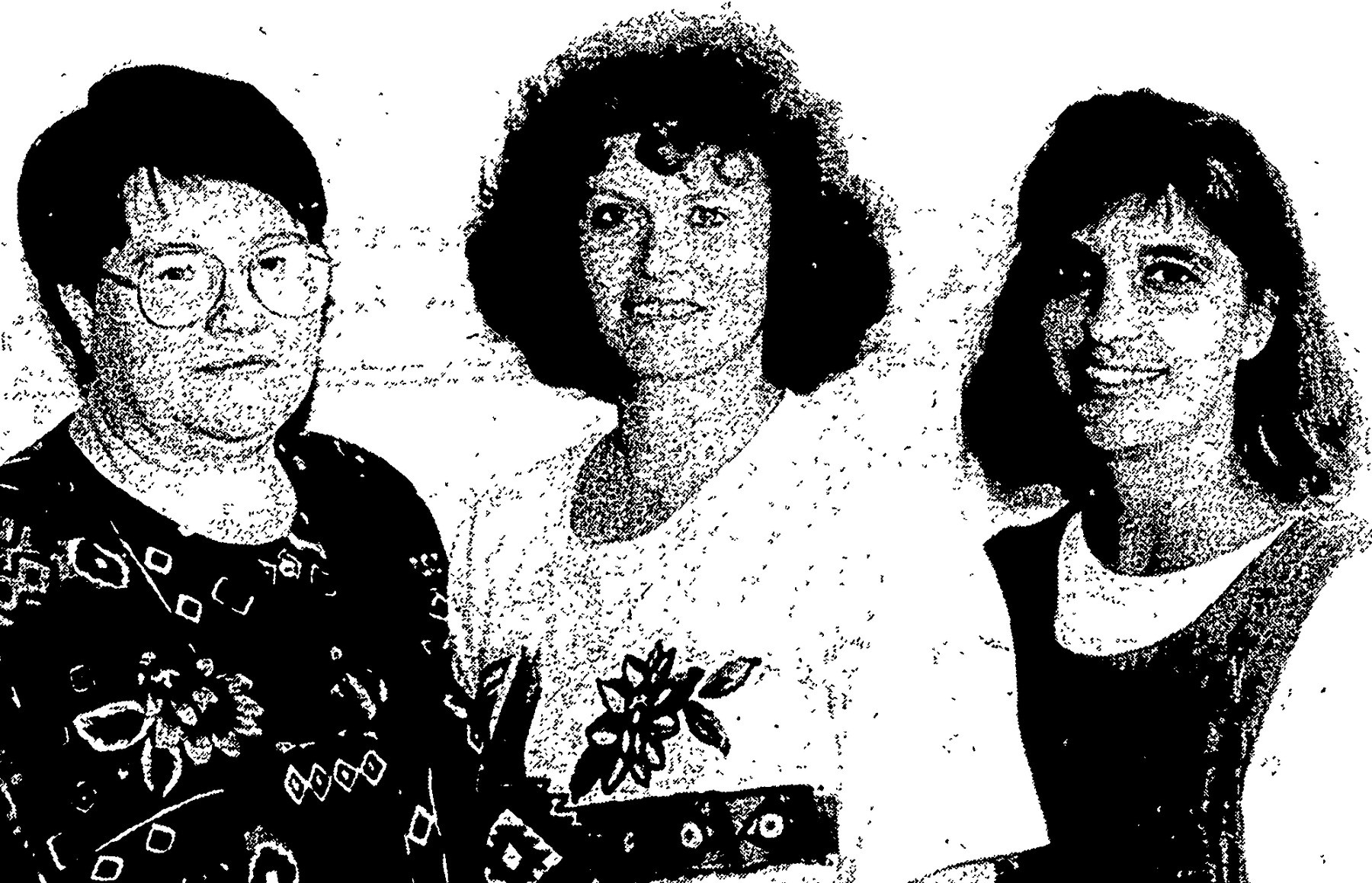
Kathy Lodl became editor of the joint publication. A front-page photograph introduced Lodl with Mary Kay Kaup, the Scribner office manager, and Gina Peters, advertising manager. The plan retained offices in both towns and placed most production equipment in the Sentinel building on Hooper’s Main Street. Pages were prepared in Hooper and Scribner, taken to West Point for Wednesday printing, and mailed from Hooper, Scribner and Snyder around noon. Rural subscribers were to receive their copies in Thursday’s mail. [4]
The combined subscription lists were expected to bring circulation above two thousand copies each week. Bertha Olson continued reporting Uehling news, and Delores Meister covered Snyder. A wider paper still depended on people with close knowledge of individual towns. [4]
A Nebraska Press Association account records that Lodl became owner and publisher in 2000. The City of Scribner’s media directory continues to list the Rustler-Sentinel and its Wednesday publication schedule. The Hooper Sentinel name survives both in that successor publication and in the old issues that remain essential sources for the area’s history. [6][7]
Inside the Sentinel: a photograph gallery
These images show the people and working spaces behind the paper. Dates are supplied only where the original source identifies them. Newspaper photographs retain the grain and contrast of the surviving microfilm.

Read the newspapers yourself
The Scribner Public Library’s free digital archive includes surviving Hooper Sentinel issues dated between 1898 and 1994, along with the Scribner papers and the Rustler-Sentinel. Coverage is not complete for every year. Search a name or subject, then inspect the original page: advertisements, nearby notices and captions often answer questions that a search-result excerpt leaves open. [9]
More Hooper stories
- Hooper’s Railroad and Depot: Passengers, Freight and a Vanished Landmark
- When Hooper Took to the Road: Monnich, Tunberg & Reetz and Smida Garage
- Inside the Harms Store: A Family and Nearly Eighty Years of Hooper Shopping
- When Hooper Went to the Show: Tilson’s Opera House and the Amusu Theatre
- Hooper’s Post Office: The People Who Carried the Mail