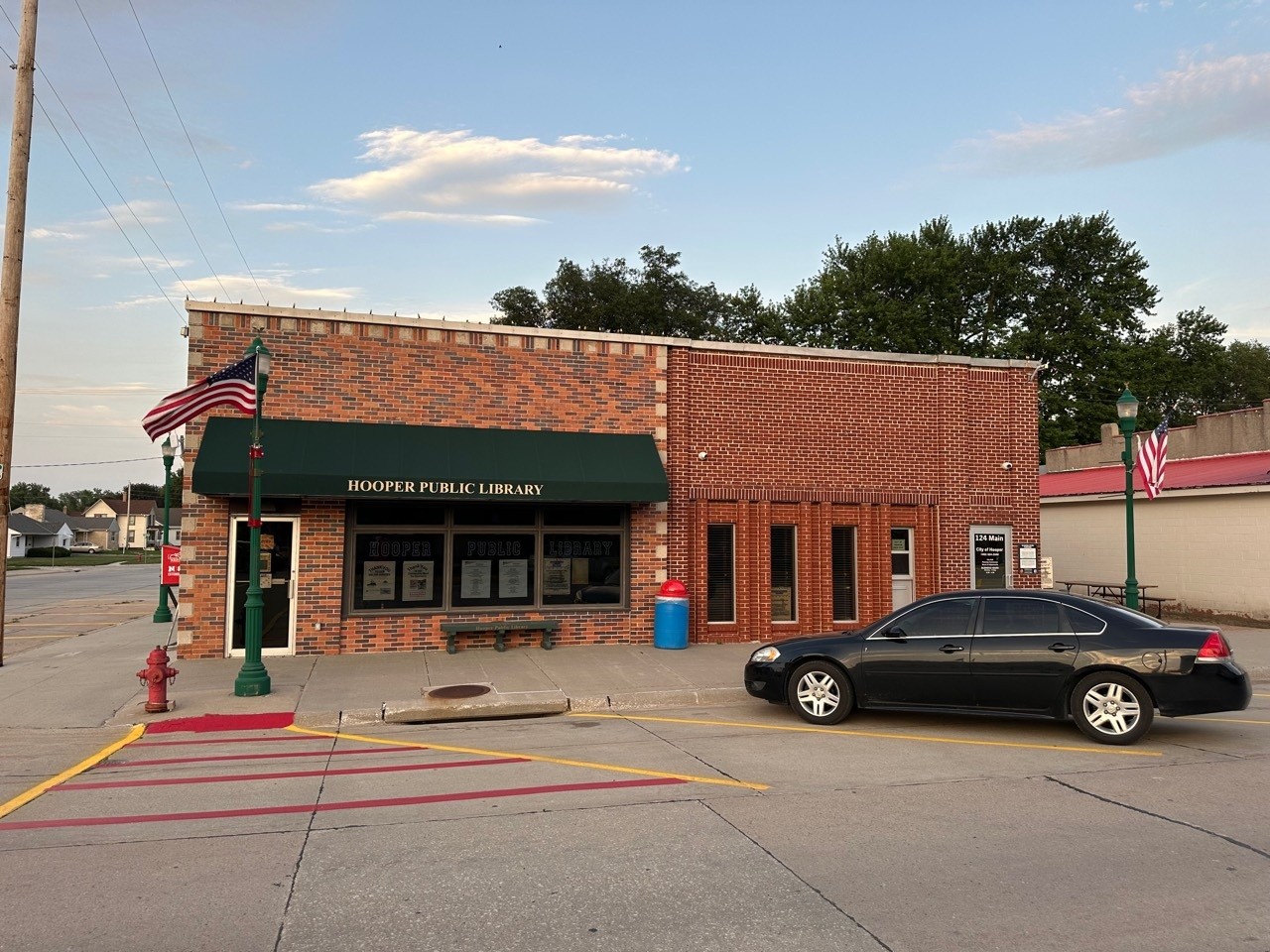
Hooper’s library began with a rented room, a modest book collection and a librarian paid six dollars a month. Its story runs from upstairs rooms to City Hall, through floodwater and decades of volunteer work, and into a former grocery building on Main Street. The changes in its address tell only part of the story. Just as important were the people who kept a public collection available when money, heat and shelf space were limited. [1]
A library association, then an open door
On August 11, 1913, residents organized the Hooper Public Library Association at the First National Bank. Its first board included J. E. Marsh, the Rev. J. A. Mathiesen, T. E. Smith, F. H. Mayott, H. G. Meyer, Lloyd Denslow, B. Monnich, E. K. Geisert and George W. Heine. Terms were staggered, giving the new association continuity as members rotated. [1]
The practical work followed in early 1914. A committee looked for temporary quarters, and in January the association arranged to rent a rear room above Davies Drug Store from Dr. Zellers for five dollars a month. On February 12, the board selected the Rev. Joel Warner as librarian at six dollars a month. The library opened March 2, 1914, with Tuesday and Saturday afternoon hours. Its opening policy extended access to people doing business in Hooper, a reminder that the library served a trading community as well as residents within town. [1]
Warner later recalled beginning with about 200 books from the school library and receiving help from Charlotte Templeton in registering the collection. Fifty books went out on the first day. By January 1924, he reported more than 2,400 books. These figures, preserved in the centennial history, show a small service growing into an established local institution. [1]
Moving the shelves—and keeping the service going
In March 1915, the library arranged another move, this time to the east room above the post office in the Dodge County Bank building. Rent was $6.50 a month, with light and fuel included. In February 1916, the town board offered rooms in Town Hall. The library board discussed shelves with doors, an everyday furnishing decision that also suggests the challenges of sharing civic space. [1]
Support came from beyond the boardroom. A December 1914 notice reproduced in the centennial book advertised a performance of Tony and the Convict at the Tilson Opera House for the library and concert band, with the high school orchestra participating. Hooper was using performances and local talent to support public reading years before the larger building campaigns of the mid-century period. [1]
Warner resigned in September 1924. The book records Mrs. S. L. Whitcomb, Mrs. Sherwood and Mrs. L. G. Fauss among the librarians who followed. Later board entries repeatedly return to the same needs: reliable heating, adequate lighting, useful reference books and room for a growing collection. [1]
Floodwater, readers and long service
The June 11, 1944 flood reached the library. In September, the Fremont Tribune reported that it had reopened to patrons for the first time since water more than two feet deep covered its books, walls and floors. The short account makes the library’s recovery part of Hooper’s wider rebuilding story: restoring public life required repairing places where people gathered and learned as well as homes and businesses. [2]

A decade later, librarian Mrs. I. E. Grandy’s report gave the collection a measurable scale. The March 25, 1954 Sentinel listed about 2,700 volumes, 735 registered borrowers and 3,228 loans during the reporting year. The board also discussed redecorating and better lighting. Circulation was an ongoing service with hundreds of users, even while the physical surroundings needed attention. [3]
Grandy resigned in February 1956 after years of service. The position was offered to Mrs. Walter Pfeiffer, effective March 1, at the existing salary of $25 a month. In May 1963, the newspaper marked another transition: Mrs. C. D. Heine retired after at least thirty-five years on the board. Her involvement reached back to the library’s beginning in 1913, and she was serving as board president when she stepped down. [1], [4]

A grocery building becomes a library
By the 1970s, the need for better facilities was pressing. A 1974 meeting considered survey responses, three-quarters of which favored improved and more modern quarters. That June, the existing gas heater was declared beyond repair; shelving, cataloging, lighting and cooling were also on the agenda. The difficulty was larger than buying a few new books. [1]
On September 26, 1974, the City Council accepted the donation of the Lallman building, with remodeling intended to create a combined city hall and library. The centennial account identified an estimated $15,000 renovation and a substantial need for volunteer labor. Volunteers insulated walls, installed wallboard and held a painting day. An auction of items in the building contributed $740.25 to the library fund. The Council moved into its new meeting room in January 1976 while the library work was still being completed. [1]
The project drew on connections throughout the community. Rosemary Milbrandt helped secure hundreds of children’s books from Fremont’s Keene Memorial Library. Mrs. Pfeiffer attended library workshops, and the Metropolitan Library Network supplied books, reference material and audiovisual equipment. The Happy Hooperettes Extension Club worked toward a telephone connection for the library. A better room and better service were being developed together. [1]
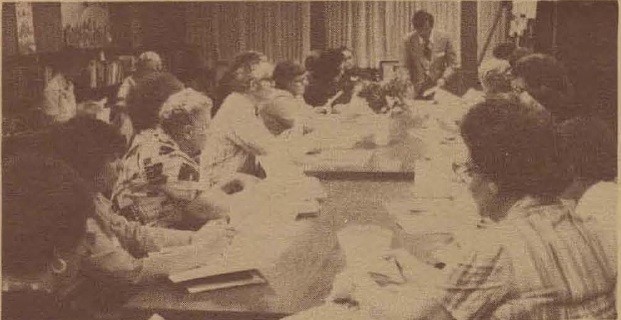
By 1977, the change was visible in both photographs and borrowing. The Nebraska Library Commission pictured a trustees’ workshop inside the remodeled grocery building donated by Mr. and Mrs. Norris Lallman. Its May 30 newsletter reported 546 items circulated in April 1977, compared with 98 in April of the previous year. The increase shows the strong response to the new setting. [5]
The library on Main Street
The library’s official description today places it at 128 North Main Street and lists more than 10,000 books, DVDs, public computers, Wi-Fi, digital books and audiobooks through Libby, and programs for adults and children. The City Council and Board of Library Trustees oversee its operation. Visitors can check the library’s website and online catalog for current services. [6]
The modern building photograph below belongs to this later chapter. Hooper’s library has changed locations and tools, while continuing the purpose residents organized around in 1913: making information and reading available close to home.