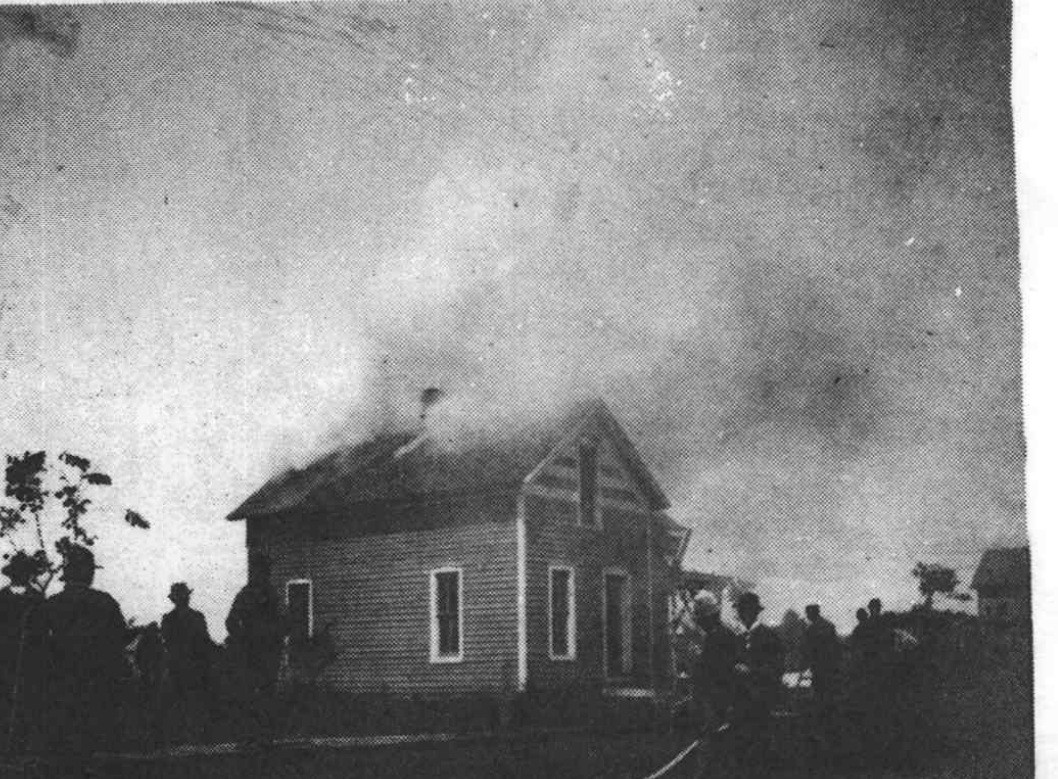
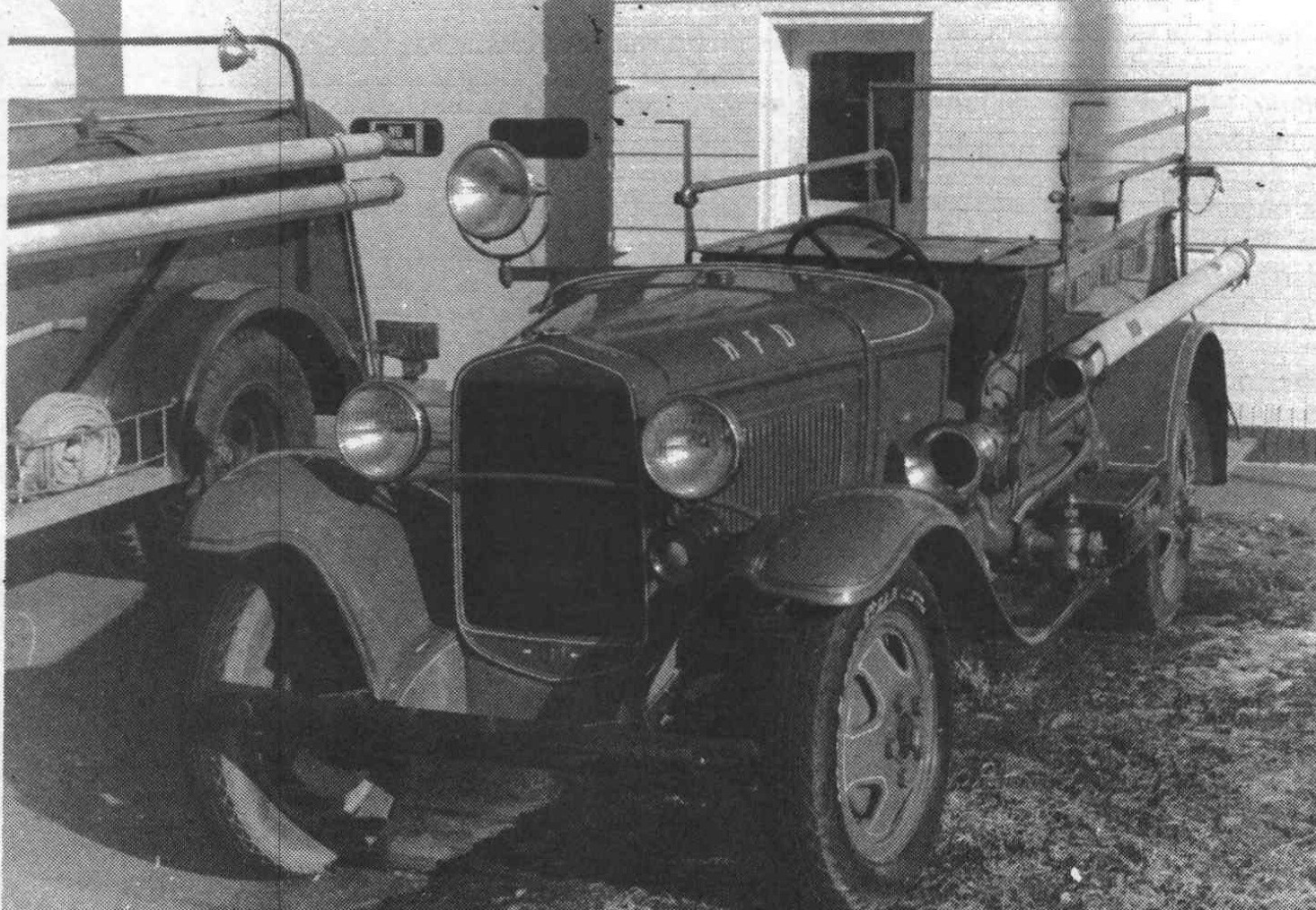
The photographs tell the change vividly: volunteers directing a hose at a burning building around 1900, a Model A carrying the town’s first pumper, and a fleet lined up outside the fire station decades later. Hooper’s fire service developed through new equipment, rural cooperation and the willingness of local people to train for emergencies. Rescue work eventually became an essential part of that service. [1]
Early volunteers and a town shaped by fire
Hooper’s destructive early fires made organized protection a practical necessity. At a 1952 firemen’s banquet, Mrs. H. T. Ring presented a history assembled with older residents. Herbert Ring recalled his family losing their jewelry store and living quarters in the 1890 fire. The retrospective connected that disaster with organizing a department using a hook-and-ladder vehicle and hand-drawn hose equipment, and named Charles Basler as its first chief. [2]
The department’s own 2026 history states that its printed records date to 1898 and records a 125th-anniversary celebration in 2023. These are useful milestones alongside the earlier recollections: the 1952 account describes volunteer organization following the 1890 disaster, while the modern department dates its documented anniversary tradition from 1898. A single unsupported founding date would obscure that distinction. [2], [5]
The centennial history describes the equipment that followed bucket brigades. A hose reel on wheels was pulled by a handle to the fire and attached to a hydrant. Later, an available automobile could tow the cart. Water pressure was considered reasonably good downtown, but service on the hills presented difficulties. Even a usable water system did not give every part of town the same protection. [1]
From chemical truck to a motorized pumper
One early vehicle carried two water barrels on a Ford Model T chassis. It was a chemical apparatus: soda and acid produced pressure to force water through the hose. The equipment represented an advance over hauling buckets, but it was very different from the pumps and tankers that followed. [1]
In 1931, a used Model A became the chassis for a pumper installed by the Peter Pirsch Company. According to the centennial account, it could pump more than 300 gallons per minute and carried hose, nozzles, an axe, a first-aid kit and a pike pole. A Dodge pumper joined the service in 1939 with an enclosed driver’s cab. The Model A remained useful, but pumping flooded basements after the 1944 disaster badly damaged it. Volunteers later restored it for parades and preservation. [1]
Equipment purchases also reflected how closely town and countryside depended on one another. The centennial history places the combination of the Hooper department and rural board in 1953, under the Hooper Rural Fire Protection District name. Studebaker apparatus became part of the fleet. The older Dodge, relieved of pumping duty, was converted into a supply truck carrying firefighting equipment and first-aid supplies. In that new role, it was an early step toward a dedicated rescue vehicle. [1]
Learning to answer medical emergencies
The move into rescue service required trained people as well as a truck. On November 1, 1962, the Sentinel reported that Ed Petersen, Jim Ott and Gene Tonjes had completed the University of Nebraska School of Medicine’s course in the immediate care of sick and injured people. Their completion brought Hooper’s total to eight. Win Hoefner, Harold Karl, Marv Marreel, Dale Sager and Pat Schlueter had finished the previous winter. The course addressed illness, injuries and mass casualties. [3]
A GMC van purchased in 1962 carried the name First Aid and Supply. It replaced the old Dodge as a supply and rescue vehicle. The centennial history describes additional highway-rescue instruction and a fifteen-week medical-school course attended by five members, illustrating the training underway before the full group of eight was reported in November. [1], [3]
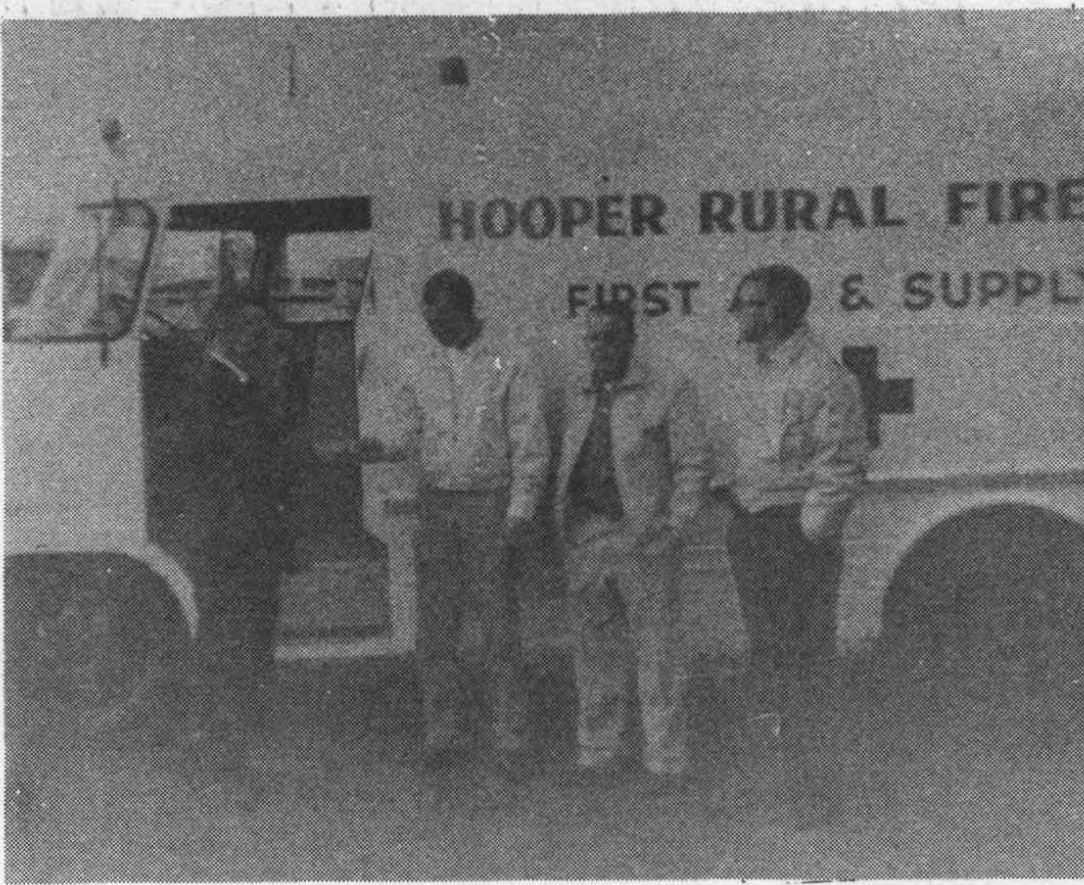
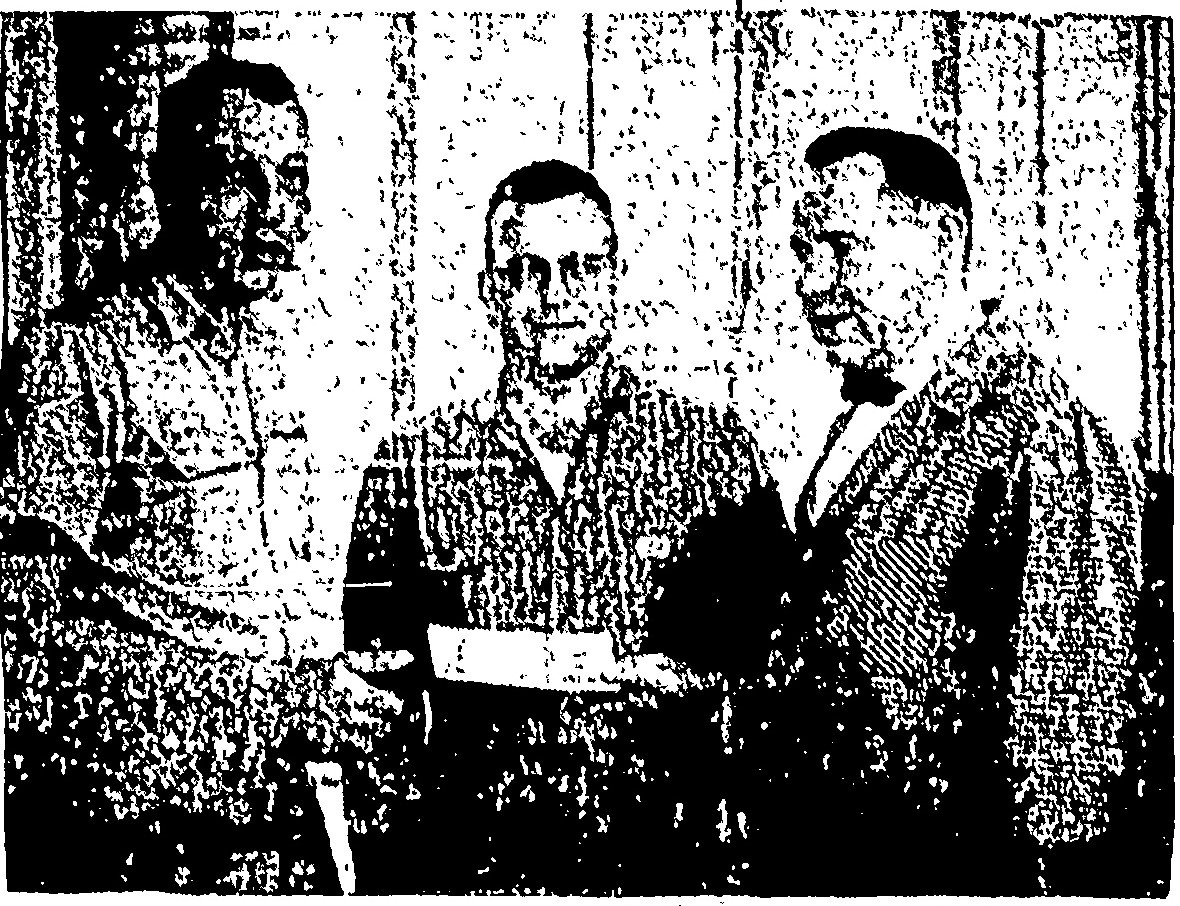
That December, the newspaper pictured Chief Ed Petersen and First Aid Captain Win Hoefner receiving an Ak-Sar-Ben contribution from Morris M. Payne. The $250 was intended to help equip the newly placed First Aid and Supply unit. A second photograph documented officials receiving title to the truck from Jim Ott of Begley & Sons. These reports place the van within an actual sequence of training, purchase and equipping, rather than treating it merely as an old vehicle in a photograph. [4]

Water for rural fires, shared equipment for everyone
Rural calls required a dependable supply of water wherever a fire occurred. The centennial history records a used Ford dump truck fitted with a 1,000-gallon tank in early 1960. It was an improvement in water-carrying capacity, although difficult to drive. In 1967, a 1,600-gallon tanker built by Smeal Manufacturing of Snyder replaced it. Smeal also built later pumpers on Dodge chassis. [1]
A 1975 purchase illustrates how the city and rural district combined resources. The rural board bought a new pumper designed for 500 gallons per minute; the City of Hooper paid the additional cost for a 750-gallon-per-minute pump and hose fittings suited to city mains. The book explained that the equipment served both rural and town fires under an agreement covering expenses, replacement equipment and insurance. [1]
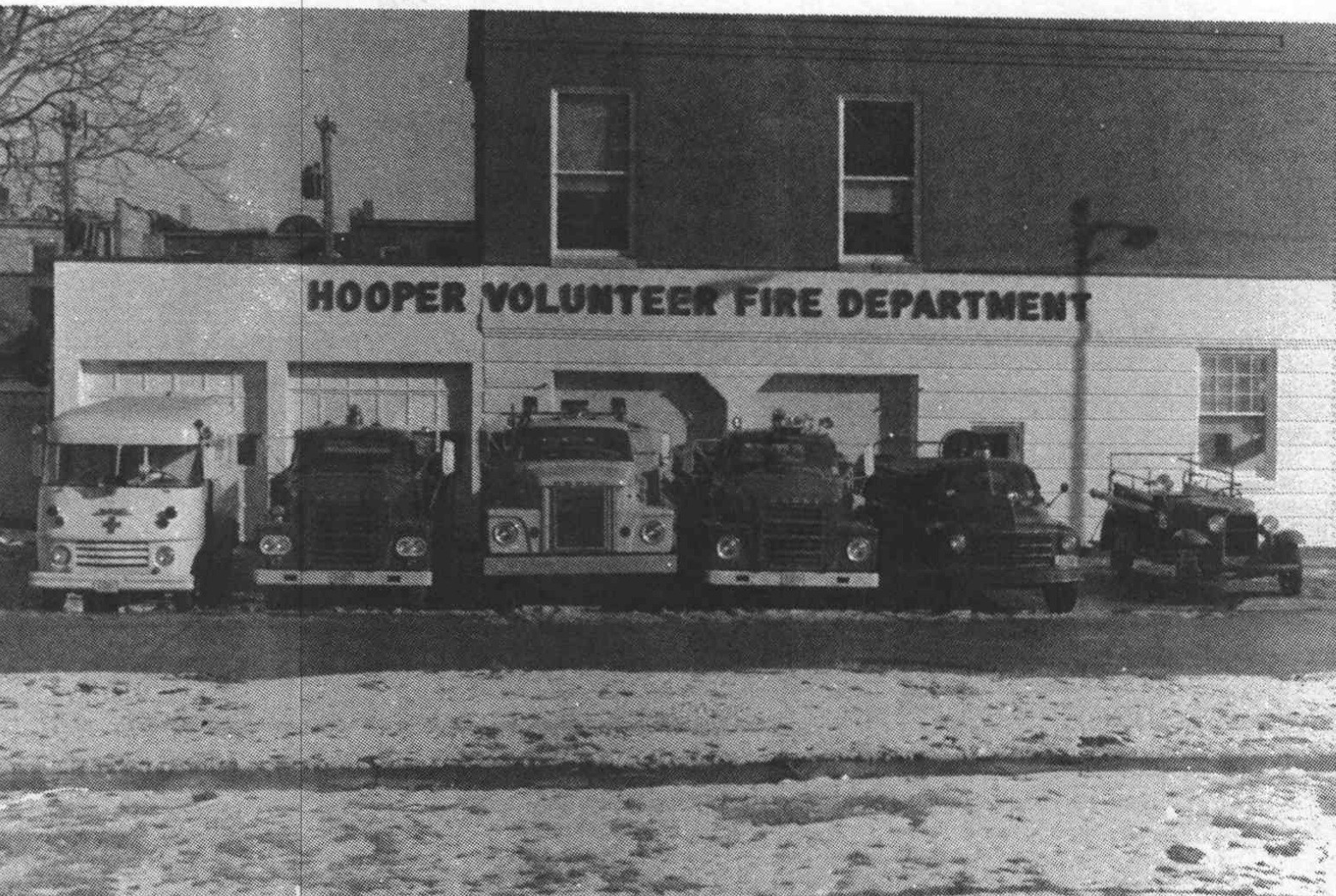
At the time of the centennial account, the department had twenty-one members, plus an auxiliary whose work included fundraising and communications. Volunteers had also purchased a two-way base radio using money raised through projects and gifts. Protective clothing, breathing equipment and continuing instruction were part of an increasingly demanding service. The book described a protection area of approximately fifty square miles and about 2,000 people; those figures belong to its 1976 snapshot. [1]
A continuing local service
The 150th history book carries the story forward. It dates the current station’s construction to 1981 and records thirty-seven active members responding to an average of 150–200 calls per year at the time its account was prepared. It also describes monthly meetings and regular training, with Brett Moeller as chief. Those are the department’s published 2026 figures, rather than a live staffing count. [5]
Across these generations, the recurring pattern is practical cooperation: equipment bought together, skills learned after work, benefits organized by neighbors and apparatus adapted as needs changed. The Model A, the rescue van and the station lineup preserve different chapters of that work. Together they show how a local fire company grew into a service prepared for far more than a burning building.