Forty members of Hooper’s new American Legion post met in an upstairs clubroom on January 24, 1920, with a practical problem: furnishing and remodeling it would take $600. According to the town’s centennial history, they subscribed and paid the entire amount before the meeting ended. It was an early example of the work that would make veterans’ organizations part of everyday life in Hooper: finding a place to gather, raising the money to maintain it, and putting that shared effort to use.[1]
More than a century later, Hooper’s Legion and VFW names still appear on Main Street and in their state organizations’ records. Their histories include remembrance and military service, but also baseball, youth programs, meals, parades and children’s parties. The American Legion, its Auxiliary, the VFW and the VFW Auxiliary each have their own story.[2][3][7][8]
The Legion begins in 1919
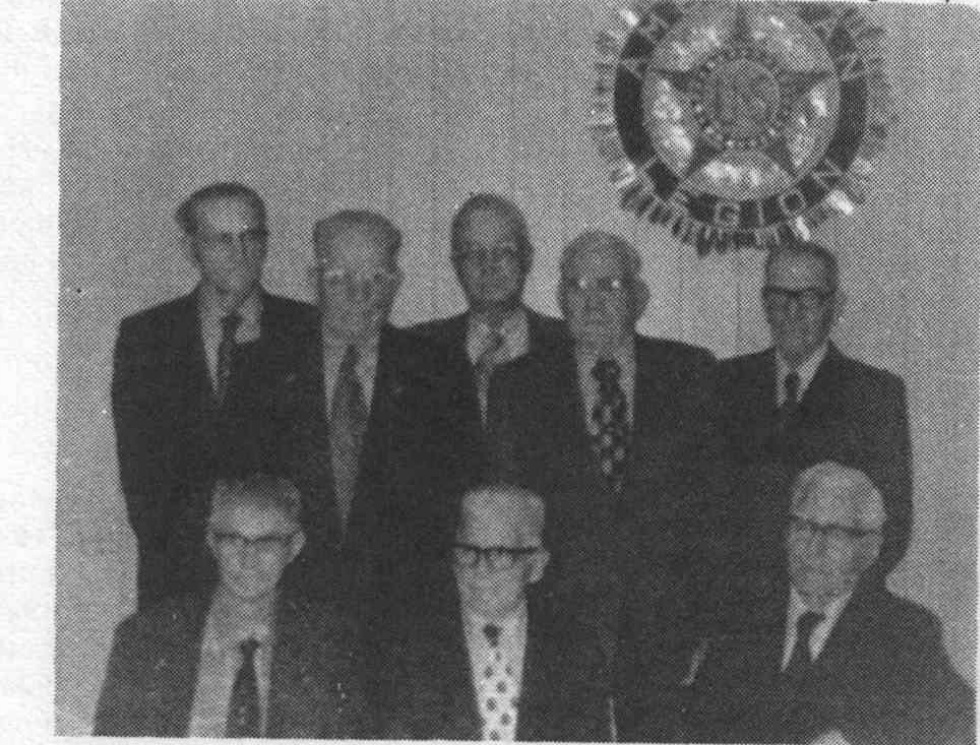
In September 1919, a newspaper notice invited Hooper’s former soldiers, sailors and marines to City Hall on Sunday, September 14, to complete the organization of an American Legion post. The local history says returning servicemen had been signing its petition since Decoration Day. Thirty signed the charter when it arrived, and Dr. W. H. Heine became the first commander.[1]
They chose the name Cornelius Tillman Post 18. Cornelius H. Tillman had enlisted at Oberlin, Ohio, on June 13, 1917, and served with the United States Ambulance Service. He died of pneumonia on January 24, 1918, a week before his twenty-second birthday. His name gave the new organization a particular Hooper life to remember, alongside the experiences of the veterans who returned.[1]
The post first met in the Stock Show Buildings, where members displayed war relics. By January 1920 they had rooms above Frank Tillman’s soft-drink parlor on the east side of Main Street. The money raised at that first clubroom meeting paid for improvements; the account describes paneled walls and, later, a shower bath.[1]
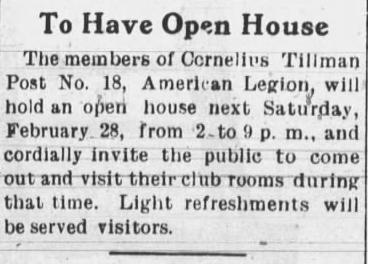
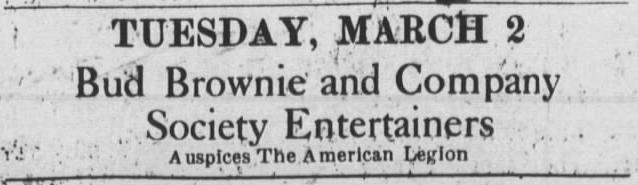
A contemporary invitation shows the post opening those rooms to the town. The February 26, 1920, Sentinel announced a public open house on Saturday, February 28, from 2 to 9 p.m., with light refreshments. The same page advertised Bud Brownie and Company at the Amusu Theatre on March 2 under American Legion auspices. Both notices show what the new post was arranging; neither is a report written after the event.[16]
Another move followed in January 1922, to rooms upstairs in the Dodge County Bank building on the west side of Main Street, previously occupied by the Community Club. An open house on March 18 introduced that new home. These successive locations matter: the Legion’s early rooms should not all be identified with the storefront people recognize today.[1]
A hall built through volunteer work
The 1976 history describes another major effort beginning in 1968, when Al Croson, Don Schwab and Clarence Heywood led remodeling of a new Legion home. Members improved the front, added paneling, and worked on the kitchen and bar. Several successive commanders helped carry the project through. In November 1973, the post celebrated by burning its mortgage.[1]
The anniversary book published in 2026 also associates the Legion’s Main Street premises with 1968, within its history of downtown businesses. Earlier uses listed there include Malloy Paint and the Amusu Theatre. That is a history of a building’s occupants; the post itself had already existed for nearly fifty years when the 1968 work began.[4]
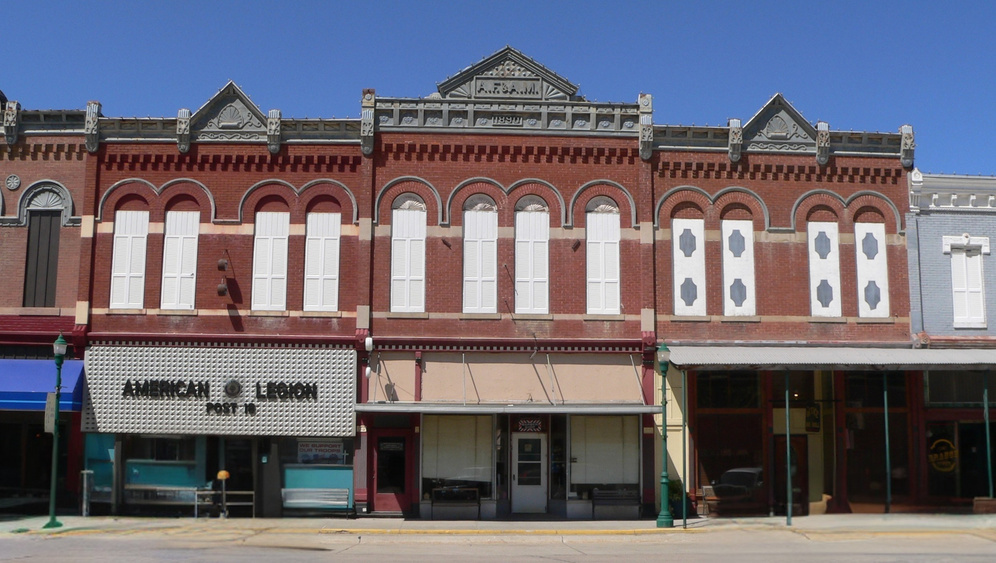
Not every detail of post life was solemn. The centennial account remembers Maude, a mule the Legion bought from a local owner and took to conventions and meetings. Such small stories belong beside the formal lists of officers: they show the fellowship that helped keep an organization going between its public duties.[1]
The Auxiliary: a beginning in 1922 and a return in 1926
Hooper’s American Legion Auxiliary began organizing as the post settled into its 1922 rooms. A meeting of prospective charter members took place on April 7, with Lucile Cooper acting as president. The first regular meeting followed on April 20, and the charter was granted on April 21. The centennial history records sixteen charter members.[1]
That first effort did not continue uninterrupted. Although membership reached thirty-nine during the first year, the unit disbanded. It reorganized on May 10, 1926, with twenty-six new members signing and Mrs. Roy Bott elected president. Both dates belong in its history: 1922 marks the original charter, while 1926 marks the reorganization.[1]
The work described in the centennial account included poppy activities, children and youth programs, and Girls State. Those interests remained recognizable fifty years later. In her contribution to the 2026 anniversary book, Unit 18 vice president Julie Totten described support for the poppy program, Girls State delegates, veterans’ programs, Logan View educators and staff, and patriotic observances.[1][2]
Her account also records the practical ways members raised funds: the Legion and Auxiliary’s soup-and-pie event, concessions at bingo, and “Christmas Revisited,” where donated new and lightly used holiday decorations were offered for a free-will donation. These are activities reported for the anniversary book, rather than a schedule of upcoming events.[2]
Coffee and sandwiches during the 1944 flood
The Legion rooms became a relief station before the June 1944 flood reached Hooper. The Sentinel reported that Auxiliary members served workers coffee and sandwiches there until danger forced them out. Their work then joined the Red Cross canteen in the Pfeiffer garage near the hotel. The paper named canteen chairman Mollie Schiessler and Auxiliary chairman “Babe” Bott, and credited undamaged households with supplying food. In that emergency, the hall and the people who used it became part of Hooper’s response.[13]
Read more in Coffee, Soup and Shelter: Hooper’s Flood Relief Effort.
The VFW after World War II
A second veterans organization took shape after World War II. The centennial history dates the organization of Hooper VFW Post 7616 to May 27, 1946, with sixty-two former servicemen. Charles R. Richards was its commander; other initial officers included John H. Nelson, C. J. Heywood and J. Wesley Pace.[1]
A contemporary newspaper supplies the post’s name and evidence of its Auxiliary. On October 27, 1949, The Hooper Sentinel announced a Halloween party hosted by the Auxiliary of Atomic Bomber Post 7616. Children ages six through twelve from Hooper and its trade territory were invited. The plans included a parade, games, refreshments and a costume prize.[3]
The notice specifically changed the location from City Hall to the VFW clubrooms and said the Commercial Club had voted $20 to help with expenses. It captures the Auxiliary’s role in community life only a few years after the post organized, and the cooperation between local organizations. Because it is an advance notice, it establishes the plans for that evening rather than documenting how the party turned out.[3]
Modern records identify a different number: David Hargens VFW Post 10535. Dodge County’s approved 2024 property-exemption list names that post as the holder of a veterans’ meeting place in Hooper. The county assessor identifies its property at 106 North Main Street, and the Nebraska VFW’s official dashboard lists Post 10535 in Hooper.[5][6][8]
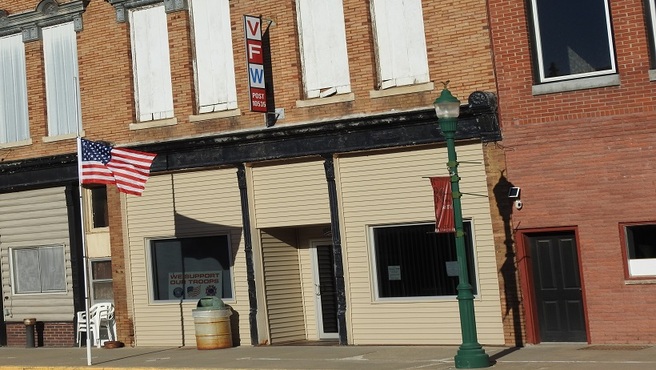
The 2026 book’s downtown list places VFW Post 10535 under 1993 at this storefront. It does not establish the post’s charter date. Nor do the sources so far establish whether Post 7616 closed, merged, changed its number, or had some other relationship to Post 10535. The older post and Auxiliary can be documented; their organizational connection to the modern post remains an open question.[1][3][4]
Post 10535 in Winslow, and its Auxiliary in 1993
The later post’s number appears before the 1993 Main Street listing. In November 1981, the Scribner Rustler advertised a veterans-benefits information meeting at the Winslow auditorium sponsored by “Winslow Post 10535.” Veterans, widows, children and other interested residents were invited. This gives the post a documented Winslow connection by 1981; it does not supply its charter date or establish a relationship to Post 7616.[17]
The Hooper Sentinel also documents an Auxiliary to Post 10535 in 1993. Its May 6 report records a Post Prom donation and co-sponsorship of the Voice of Democracy contest with the post. A May 27 account of the Auxiliary’s May 20 meeting records support for a veterans camp program and scholarships, along with seven members volunteering for the community recycling project. These dated notices extend the Auxiliary’s documented story beyond the older Atomic Bomber organization, while leaving its present status unconfirmed.[18][19]
Remembering service and supporting the next generation
The post also appears in plans to preserve an older local history. In June 1928, the Sentinel named Cornelius Tillman Post 18 as a participant in the proposed July 5 dedication of the Jalapa monument south of Hooper. The announced program included flag ceremonies, early settlers’ recollections and a history reading. Jalapa’s story explains what that marker commemorated.[15]
Youth sponsorship already had a place in that work in 1951. The September 13 Sentinel reported that Girls State and Boys State delegates spoke to a joint Legion–Auxiliary meeting after a week in Lincoln. They described a better understanding of government and showed their study materials. The newspaper also noted support from other local organizations.[14]

Some Hooper veterans belonged to both organizations. Donald K. Schwab, listed as the Legion’s commander for 1945–46 in the centennial history, is one example. The Congressional Record tribute following his posthumous Medal of Honor in 2014 specifically names his memberships in Cornelius Tillman American Legion Post 18 and Hooper VFW Post 10535. It also recalls his civilian service on church and school boards. His example connects military remembrance with the ordinary work of a community.[1][9]
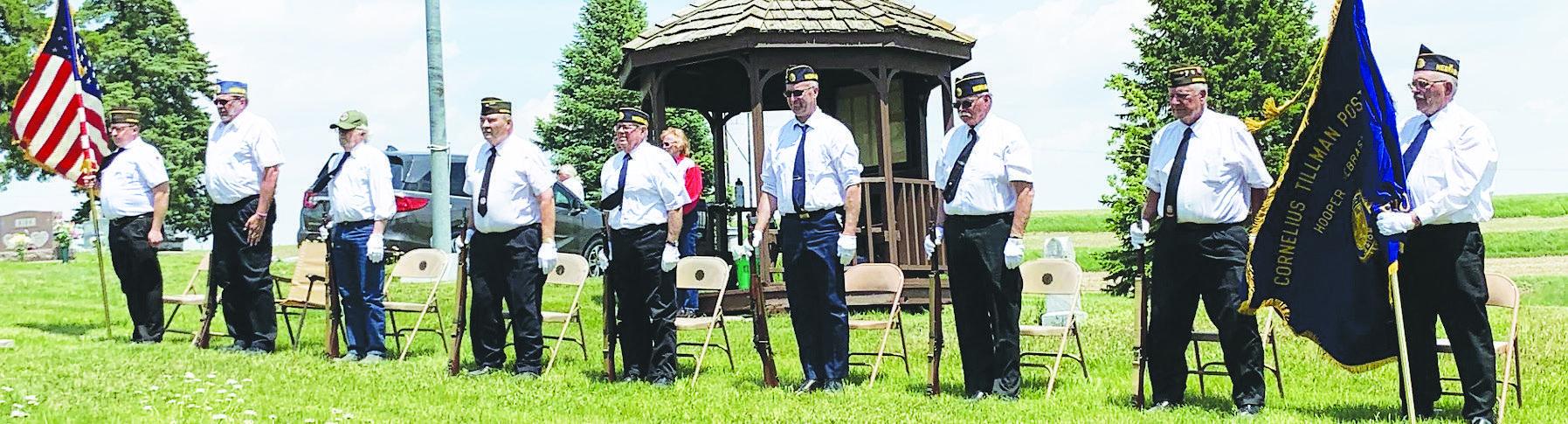
The Legion’s own account in the 2026 anniversary book describes military funeral honors, color guards, flags on Main Street and the hilltop, and the Memorial Day program at Hooper’s public cemetery. Members place flags and crosses at individual graves and set up the Avenue of Flags. The same account lists joint Legion baseball sponsorship with Scribner, a Boys State delegate from Logan View, and scholarships for graduates of post members.[2]
The two posts also appear together in a dated newspaper photograph. The June 1, 2023, Oakland Independent identified Cornelius Tillman American Legion Post 18 and David Hargens VFW Post 10535 performing military duties at Logan Cemetery’s Memorial Day service. It is a record of the organizations serving together outside Hooper, distinct from the program at Hooper’s public cemetery.[12]
Remembrance can also carry Hooper’s names far from home. The August–September 2025 Nebraska Legionnaire pictured Post 18 member Gary Rold at an event in San Diego honoring Vietnam veterans killed in action. Its caption identified the yellow ribbon he held with Hooper native David Hargens, who was killed in Vietnam.[10]
The Nebraska Legion’s 2025 directory lists Hooper Post 18, while the VFW department’s dashboard, checked October 13, 2026, lists Hooper Post 10535. Unit 18’s contribution to the anniversary book documents the Legion Auxiliary’s work at the time of publication. Those sources establish identifiable organizations and recent activity; they do not establish a current Hooper VFW Auxiliary or a present-day meeting schedule.[2][7][8]
Help fill in the VFW’s missing chapter
The most useful missing records would be the charters, minutes or dated photographs of Atomic Bomber Post 7616 and its Auxiliary, and records explaining the beginnings of Post 10535 and its David Hargens name. A document recording a closure, merger, charter or move could settle questions that a storefront photograph cannot. If your family has one, share it with Celebrate Hooper, along with what is known about its date and origin.