
Hooper and the Flood of 1944 · Part 5 of 5
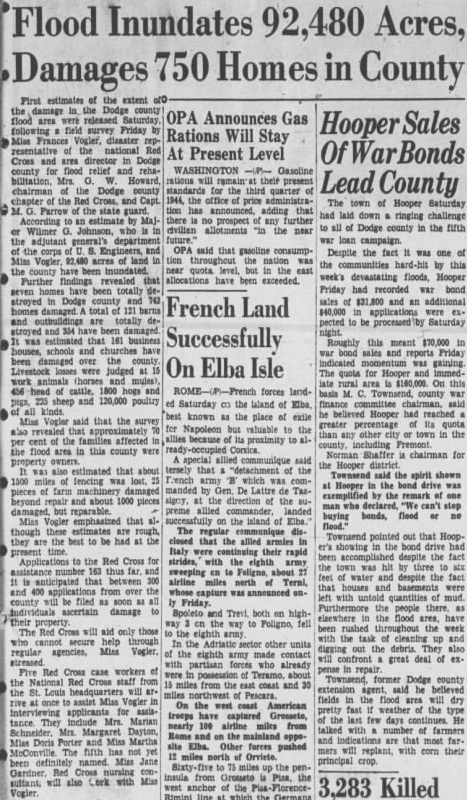
The June 17 Fremont Guide and Tribune placed two kinds of news on the same front page: enormous flood losses across Dodge County and a report that Hooper led the county in war-bond sales. Only days after residents had left their homes for higher ground, the town was also participating in the Fifth War Loan campaign. [E]
Two emergencies on one front page
The flood headline reported 92,480 acres inundated and 750 homes damaged in the county. Those were preliminary county figures, not a damage count for Hooper alone. Nearby, the Hooper bond story described sales moving ahead despite the disaster. Reading the items together preserves a fact that can disappear when we isolate local history from wartime life: the flood did not pause the war or its demands on communities. [E]
Hooper reaches its quota
A week later, the June 24 issue reported Hooper as the first town in the county to go over its Fifth War Loan quota. Chairman Norman Shaffer’s reported total was $167,562.50 against a district quota of $165,000. The paper said flood damage had slowed the drive and that volunteer workers would continue through the rural areas around Hooper. The district figure should not be read as money raised solely within the village limits. [F]
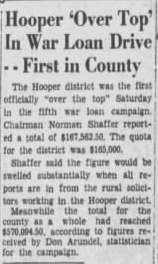
The article gives a campaign total, not a list of individual contributions or an account of how families balanced rebuilding expenses with bond purchases. It would be easy to supply motives that the record does not establish. What the report does show is that organized fundraising continued during flood recovery, and that the campaign extended into the surrounding countryside. [F]
The flood edition still carried a war appeal
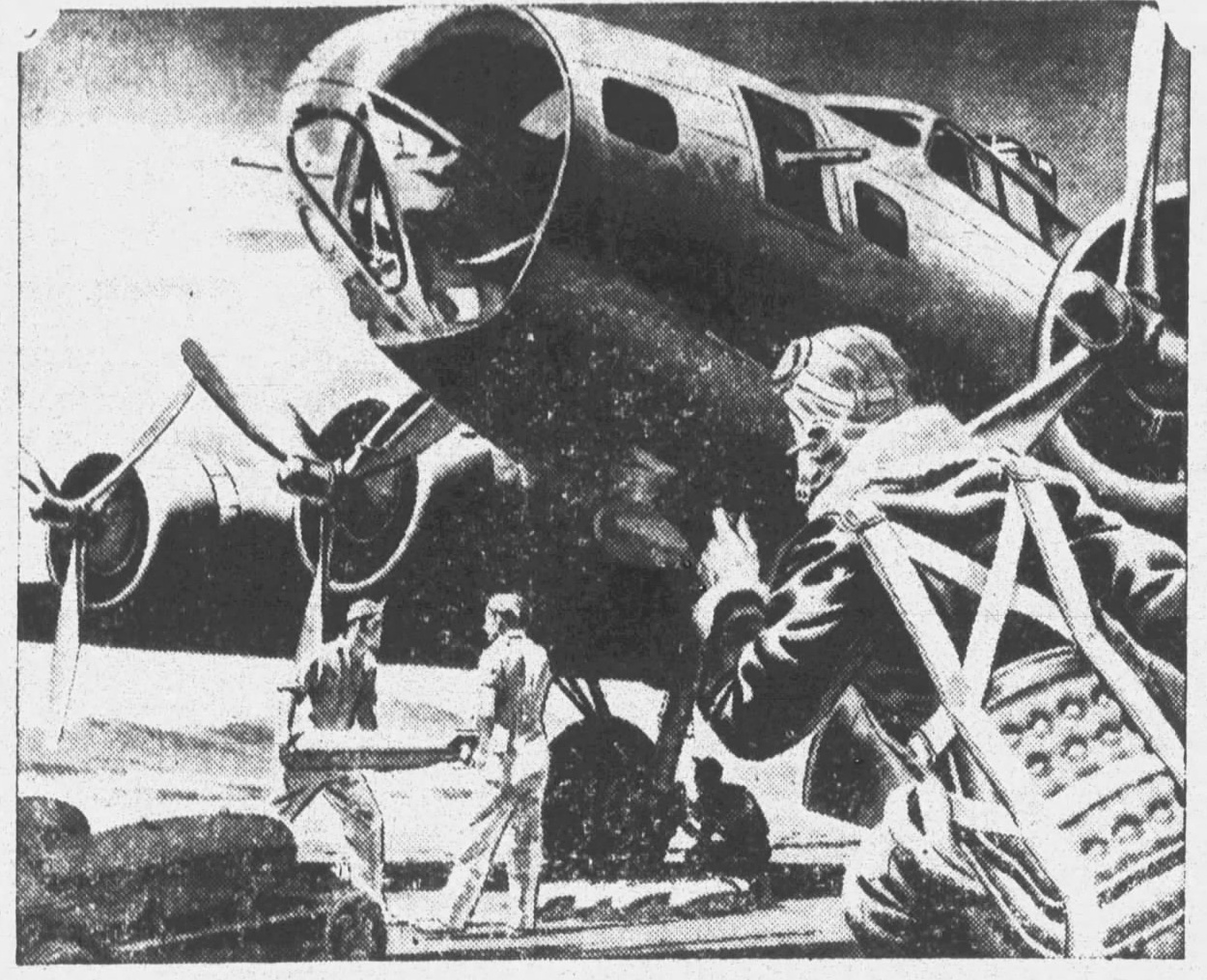
Hooper’s own newspaper offers another example. Its June 15 issue depended on help from the Perkins job shop in Fremont because flood damage had disrupted the Sentinel’s equipment. Yet its fourth page carried a Fifth War Loan advertisement built around an airman’s fifty-fifth mission. Local disaster reporting and a national appeal for bond purchases reached readers in the same small edition. [A][I]
The comparison makes this a distinct part of Hooper’s flood history. One set of newspaper columns asks how to clear basements and repair homes; another reports the bond drive. Together they show a community carrying on with wartime obligations while dealing with an immediate disaster at home.