Hooper and the Flood of 1944 · Part 2 of 5
As floodwater entered Hooper’s telephone office, the operators kept working to spread the alarm. The town’s centennial history says they stayed until they had to be carried out. On the next page, it preserves a name: Anna Wagner, the operator on duty. [1, pp. 41–42]
The flood of June 1944 damaged both Hooper and Uehling. Its story appears in several places in Centennial History of Hooper, 1876–1976: in the telephone company’s struggle to restore service, in a rural mail carrier’s losses, and in the design of a building erected almost twenty years later. Read together, those accounts show how people kept helping one another when familiar routines broke down.
Keeping the warning moving
The telephone exchanges were already undergoing rebuilding when the flood struck. Wartime shortages of workers and materials had complicated the work, and trained employees had been drafted. After the Hooper and Uehling exchanges were sold to the West Iowa Telephone Company of Remsen, Iowa, crews began laying cable and rebuilding the system. The flood interrupted that progress and ruined much of the central-office equipment. [1, p. 41]
The centennial account does not give us a transcript of the warnings or a minute-by-minute account of the operators’ departure. It does record that they remained at their posts as water entered the office. Its brief acknowledgment of Anna Wagner makes a large disaster personal: behind the telephone system was someone who stayed to help get the word out. [1, pp. 41–42]
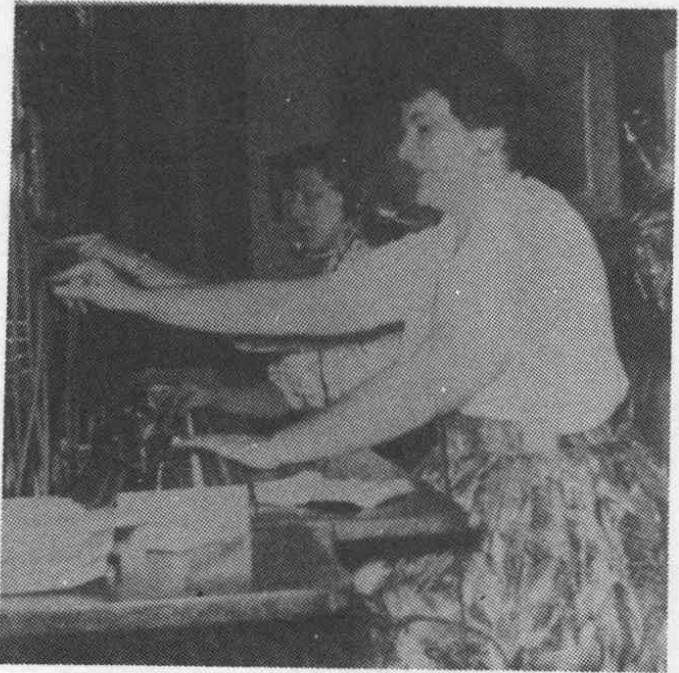
A contemporary report adds a stark detail. On June 22, The Hooper Sentinel reported that the operators had kept the switchboard working until several feet of water entered the plant, and that they were taken out by boat. It did not name them; Anna Wagner’s identification comes from the later centennial history. [3, p. 1]

A telephone station on the hill
The centennial history records a fourteen-day suspension of regular telephone service. That did not mean every connection remained silent for two weeks: an emergency telephone station on the hill south of Hooper restored communication with neighboring towns and long-distance points while repairs proceeded. [1, p. 41]
Replacement switchboard equipment traveled by air from Rochester, New York, to Omaha. From there, it was picked up by car, brought to Hooper and installed. A lost carload of poles had to be replaced, and additional crews came from Iowa to help rebuild the outside plant. [1, p. 41]
Once the water receded, local employees—including office workers and operators—worked almost around the clock on the cleanup. The book singles out lineman Joe Tillman for his work restoring service after the flood. Equipment could be shipped in, but putting the system back together still depended on people cleaning, repairing and reconnecting it. [1, pp. 41–42]
The newspapers complicate the repair timeline. The June 15 Sentinel reported that telephone service was still out while a long-distance connection was available at the central office. Its June 22 issue said local service had resumed early that week after switchboard repairs arrived from New York. That appears earlier than the book’s fourteen-day account; the sources may describe different stages of restoration, but they do not establish that explanation. [2, p. 3] [3, p. 1]
When the mail route helped its carrier
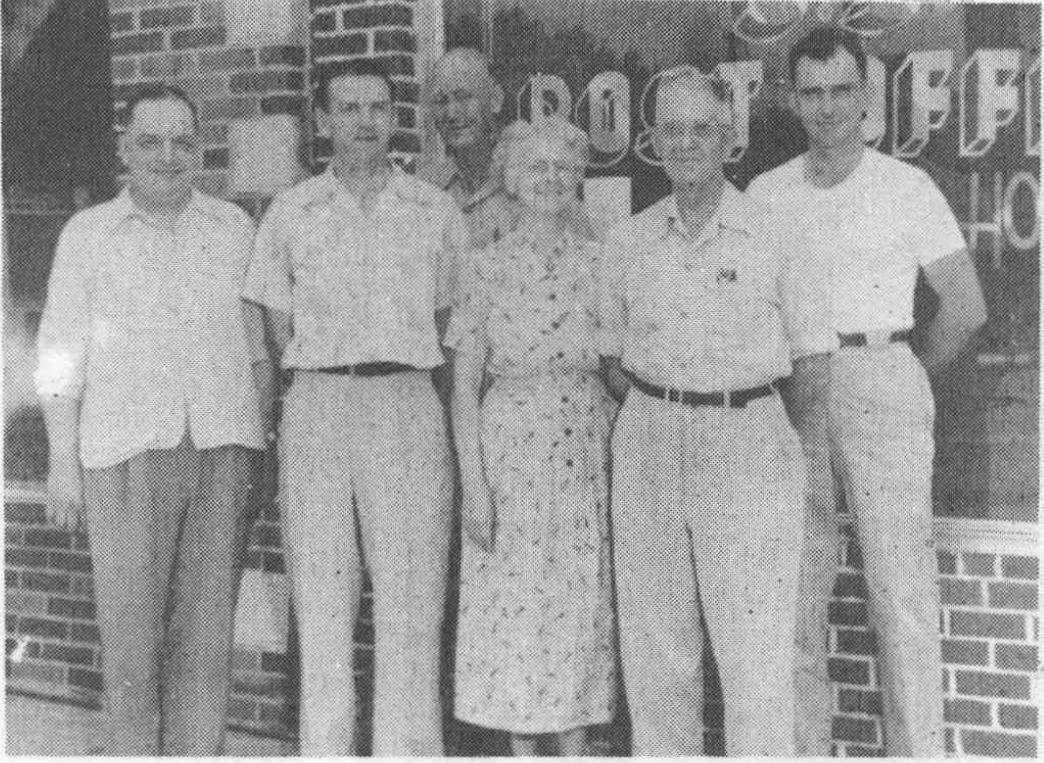
Elsewhere in the book, the same flood appears in the story of Oliver “Ollie” Nelson. He carried mail on Rural Route 1 for thirty-six years, from 1920 to 1956. The centennial history remembers his Model T Ford, his treats for children and deliveries so dependable that farmers said they could set their clocks by him. [1, p. 9]
In 1944, the Nelson family lost all of their first-floor and basement possessions to the flood. People on his route north of town responded with food, clothing, shoes and spare furniture. The carrier who had spent years bringing something to their homes now received help for his own. [1, p. 9]
There is no dollar total for that assistance in the account. What survives is a list of practical necessities and the connection between a rural route and the family who served it. That small passage adds something the telephone company’s repair history cannot: a glimpse of recovery inside a household.
The June 15 Sentinel offers a glimpse of the route returning to work: it reported that Nelson on Route 1 had made partial deliveries that Thursday. The brief item gives a contemporary point of contact with the family story preserved in the centennial book. [2, p. 3]
A memory built into the next telephone office
The flood’s effects lasted beyond the immediate repairs. When the telephone company prepared to replace manual switching with dial service, the new building was designed to keep future floodwaters out. The centennial history says the devastation of 1944 remained on F. W. Daubendiek’s mind; he had been in Hooper when the flood struck. The new dial equipment went into operation on November 19, 1963. [1, pp. 42–43]
That is one way a town carries a disaster forward: in the people it remembers, the help neighbors give, and the choices made when it is time to build again. Hooper’s centennial book preserves all three, from Anna Wagner at the telephone office to the families bringing furniture to Ollie Nelson.
Does your family have a dated photograph, letter or memory of the 1944 flood? Share it with the Hooper History Project. Names, locations and original captions can help connect those records with the stories preserved in the book.
The flood in neighboring Scribner
Nearby Scribner also preserves a visual record of the June 1944 flood. Musbach Museum’s Flood of 1944 collection brings together local recollections and newspaper material. The aerial photograph below shows Scribner after the flood, looking north; its original caption identifies the agriculture building at the fairgrounds in the lower right.

Musbach Museum’s accounts add a neighboring community’s perspective to the Hooper stories preserved in the centennial book. Readers can explore its Museum Muses posts for more Scribner history.
Historical notes
This article combines the 1976 centennial history with contemporary newspapers and an official state report. The book supplies Anna Wagner’s name, the Nelson family’s assistance, and the later telephone-office history. The newspaper reports do not independently name the operators. Dates and the telephone-restoration timeline differ as explained above. The Hooper photographs show 1953 and 1955; the museum’s flood photograph shows Scribner. None is labeled as a photograph of Hooper during the 1944 flood.
Sources
- Centennial History of Hooper, 1876–1976, printed pp. 9, 41–43.
- The Hooper Sentinel, June 15, 1944, “Hooper and Area Hit By Damaging Flood Waters,” p. 1, p. 2, p. 3.
- The Hooper Sentinel, June 22, 1944, p. 1, “Aftermath—A Flood Resume.”
- Musbach Museum, “The Flood of 1944”, including the Scribner aerial image credited to Omaha World-Herald.
- Fremont Guide and Tribune, June 24, 1944, p. 1, “Seek Outside Aid For Flood Cleanup.”
- Fremont Guide and Tribune, September 23, 1944, p. 8, “Hooper Library Survives Flood.”
- Nebraska, Report of the Adjutant General, 1943–1944, “Elkhorn Valley Flood,” printed p. 82.