
Hooper’s telephone history is still part of everyday life. Today, WesTel Systems lists Hooper, Uehling and Winslow among the communities it serves. Its connection to Hooper reaches back to 1943, when the local company came under the control of W. H. Daubendiek and became connected with West Iowa Telephone. The WesTel name followed in 2001, bringing West Iowa Telephone, Hooper Telephone and MidlandsNet under one brand.28, 31, 32
Long before that shared name, Hooper residents organized a telephone company of their own. In 1901, they elected officers at the Dodge County Bank, built a system of poles and wires, and arranged for Charlie Hoffman to house the central switchboard in his restaurant. The small exchange soon outgrew its first room, linking more homes, Main Street businesses and surrounding farms.4, 15, 17, 11, 22
The story follows the people who made those connections possible: Hoffman and the first directors, longtime manager Marion E. Shipley, operators who worked through the 1944 flood, and crews who rebuilt the lines. Their work connects the company’s Main Street beginnings with the dial telephones and broadband that followed.1, 24, 26, 28
Updated October 20, 2026, with the revised company timeline and new information about the Hooper office’s 1999 closure.
Explore the article
Company timeline at a glance
- 1901: Hooper residents organized the company. Its charter set March 1 as the start of legal existence, the state recorded the filing April 19, and a July newspaper notice placed completion of the central connections on July 13.4, 5, 21
- 1902: The growing exchange announced a move from C. Hoffman’s restaurant to a room formerly occupied by Hecker & Son, with M. E. Shipley taking charge.11
- 1914: Hooper Telephone purchased the Uehling exchange, according to the centennial history. A January 1915 state order confirms that it operated both exchanges.1, 30
- 1930s–early 1940s: Subscriber numbers declined during the Depression. Wartime military service and industrial jobs later drew workers away from the telephone system.1, 31
- 1943: W. H. Daubendiek acquired a controlling interest, beginning the West Iowa connection. Hooper Telephone continued under its own company name.31, 32
- 1944: Floodwater damaged the system. Operators kept working until rising water forced their evacuation by boat.26
- By 1947: Rebuilding and modernization had replaced more than 800 miles of line wire, according to the centennial history.1
- 1963: Hooper converted from manual to local dial service in stages. The project had been announced in 1962 with an estimated $145,000 in additional investment.44, 34, 35
- 1965: The company announced December 5 as the planned start of direct long-distance dialing, a separate improvement from local dial service.45
- 1967: The company reported more than 1,000 telephones in service and began planning underground private lines for rural customers.1
- 1976: The rural underground private-line project was nearing completion when the centennial history was written.1
- 1995–1996: WesTel’s corporate history dates cable television to 1995 and internet to 1996. A contemporary newspaper dates internet service in Hooper Telephone’s territory to 1995; the accounts differ on the start year.28, 46
- 1999: The Hooper office closed, as former office manager Dave Nilles confirmed in an October 20, 2026 email forwarded by Melissa Lanzourakis. Telephone service in the community continued.49, 28, 48
- 2001: West Iowa Telephone, Hooper Telephone and MidlandsNet came under the shared WesTel Systems brand. The name change did not itself merge the companies.28, 47, 48
- 2011: WesTel’s company history marks the start of fiber-to-the-home services. It does not provide installation dates for individual Hooper addresses.28
- 2019: Dodge County recorded WesTel buried-fiber installation agreements in parts of five townships, including Hooper Township.38
- 2021: The state granted the company a waiver of the public-payphone requirement after it reported six years without in-box coin collections at its three stations.39
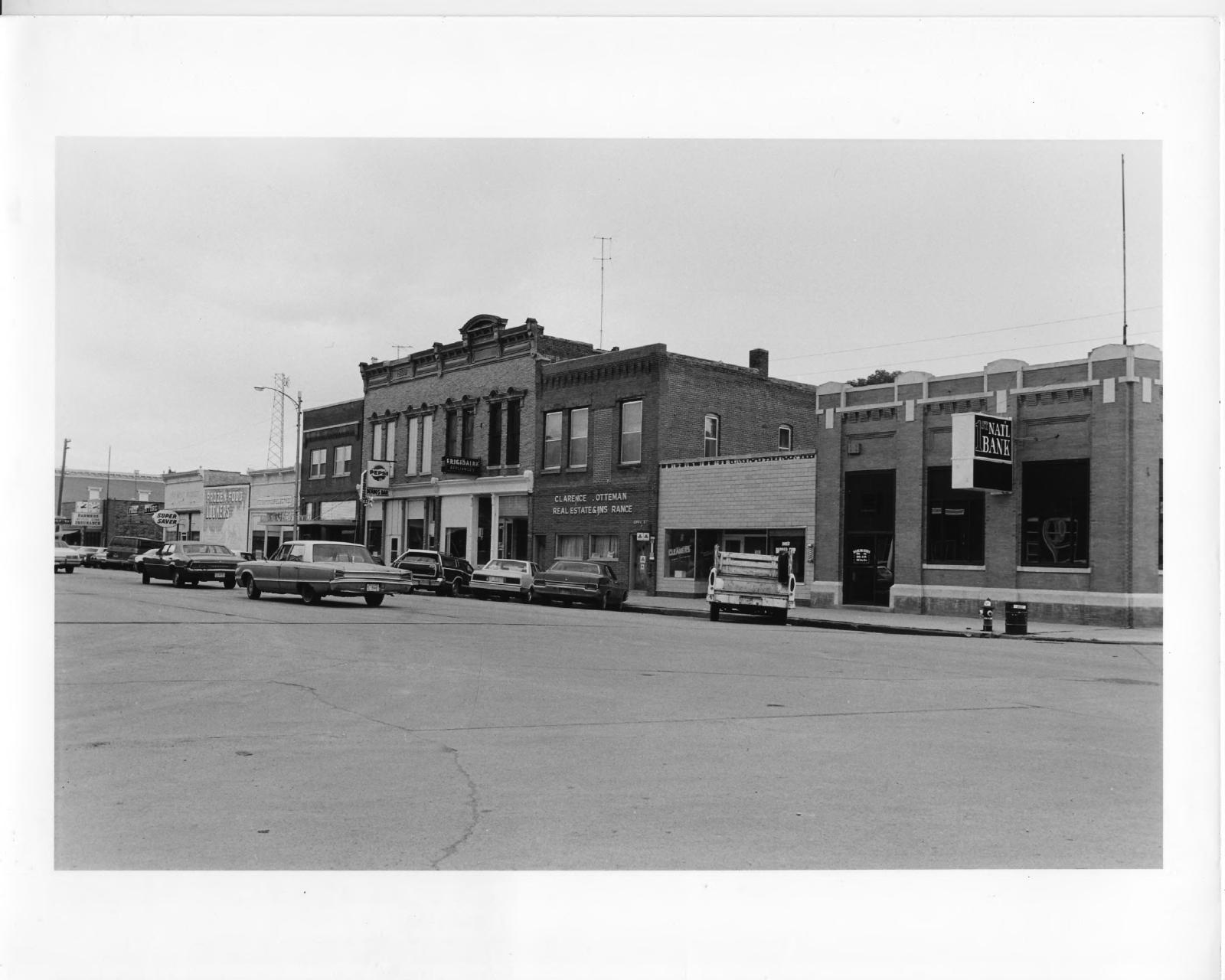
1901: Hooper builds its own telephone company
Hooper’s new telephone company took shape in meetings at the Dodge County Bank in February 1901. Subscribers adopted articles of incorporation and bylaws, then elected directors. The articles set March 1, 1901 as the beginning of the corporation’s legal existence; the state recorded their filing on April 19. Those were steps toward opening a working telephone exchange, which still required equipment, lines and someone to run the switchboard.4, 5
Founding dates, capital and the company’s charter
The company was authorized to build and operate telephone equipment in Hooper and the surrounding towns and countryside. Its articles provided for $50,000 in authorized capital, divided into $25 shares; the amount actually paid in would depend on subscriptions. The February meetings, March commencement and April filing describe the company’s organization, not the day service began.14
The first officers reported by the Hooper Sentinel were T. W. Lyman, president; B. Monnich, vice president; J. Howard Heine, secretary; Jerry Denslow, treasurer; and M. E. Shipley, general manager. Shipley would help guide the company for nearly four decades.4, 1

Read the founding meeting report and transcription
The 1976 centennial history names E. O. Spielberg as the initial president. The February 28, 1901 newspaper places Spielberg among the directors and names Lyman as president. This article follows the contemporary report for that first election.4, 1
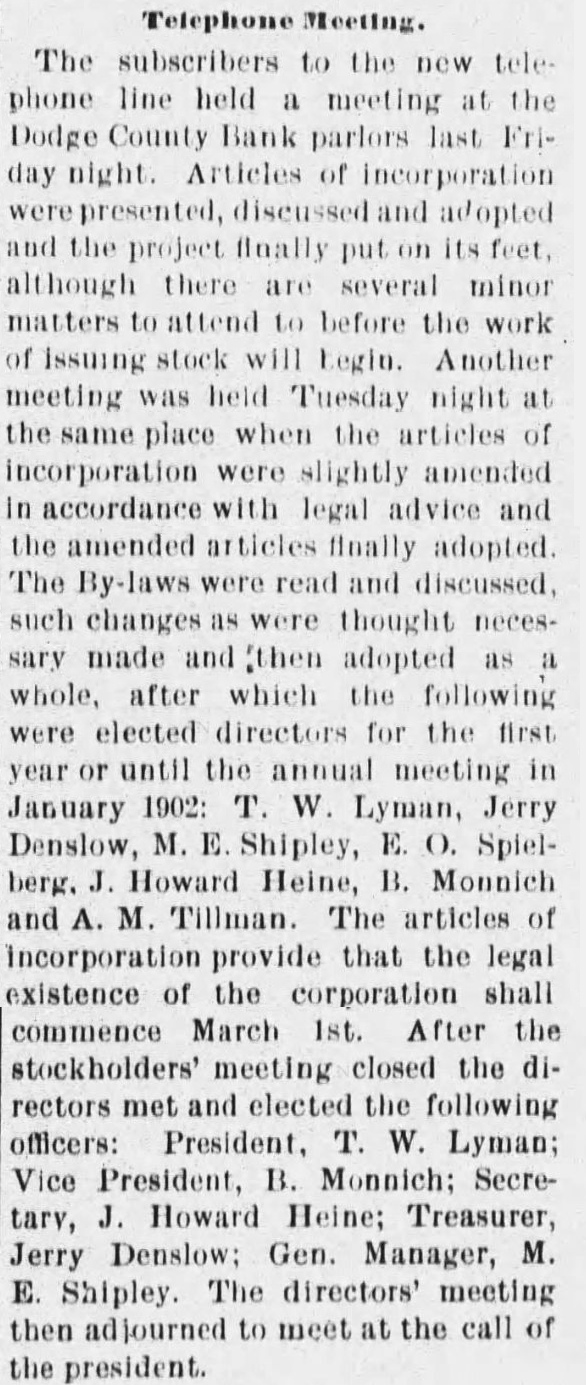
Typed transcription
Transcribed from the February 28, 1901 original. Line-break hyphenation has been joined; the wording is retained.
The subscribers to the new telephone line held a meeting at the Dodge County Bank parlors last Friday night. Articles of incorporation were presented, discussed and adopted and the project finally put on its feet, although there are several minor matters to attend to before the work of issuing stock will begin. Another meeting was held Tuesday night at the same place when the articles of incorporation were slightly amended in accordance with legal advice and the amended articles finally adopted. The By-laws were read and discussed, such changes as were thought necessary made and then adopted as a whole, after which the following were elected directors for the first year or until the annual meeting in January 1902: T. W. Lyman, Jerry Denslow, M. E. Shipley, E. O. Spielberg, J. Howard Heine, B. Monnich and A. M. Tillman. The articles of incorporation provide that the legal existence of the corporation shall commence March 1st. After the stockholders’ meeting closed the directors met and elected the following officers: President, T. W. Lyman; Vice President, B. Monnich; Secretary, J. Howard Heine; Treasurer, Jerry Denslow; Gen. Manager, M. E. Shipley. The directors’ meeting then adjourned to meet at the call of the president.
A switchboard contract, poles and a delayed cable
By late March, directors were ordering crossarms, pins, brackets, insulators and tools. Poles were already on order, and a committee was preparing an ordinance allowing the company to use streets and alleys. Several people wanted the switchboard job; directors decided to seek bids for a five-year contract.15
The April 4 advertisement invited bids from people willing to operate the board in a centrally located business or residence. Bids were due April 10. On April 18, the newspaper reported that the committee had chosen Hoffman’s restaurant for the central office.16, 17
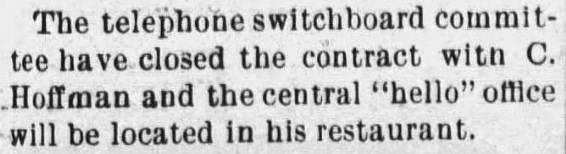
“The telephone switchboard committee have closed the contract with C. Hoffman and the central ‘hello’ office will be located in his restaurant.”
Getting the lines ready took longer. By May 9, the poles were set and most crossarms were in place. The company hoped to open before June 1 if materials arrived. But on June 13, construction superintendent Thomas Irons had finished all he could: the telephones were installed, while a missing cable kept them disconnected from the central office.18, 19
The cable finally arrived after about six weeks’ delay, the paper reported on July 4. On July 18, it announced that the line had been connected “last Saturday” and calls were passing through the central office. That places the reported connection on Saturday, July 13, 1901. The brief notice leaves the first caller and exact time unknown.20, 21
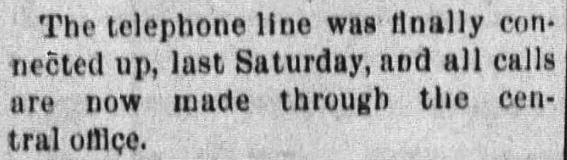
“The telephone line was finally connected up, last Saturday, and all calls are now made through the central office.”
The first offices on Main Street
The exchange’s first two homes were part of Hooper’s existing business district: Hoffman’s restaurant and bakery, then a room previously used by Hecker & Son. Newspaper accounts identify the businesses; maps, photographs and property records help place them on Main Street.17, 11, 1, 2, 3, 10, 12
Hoffman’s bakery and the first central office
Hoffman had arrived in Hooper in spring 1892 and opened a confectionery and bakery, according to a January 1901 business profile. By 1899, the business needed larger quarters. He built on Main Street, giving the telephone company a centrally located place to begin two years later.6, 17
In July 1899, Charlie Hoffman began excavating a basement for a large two-story brick building. His neighbor, A. M. Tillman, decided to remove a frame building from the adjoining lot and join the project. By July 27, Louis Stroh was laying foundation brick for the Hoffman–Tillman building.7, 8
Maps trace the same change. In May 1899, lot 12 on the east side of Main, between Fulton and Elk, was vacant beside a frame saloon on lot 13. By June 1904, the lots held adjoining two-story brick stores: a restaurant and bakery with an oven at the rear on the south, and a saloon with cigar manufacture upstairs on the north.9, 10
The strongest evidence points to the southern storefront at today’s 106 North Main Street, associated in county property records with David Hargens VFW Post #10535. The National Register identifies the 1899 double building as DD06-64, on original block 1, lots 12–13. That building, the newspaper construction accounts and the mapped bakery location fit together, although the precise switchboard room remains unverified.2, 3, 6, 7, 8, 9, 10
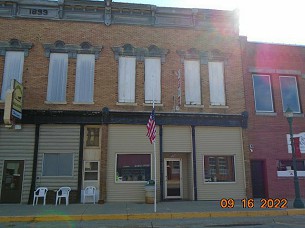
Building identification: the remaining gaps
No deed naming Hoffman on lot 12 has yet been located in this research. The 1904 map numbers the storefront “305,” a historic number that differs from the verified modern address. The assessor’s building-year entry also differs from the contemporary 1899 construction reports and the National Register date. Those earlier records provide the construction date used here.3, 7, 8
October 1902: Growth forces a move
By October 1902, the exchange had outgrown Hoffman’s business. The Sentinel reported that a system beginning with about 50 telephones had grown to 130. Hoffman wanted to give up the central-office contract: the switchboard demanded more room and time than he could provide.11
The October 30 newspaper announced a move that week into a room formerly occupied by Hecker & Son as a restaurant. Shipley would take charge of the central office alongside his construction duties. The later centennial history places the telephone office behind Hecker Grocery, preserving a second description of those early quarters.11, 1
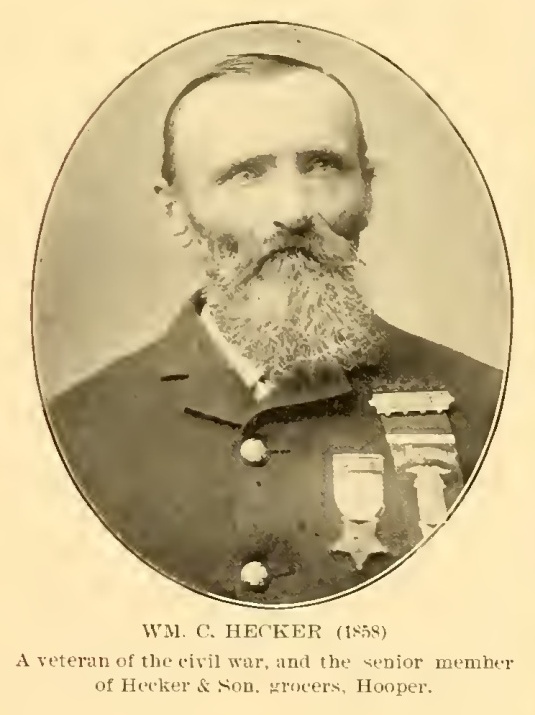
The Hecker property at Main and Fulton
The Hecker property stood at the northeast corner of Main and Fulton, where First National Bank later built. The centennial history says the bank acquired the corner site from the W. C. Hecker estate and opened its new building in May 1914. The National Register places the bank on the western half of original block 1, lot 9.1, 2
A 1904 map shows a frame grocery at that corner. By 1916, the bank occupied the site and a building directly behind it, facing Fulton, was labeled “Telephone Exchange.” The centennial history also includes a photograph of the earlier grocery and identifies it as the building with the telephone company in its rear.10, 12, 1

What the maps establish—and what they leave uncertain
The grocery and the later bank were different structures. These records locate the former Hecker property and the exchange shown in 1916, but do not establish that the office announced in 1902 occupied that identical rear structure. The 1904 map labels the rear operation “Telegraph Exc.”; only the 1916 map explicitly labels it a telephone exchange.1, 10, 11, 12
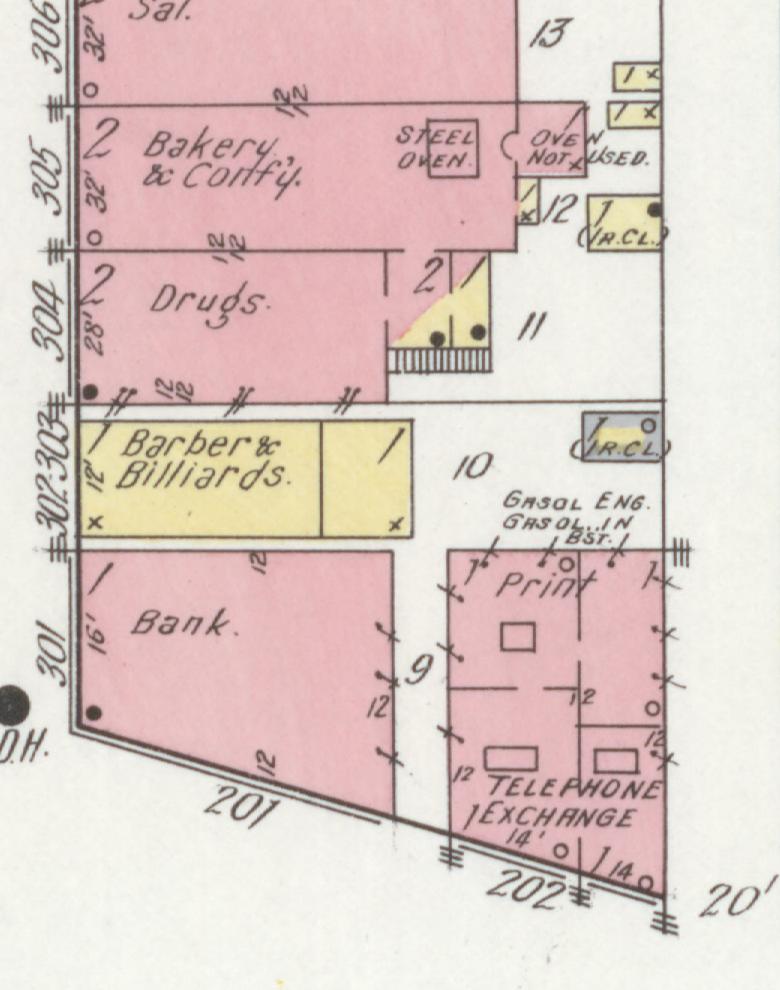
Connecting farms, Fremont and Uehling
As the company grew, service to farms became central to its business. At a 1910 meeting in Tilson’s Opera House, farmers challenged farm-line charges that were higher than city residence charges. The centennial history records their objections and the request for directors to investigate arrangements in other communities.1
The scale of that rural service is clear in the state commission’s figures for the year ending June 30, 1913: 418 farm subscribers and 229 city subscribers, with 647 instruments and 271 stockholders. The system contained 945 miles of wire, a measurement of the wire itself rather than distinct route mileage.22
The 1913–1914 Fremont connection dispute
Reaching other towns brought another challenge. Hooper Telephone and Fremont Telephone jointly owned a toll line, but Nebraska Telephone Company acquired control of the Fremont company and moved its business into its own exchange. On August 13, 1913, Hooper filed a complaint with the Nebraska State Railway Commission seeking connections to the larger network.22, 23
After a September 15 hearing in Fremont, the commission ordered Nebraska Telephone to connect the joint toll line to its Fremont switchboard and provide access to Nebraska destinations on its network. It also required a connection between Nebraska Telephone’s nearby toll line and Hooper’s exchange, at Nebraska Telephone’s expense. The order was issued September 20; toll revenues were to be divided under the state’s 1913 law.22
Nebraska Telephone appealed, arguing that the arrangement could interfere with traffic on its Omaha–Norfolk circuit, even though a physical connection was possible. The Nebraska Supreme Court affirmed the order on May 15, 1914, in Hooper Telephone Company v. Nebraska Telephone Company. Either company could still return to the commission with evidence about terms and expense.23
A note on the Fremont connection dates
Hooper already had intertown service through the jointly owned toll line; the dispute was over access to additional connections. The order specified October 1, 1913 as its effective date, but the records examined here do not establish when the physical work was completed. The case and the purchase of the Uehling exchange were separate events.22, 23
1914: Adding the Uehling exchange
Hooper expanded in another direction in 1914, purchasing the Uehling exchange from Nebraska Telephone Company, according to the centennial history. The purchase brought Uehling’s local telephone operation into Hooper’s system.1
A contemporary state order confirms that Hooper Telephone operated both the Hooper and Uehling exchanges by January 1915. Company president M. A. Uehling and manager M. E. Shipley appeared before the Railway Commission. The order also records customers’ frustration with shared lines: some had as many as three other parties on their line while paying the same rate as customers with a line of their own. The Commission approved a 25-cent monthly premium for individual-line service, effective February 1, 1915, leaving party-line rates unchanged.30
Archival leads for the Uehling purchase
The state archives’ inventory lists Uehling reports for 1910–1912 under Nebraska Telephone ownership, leased to Lewis P. Hanson, followed by a 1915 report for the Uehling exchange of Hooper Telephone. The inventory supports further research, but the underlying reports have not been examined. The exact transfer date, price and acquired property remain unverified.13
Shipley and the people behind the switchboard
A larger system brought new equipment. In 1920, the company bought a switchboard to convert Hooper to common-battery service, the centennial history records. Operators still connected calls; dial service lay decades ahead.1
Marion E. Shipley’s long tenure
For much of this period, Marion E. Shipley was the company’s general manager. He had first worked in Hooper’s newspaper business, buying an interest in the Sentinel with W. G. Thompson in 1899. His 1921 biography says he sold that interest after two years, helped organize Hooper Telephone in 1901, and had managed it ever since.24
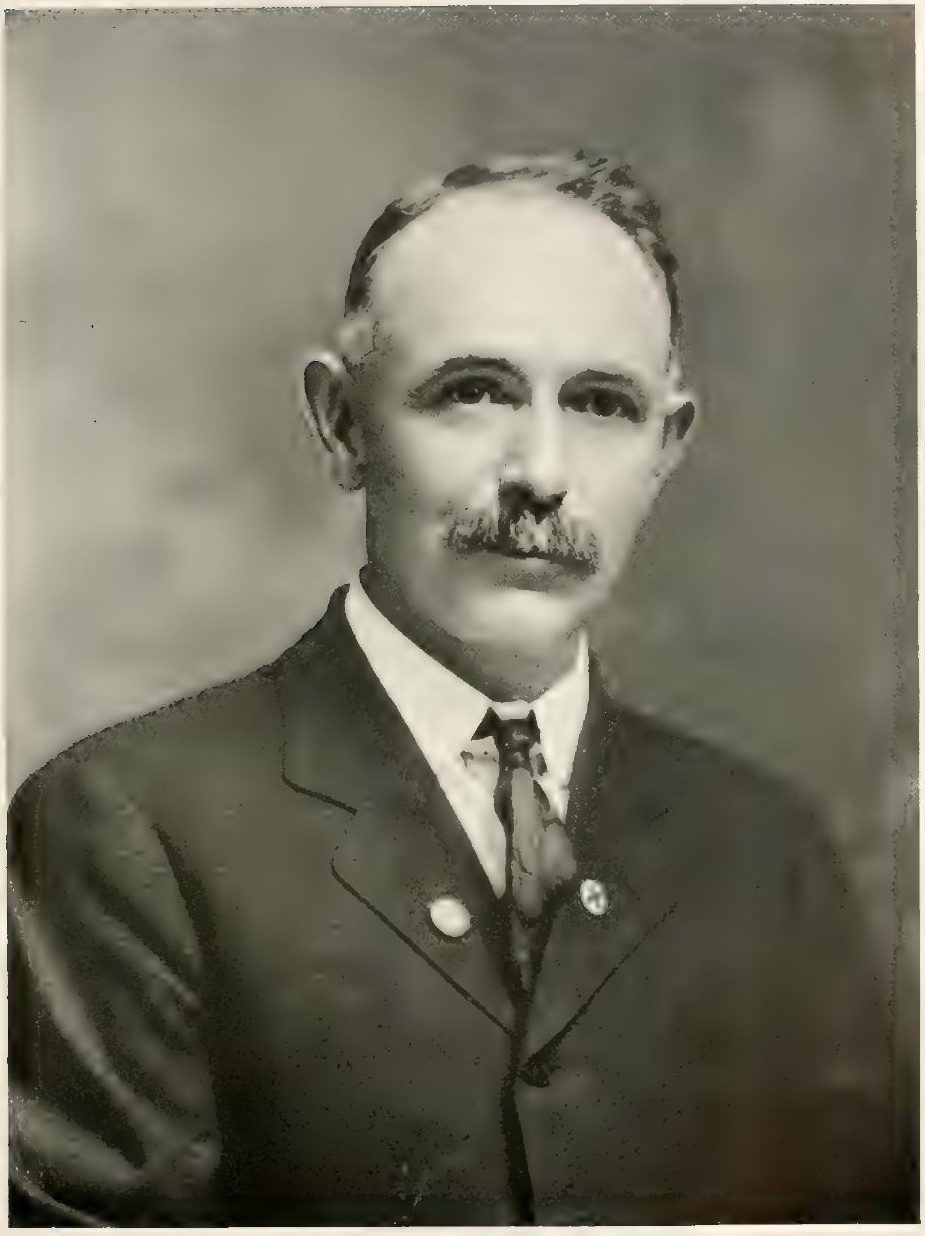
By the time of that 1921 biography, the company reported $37,000 in paid-in capital. Its officers were W. G. J. Dau, president; Herman Meyer, vice president; Norman E. Shaffer, secretary; and Henry Windhusen, treasurer. These names describe the later company, two decades after the founding election.24 A 1918 state biography already identified Shaffer as the company’s secretary, though it does not give his appointment date.41
The centennial history describes a decline in subscribers during the Depression years of 1932–1939. Military service and better-paying war-industry jobs later made it harder to retain telephone workers.1, 31
Shipley resigned because of ill health in October 1940, according to the centennial history. Harold Maxon succeeded him, followed by Wyman Wilde in 1942. Those leadership changes came during a difficult period: a severe December 1940 sleet storm, financial strain, and wartime shortages of materials and trained workers.1
1943: New ownership and the West Iowa connection
By 1943, keeping the telephone system working had become difficult. A state Railway Commission opinion described service complaints, deferred repairs and trouble retaining linemen while wartime employers offered higher wages. Local shareholders responded by selling a majority of the company’s shares to W. H. Daubendiek, an experienced telephone operator who controlled nine exchanges in Iowa.31
The agreement also reserved $20,000 of Hooper Telephone’s accumulated funds for reconstruction: $7,000 in cash and $13,000 in government securities, held at the First National Bank of Hooper under three trustees. This was a rebuilding fund; the published opinion does not give the purchase price or the exact date the shares changed hands.31
The Hooper Commercial Club supported higher rates, and a petition entered in the case carried 90 signatures from subscribers and shareholders. Despite a written objection from the federal Office of Price Administration, the Commission authorized a 25-cent monthly increase per telephone on October 9, effective December 1. Its opinion reported that reconstruction was already underway.31
The contemporary record names Daubendiek personally as the buyer of controlling shares. Peter Eulberg, a longtime West Iowa officer, later wrote in a 1959 company history that West Iowa Telephone bought an interest in Hooper Telephone in 1943. The centennial history describes a sale of the exchanges, while WesTel’s current timeline calls it a purchase of Hooper Telephone. Read together, these sources establish the 1943 connection, but they do not establish that every share or all assets were transferred in a single transaction.31, 32, 1, 28
At the time, Hooper Telephone’s exchanges served Hooper, Uehling, Nickerson, Winslow and nearby territory, with calls across its own system included in regular exchange rates. The 1943 report also makes a useful distinction about the nearby air base: it then received no local exchange service from Hooper Telephone, and its toll calls did not pass through Hooper’s exchange.31
The operators, the flood and the rebuilding
In June 1944, floodwater reached the telephone plant while operators were still at the switchboard. The June 22 Hooper Sentinel reported that they kept working until several feet of water entered, then left by boat. The centennial history later named Anna Wagner as the operator on duty and singled out lineman Joe Tillman’s work restoring service. Those names come from the later account; the newspaper report left the operators unnamed.26, 1
Emergency connections and repairs followed in stages. By 1947, the centennial history says, crews had replaced more than 800 miles of line wire and many carloads of poles. The wire total measures material replaced, rather than new geographic coverage. Accounts differ on how long service was interrupted; The Operators Who Stayed on the Line compares those reports in detail.1
A 1944 record of switchboard-operator training
An April 18, 1944 Federal Register notice authorized Hooper Telephone to employ learner commercial switchboard operators at its Hooper exchange from April 13, 1944 through April 12, 1945. These certificates permitted learner employment at wages below the usual statutory minimum under the applicable rules. The notice establishes authorization, not the identities, number or actual wages of any trainees.27
Dial telephones and private rural lines
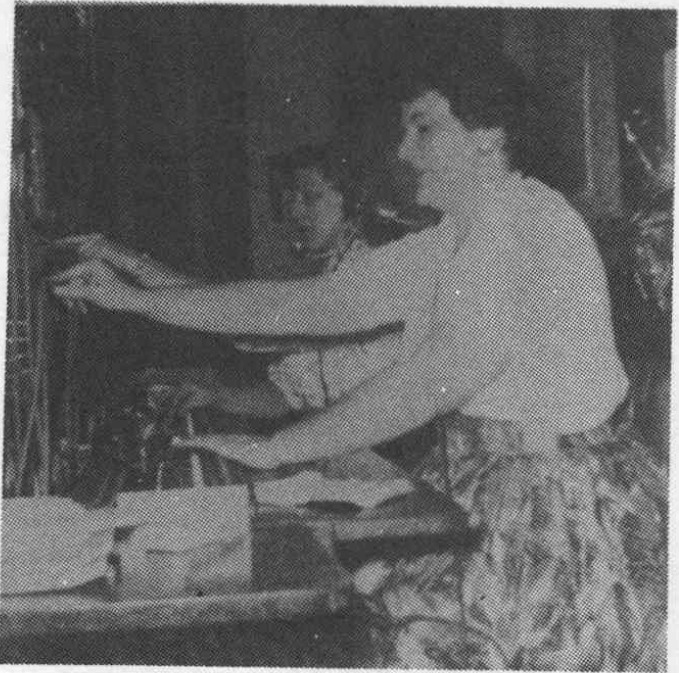
The move away from manual switchboards came gradually. Uehling converted to dial operation in 1949, according to the centennial history. Hooper’s operators continued connecting calls, as this 1955 photograph of Twila Linstadt and Alta Miller shows.1
1963: A new building and a changeover in stages
The project had been announced on March 29, 1962, with an estimated $145,000 in additional investment for dial conversion, a new building and line work. That figure was the announced estimate, not a verified final cost.44
The original newspapers show that Hooper’s move to dial service unfolded over several months. On August 29, the Sentinel described a new brick building a block and a half east of the existing office, with dial machinery inside. The work involved installing 581 dial telephones in Hooper, 352 in the rural area and 49 in Winslow. Those figures count telephones in the installation program, not people or households. Wm. C. Daubendiek was directing the transition, with construction crews from Jefferson, Iowa, and local help.33
That August report offered tentative September and October conversion dates. The company’s October 10 advertisement gave a later, specific schedule: town subscribers were to switch during the night of October 14–15, while rural lines would follow. During the transition, town customers were instructed to reach rural subscribers through the operator. This advertisement documents the scheduled town changeover, rather than confirming afterward that it occurred exactly as planned.33, 34
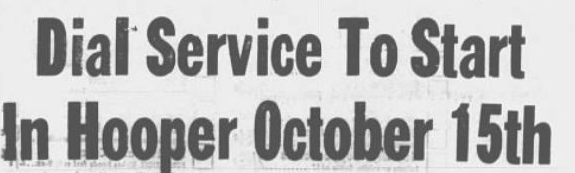
The town’s volunteer fire department marked the change in its own way. In an October 17 newspaper notice, it thanked Hooper Telephone and especially its operators for their help over the years before installation of the dial system. The notice preserves a reminder of the operators’ work for the wider community.42
The November 21 Sentinel then reported that all telephones connected to the Hooper exchange were on dial service starting November 20. It said the new directory’s instructions and numbers were in effect and an open house would follow the company’s move into its new building.35
The centennial history gives November 19, 1963, one day earlier than the contemporary completion report. That difference remains unresolved; the newspaper evidence does establish separate town and rural stages. The book also says the experience of the 1944 flood influenced the new building’s design.1, 34, 35
December 1963: An extension telephone for Christmas
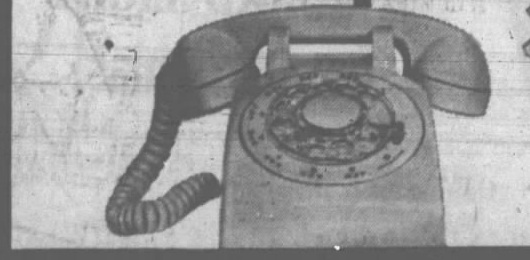
Within weeks of the dial conversion, Hooper Telephone Company was promoting another change in home telephone use. Its December 12, 1963, newspaper advertisement offered colored extension telephones as Christmas gifts, especially for teenagers’ rooms. This shows what the company was advertising locally; it does not establish how many households ordered one.43
1965: Direct long-distance dialing
Local dial service and direct long-distance dialing arrived at different times. On December 2, 1965, the Sentinel announced that customers would be able to dial station-to-station long-distance calls directly starting December 5. This was the announced start date for the later service, not the date Hooper first changed from a manual switchboard to local dial telephones.45
More telephones and plans for private rural lines
Attention then turned to rural customers. In 1967, the company began planning an underground system with private rural lines, according to the centennial history.1
At the December 1967 directors’ meeting, the company had passed 1,000 telephones. State figures show further growth by December 31, 1971: 1,298 telephones, including 114 business and 1,184 residential. The total covers the company’s entire system and counts telephones, rather than Hooper households.1, 25
When the centennial history was written in 1976, the rural project was described as nearing completion; its final completion date remains unverified. The staff then included Ronald Henrich, service manager; Perry Keithley, serviceman; Bertha Monnich, bookkeeper; Lois Moeller, cashier; and Irma Peters, clerk.1
Internet service and the Hooper office’s closing
By the mid-1990s, the business was expanding beyond telephone calls. WesTel’s corporate history dates cable television service to 1995. That is a company-wide milestone; the sources reviewed do not independently establish when cable service began in Hooper itself.28
Internet service reached Hooper Telephone’s territory during the same period. A January 12, 1999 Fremont Tribune report dates its introduction there to 1995 and describes a MidlandsNet partnership with Community Connections two years later. WesTel’s later company history gives 1996 for internet service. These accounts establish availability by the mid-1990s but leave the exact local launch date unresolved.46, 28
Long careers linking Hooper and Remsen
The connection between the two offices continued through their employees. In July 1997, the Remsen Bell-Enterprise reported that Ron Henrich, with more than 35 years at Hooper Telephone, had moved to Remsen that April and become West Iowa’s plant manager there.36
In December 1999, the same newspaper profiled Dave Nilles after 21 years in Hooper. He had joined West Iowa full time in 1978, worked as Hooper’s bookkeeper and then office manager, and had transferred to Remsen as assistant general manager and commercial manager.37
1999: The Hooper office closes
The Hooper office closed in 1999. Former office manager Dave Nilles confirmed the year in an October 20, 2026 email to Melissa Lanzourakis: “The Hooper office was closed in 1999.” Melissa forwarded his email to Celebrate Hooper the same day, and the original message has been reviewed for this history. The December 1999 newspaper independently documents his transfer to Remsen; Nilles’s later firsthand account confirms the office’s closure year. His email does not give an exact day or month.49, 37
Closing the local office did not mean the end of Hooper Telephone Company or telephone service in town. The company continued to appear in state records, and its later tariff used the Hooper Telephone name alongside WesTel Systems.48, 39
From West Iowa Telephone to the WesTel name
In 2001, West Iowa Telephone, Hooper Telephone and MidlandsNet came under the shared WesTel Systems brand. A July 19 announcement in the Remsen Bell-Enterprise set August 1 for West Iowa and MidlandsNet to begin using the name and explicitly said ownership and legal structures would remain unchanged. Hooper’s place in the shared brand is documented by WesTel’s official history and a December 20 rate sheet identifying Hooper Telephone Company d/b/a WesTel Systems.47, 28, 48
“Doing business as” identifies a trade name. The 2001 change gave the related businesses a common public identity; it was not, by itself, a legal merger.47, 48
Fiber service and local construction records
WesTel’s corporate history dates fiber-to-the-home services to 2011. That milestone describes the company’s services, rather than the date any particular Hooper home was connected.28
Local government records add a more specific view of the fiber work. On May 22, 2019, the Dodge County Board received and filed WesTel utility-installation agreements for buried fiber cable in parts of Hooper, Logan, Everett, Maple and Nickerson townships. These records document planned work and its agreements; they do not establish when individual homes received service.38
2021: A change for public payphones
On March 2, 2021, Nebraska’s Public Service Commission granted WesTel Communications, doing business as Hooper Telephone Company, a waiver of the public-pay-station requirement. The company reported three payphones with no in-box coin collections during the preceding six years and high maintenance costs. The order permitted it to stop maintaining those stations; it does not identify their street addresses or prove a removal date. No coin collections also does not mean no calls of any kind.39
WesTel’s official history and timeline connects these developments with the earlier companies. For current service information, use its contact page. The company history was checked October 20, 2026.
Help preserve Hooper’s telephone history
Records that could fill the remaining gaps
There is more to discover. A deed naming Hoffman on lot 12, a plan of the early central-office rooms, or the Uehling sale papers could answer questions left open here. The state archives’ RG0009 inventory, Subgroup 6, Series 3, lists Hooper Telephone annual reports dated 1908–1983 in box 714 and Uehling reports in box 751. These original company returns are different from the published commission reports cited in this article and could add officers, staffing, equipment and financial details. The first caller, precise room inside Hoffman’s building and completion date of the Fremont connections also remain unknown.13
The 1943 rate case offers a particularly promising photograph lead: its published opinion says the Commission’s files contained photographs and newspaper clippings of the reconstruction. The underlying exhibits have not yet been located online. An archival request should identify Hooper Telephone, application 15650, and the October 9, 1943 order.31, 13
For the first offices, the Dodge County records inventory lists a Record of Firms & Associations, 1890–1923 (County Clerk, Series Six, volume 3), and 1901–1902 tax-list microfilm covering Hooper (MP4035, roll 24). Those are leads for investigating original block 1, lots 9, 12 and 13. The underlying entries have not been inspected, so their contents cannot yet confirm the owners or rooms.40
Share records, photographs and memories
Hooper’s telephone history also lives in family photographs, employee memories and records that have never been published. If you have company papers, directories, photographs, recollections or corrections, send them to Celebrate Hooper. Include names, dates and source details where possible so we can add them to our Hooper History Database and continue this account.