In the summer of 1956, Hooper had more than one baseball story to celebrate. Its American Legion players were making a run at a state championship, while the town team was battling neighboring clubs in the Dodge County League. The photographs preserved in Hooper’s centennial book show both groups, along with earlier teams whose uniforms carried the town’s name long before those victories. [1],[5],[6]
Hooper supported several kinds of baseball: the town team, American Legion juniors and younger Midgets, as well as school athletics. The community diamond brought players, coaches and spectators together across those programs, with league games and youth tournaments filling summer evenings. [1],[7]
A town team before the modern ball park
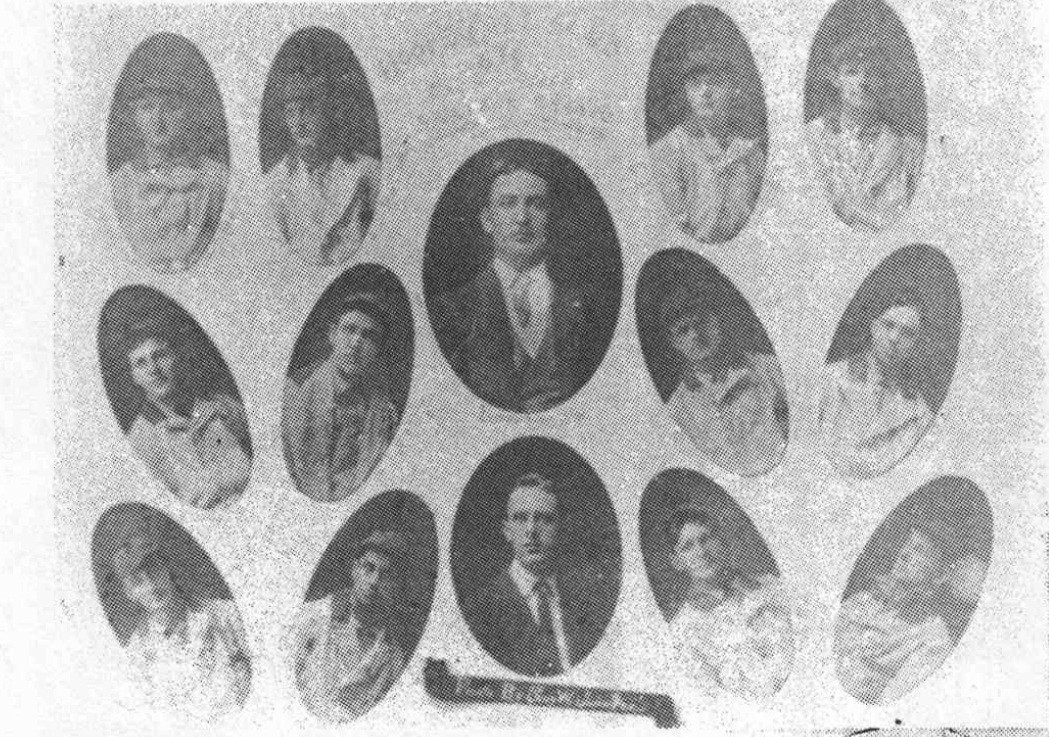
One of the earliest team photographs in the centennial collection is a 1908 composite labeled East Nebraska Amateur Champions. Players appear in individual portraits, with a list of names supplied in the book’s caption. It preserves more than a result: it gives faces to the people who represented Hooper when neighboring towns were already organizing games and taking pride in local clubs. [1]
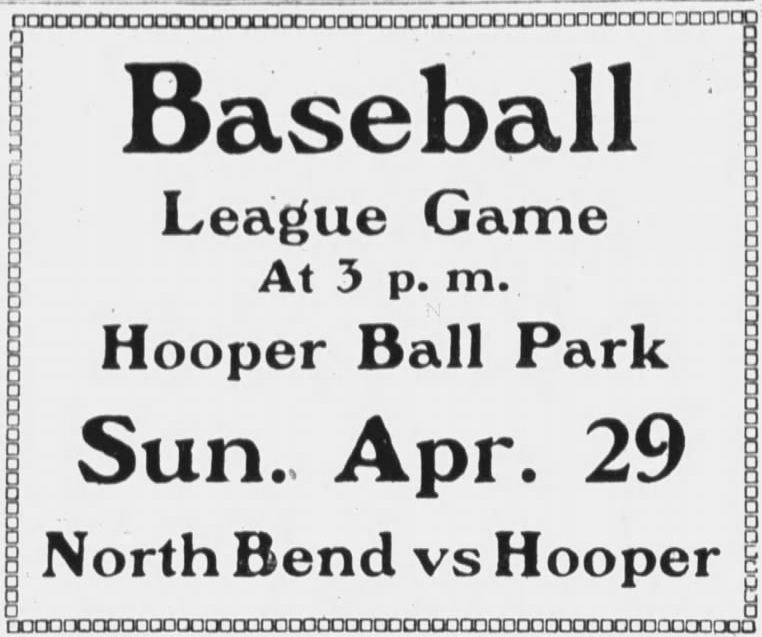
By 1928, a newspaper advertisement could assume that readers knew where the Hooper ball park was. The Sentinel promoted a league game against North Bend for Sunday, April 29, at 3 p.m. The large, simple announcement placed baseball directly into the town’s weekend calendar. The notice gave readers the essential details in a few bold lines: the teams, the place, the day and the hour. [3]
The competition extended along the Elkhorn Valley. In September 1930, the Scribner Rustler reported that Hooper had beaten Schuyler 11–4 and moved one game ahead in the Elkhorn League race. Hooper scored four runs in the first inning and added six in the ninth. The account named Meier as the starting pitcher for manager Parkert’s club. The report describes the standings at that point in the season; it does not establish the final championship result. [4]

Volunteers build the setting for summer baseball
The field itself became a community project after World War II. According to the centennial history, VFW Post 7616 proposed a baseball club and improvements to the diamond in January 1947. In February, the village board approved the Hooper Baseball Club, sponsored by the VFW, and renovation of the Memorial Park diamond. By April 3, contributions had reached $2,123.25, and the project included sixteen new uniforms. [2]
A grandstand followed. Construction began in June, and the improved diamond and grandstand were dedicated in August 1947. Those steps connected the veterans’ organization, local government, donors and players in a common undertaking. The result was a place that could serve spectators as well as the people on the field. [2]
Lights were the next major improvement. In February 1950, the Commercial Club voted to pursue a lighting project estimated at $6,000. The centennial book records pledges, individual gifts, donated labor and fundraising by local organizations. The Hooper Homemakers contributed proceeds from a food sale; benefit baseball helped raise money; and the village supplied bleachers. The book dates the dedication of the lights to June 11, 1950. [2]
The improvement matters to the later tournament accounts. When Hooper hosted visiting teams in the 1950s, it could offer a lighted diamond and places for a substantial crowd to watch. The athletes’ achievements rested on a public setting that residents had paid for and helped build. Further work continued: the centennial book records a chain-link fence and enclosed dugouts in 1972. [2],[7]
The Legion teams of 1955 and 1956
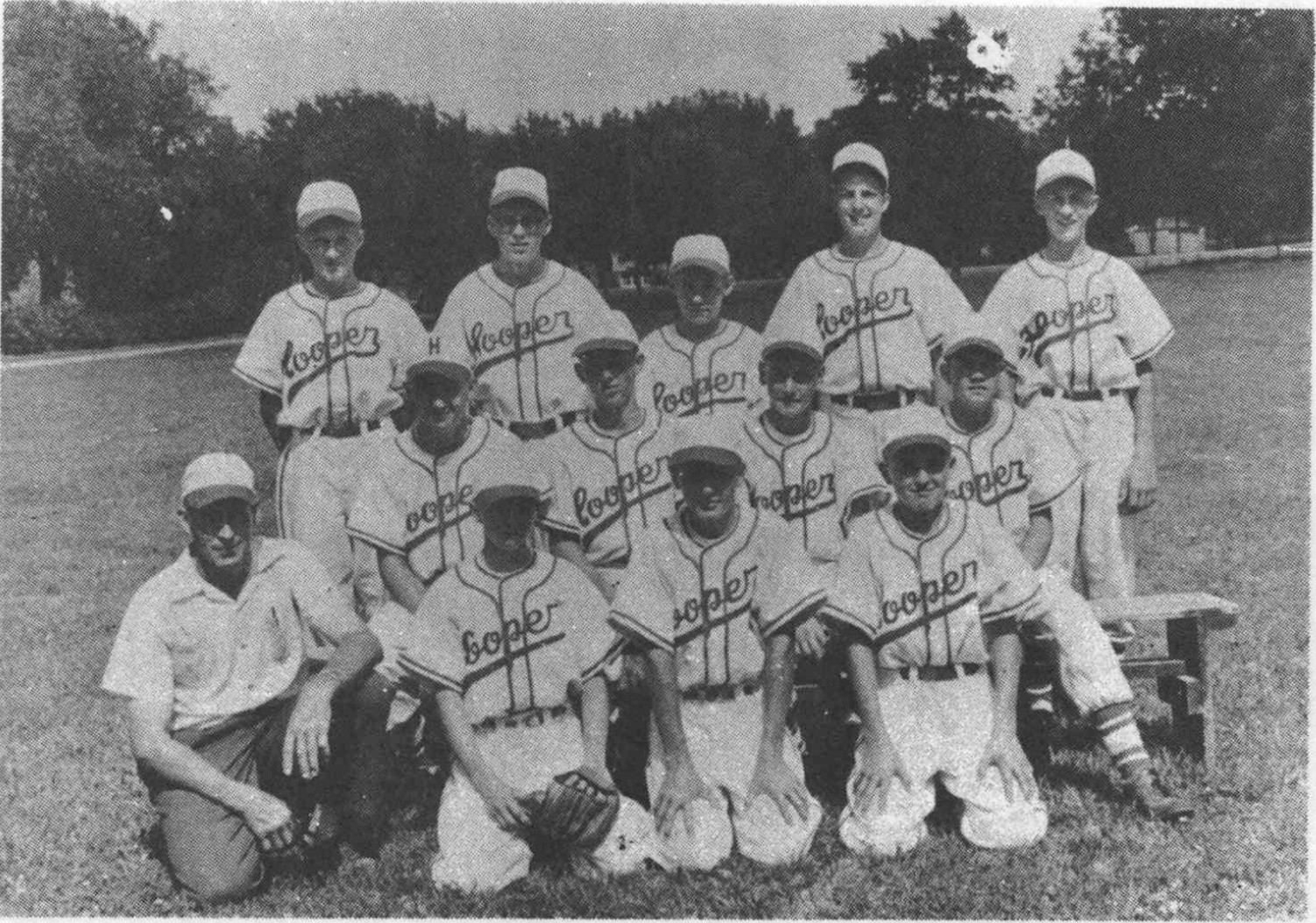
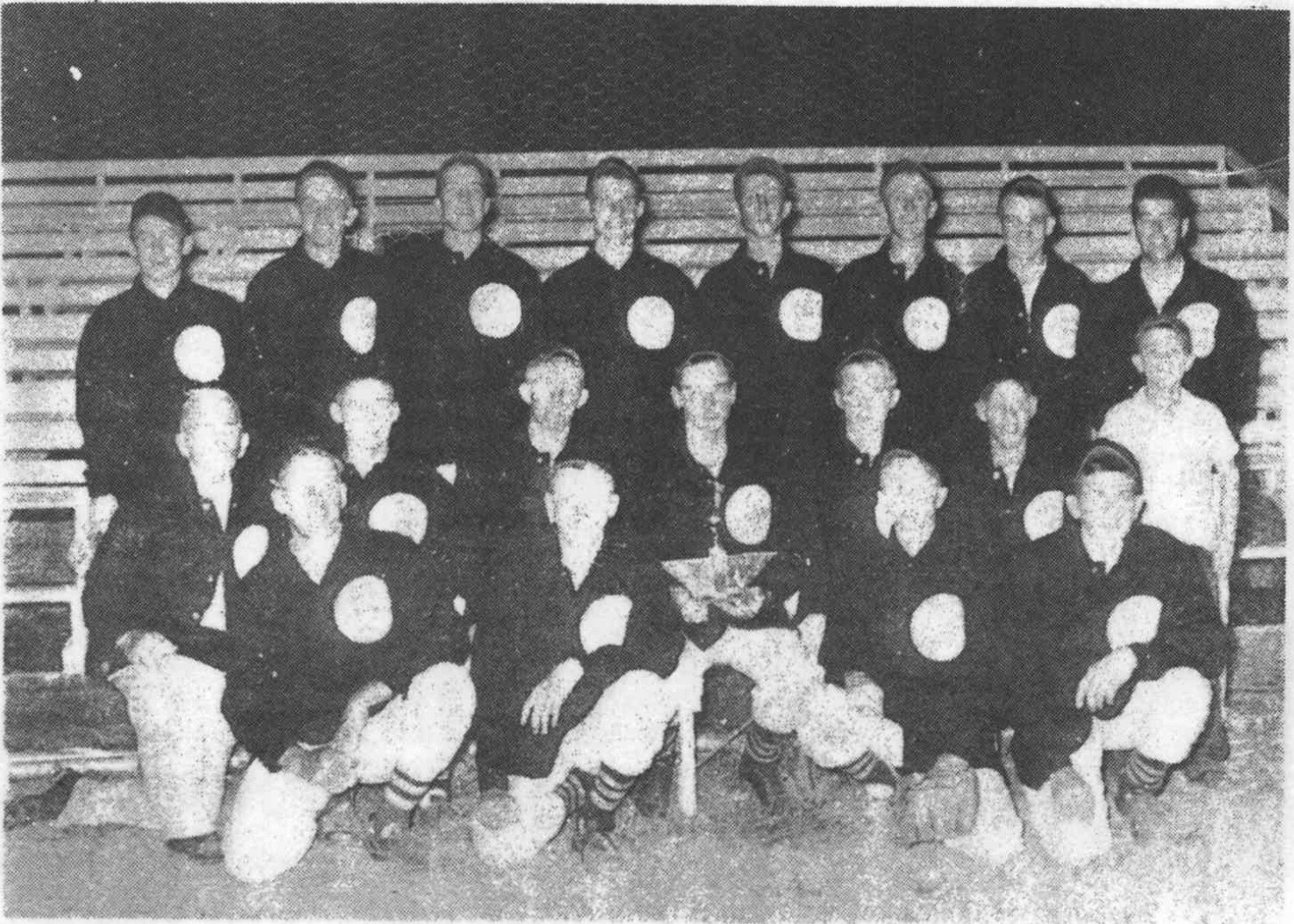
Hooper’s American Legion Midgets posed for a team photograph in 1955 with coach Marion Havekost. A year later, another portrait recorded the Legion team’s state championship at Wymore, with Havekost as coach and Leo Corbin as manager. The pictures preserve two consecutive seasons of Hooper’s youth-baseball program. [1]
Contemporary newspapers supply the path to the 1956 title. The Fremont Tribune reported on August 13 that Hooper had defeated Bassett 1–0 at Wymore in the Class B American Legion tournament. Dick Havekost struck out fourteen batters. The win put Hooper into the final against Wisner that Monday evening. [5]
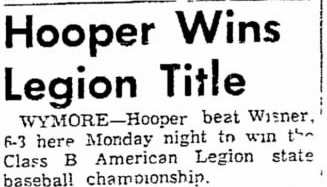
The following day’s Lincoln Star confirmed the result: Hooper beat Wisner 6–3 to win the Class B American Legion state baseball championship. Ron Havekost relieved starter Al Hagerbaumer in the sixth inning with one out and the bases loaded, stopping Wisner’s threat. He also led Hooper at the plate with two singles and a double. This report gives the championship photograph a specific opponent, score and tournament class. [6]
The town team had its own championship story
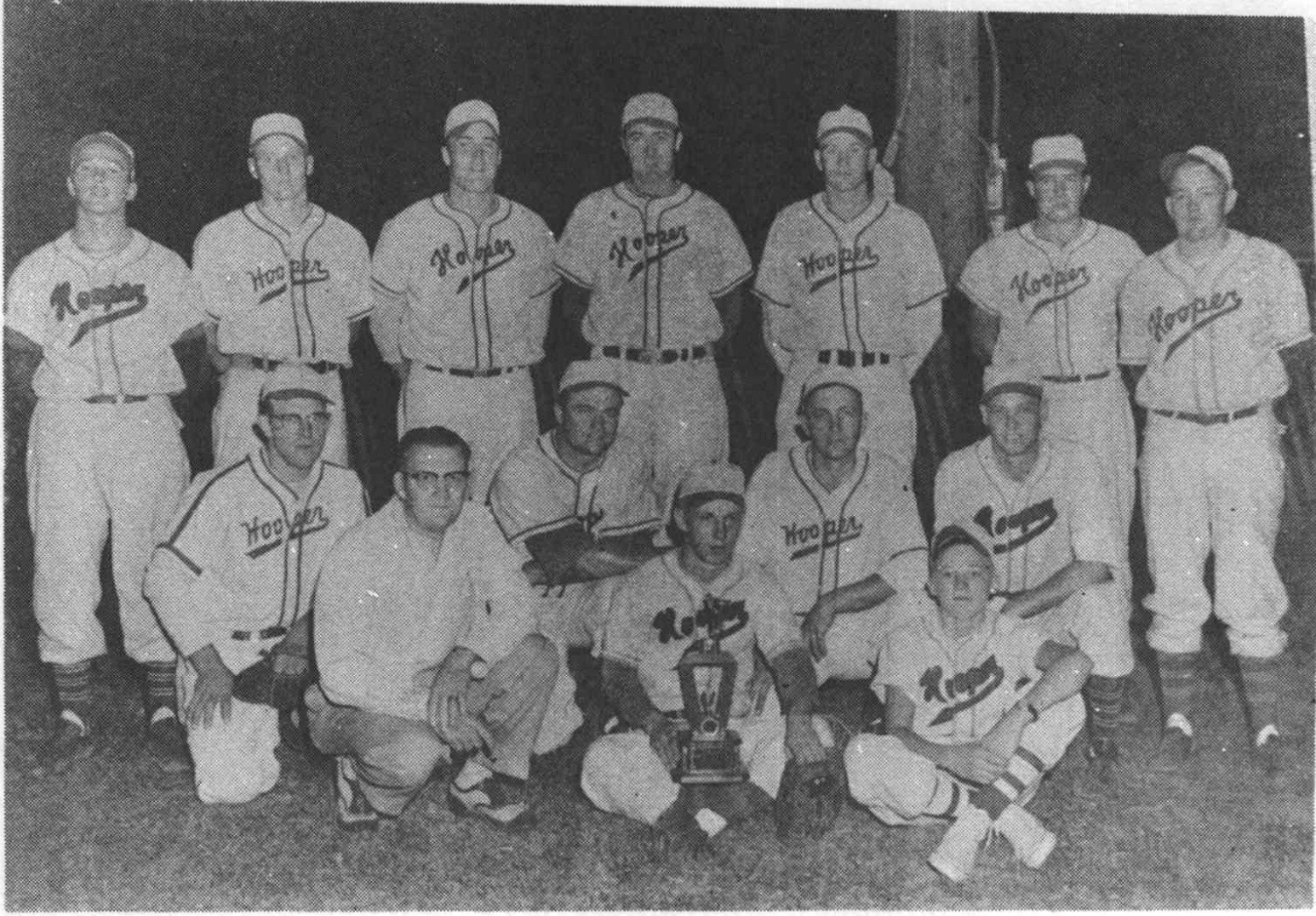
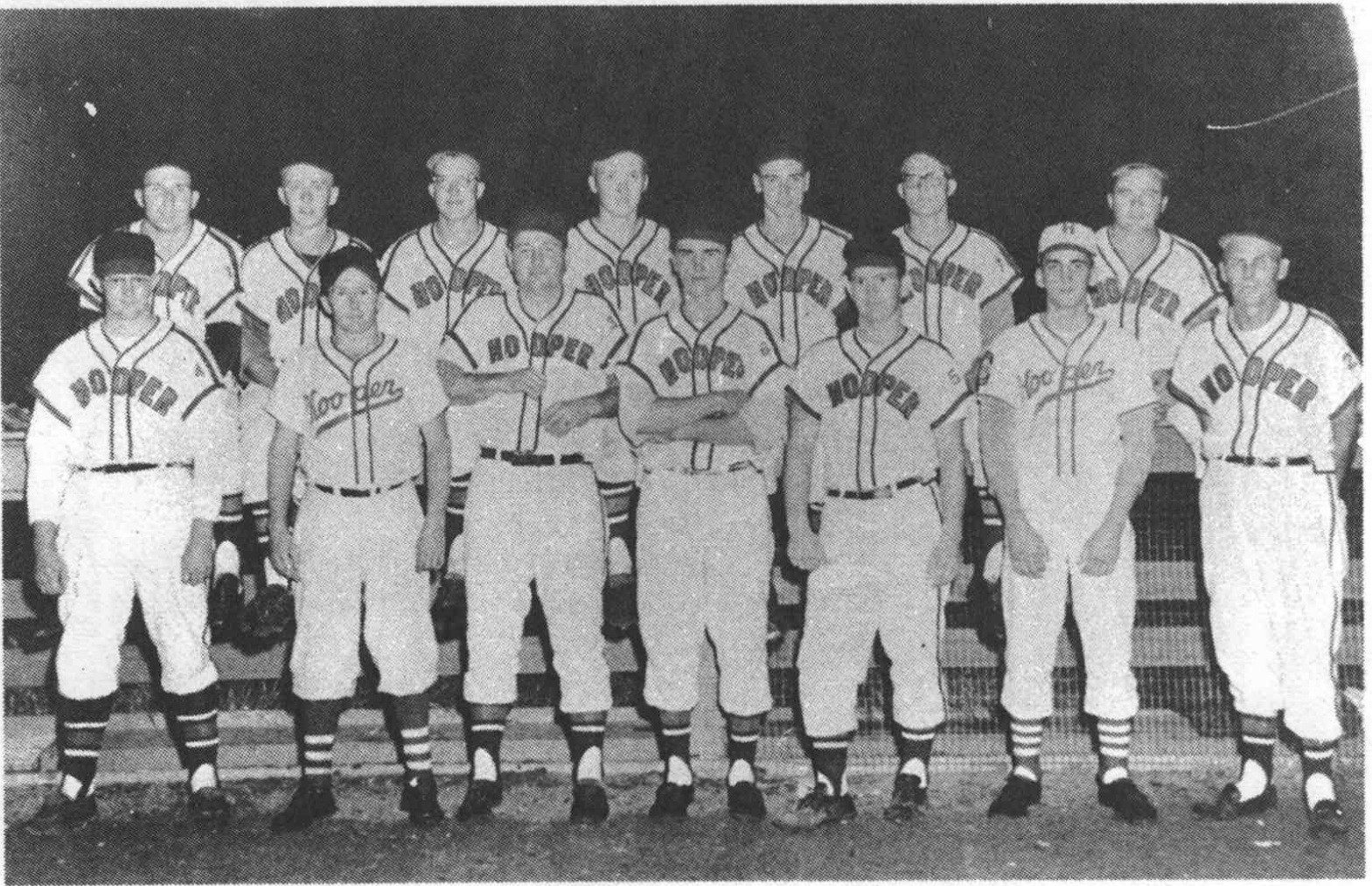
While the Legion team advanced at Wymore, the town team was playing its own games closer to home. On the same August 13, 1956, sports page, the Fremont Tribune reported a separate Hooper victory over Scribner. Paul Menking pitched a two-hitter in a 1–0 Dodge County League game. That result belongs to the town-team story, not to the Legion tournament. [5]
The centennial collection labels Hooper’s 1956 town-team photograph as Dodge County League champions. Another photograph identifies the 1960 town team with the same league honor. Shown together, the pictures document a continuing local program beyond the youth championship season. The uniforms, coaches and assembled players make the scale of that participation visible in a way that a list of scores cannot. [1]
A tournament town in 1958
By July 1958, the Sentinel was describing another strong summer for Hooper’s younger players. Its July 31 issue reported that both the Junior Legion team and the Midgets had won District 7 championships for a third consecutive year. The juniors defeated Scribner 7–5, while the Midgets beat Ulysses 8–7. The paper estimated that roughly a thousand people watched the championship games at Memorial Park. [7]
The report also looked beyond the score. Manager Leo Corbin credited the people who prepared the grounds and handled the tournament’s work. The visiting teams and spectators brought attention to Hooper’s field and hospitality. This was the payoff for the earlier grandstand, lights and volunteer effort: Hooper could host a shared summer event as well as field successful teams. [2],[7]
From the 1908 amateurs to the championship teams of the 1950s and 1960s, baseball gave Hooper a recurring place to gather and a team to follow. The community’s investment in the grandstand, lighting and grounds helped make those seasons possible. [1],[2],[3],[4],[5],[6],[7]