Look above Main Street in Hooper’s old carnival photographs and the town becomes a stage. A trapeze performer hangs over the Harms store. Two acrobats balance high above the street. An enormous inflated elephant is suspended where shoppers would ordinarily look for signs and storefronts. Another photograph places a carnival directly on Main Street in June 1907. [1]
Those images belong to a larger entertainment history: traveling shows, local celebrations, an aviation carnival, Chautauqua programs and circus visits. In 1914 alone, Hooper advertised a July carnival and held a Chautauqua gathering in August. [2],[3]
Main Street becomes a performance space
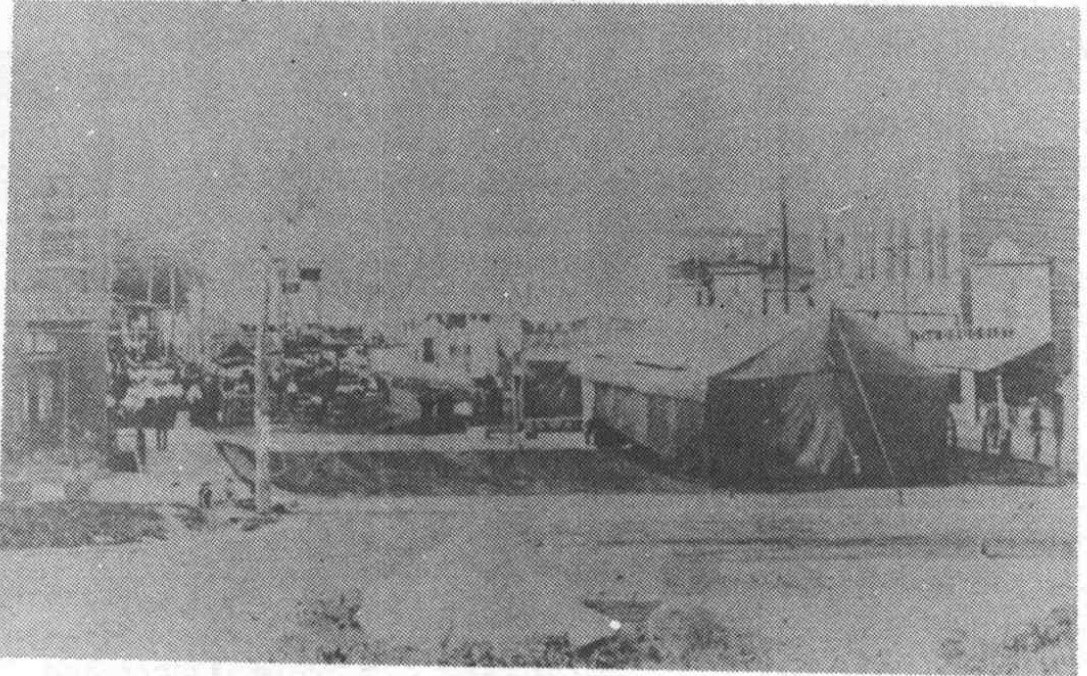

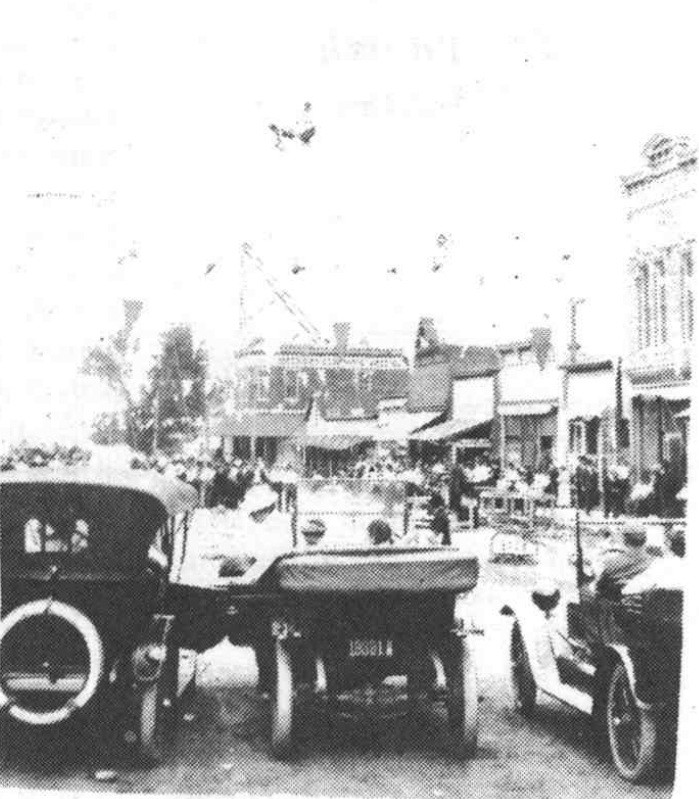
The centennial book dates the carnival street scene to June 1907. Other photographs show high-wire acts in Hooper without identifying a particular year. In the trapeze view, the performer swings from a rig erected above the Harms store, with four men helping hold it in place. [1]
The storefronts and rooftops matter almost as much as the performers. A familiar commercial street provided a backdrop for an unusual sight, turning the center of town into a place to stop and watch. The trapeze photograph specifically names the Harms store beneath the act, connecting the spectacle to a building that residents knew from ordinary business. [1]

An inflated elephant provided another striking display above Main Street. Flags and spectators filled the scene below, with automobiles parked along the street. The centennial book explicitly identifies the overhead attraction as inflatable. [1]
July 1914: an aviation meet and carnival
On July 9, 1914, the Sentinel carried a large advertisement for five days of entertainment, July 14 through 18. The Walter Savidge Amusement Company promoted an aviation meet and carnival at Hooper. The advertisement promised a flying machine as the central attraction, but its program reached well beyond aviation. [2]
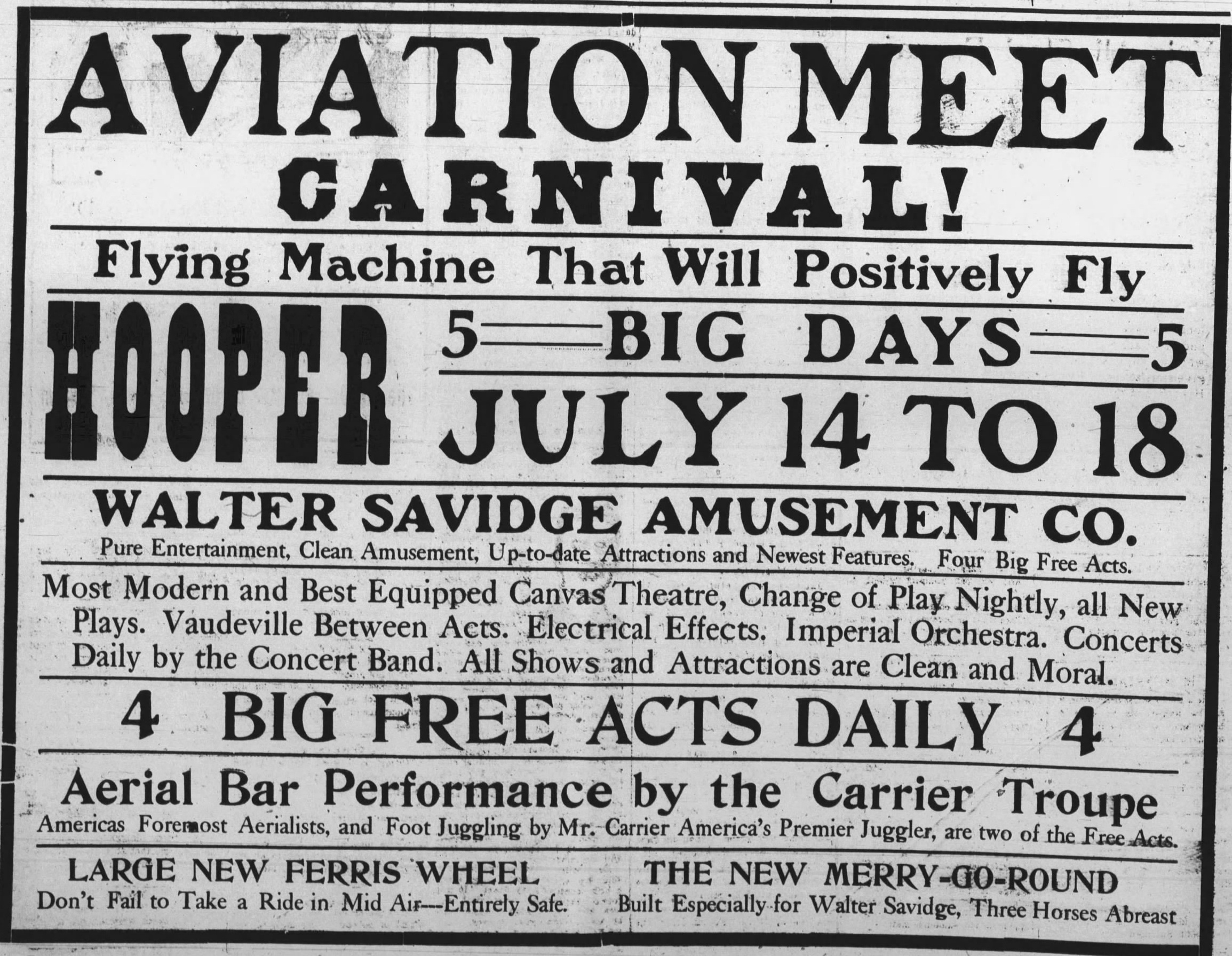
The company advertised a canvas theater with a different play each night, vaudeville between acts, an orchestra and electrical effects. Outside, spectators were promised band concerts and four free acts daily. The Carrier Troupe’s aerial-bar performers and Mr. Carrier’s foot-juggling act appeared in the program, along with a Ferris wheel and a new merry-go-round with horses arranged three abreast. [2]
The advertisement emphasized the variety packed into the five-day visit. A family could read about theater, music, mechanical rides, aerial performance and the chance to see a flying machine in one program. Changing plays and between-act entertainment gave the organizers several reasons to invite people back on successive evenings. [2]
The newspaper’s other local notices placed the Savidge visit within a busy season that also included baseball, a gun shoot, the coming Chautauqua and a fall stock show. Baseball returned on Sundays, while larger attractions brought their own schedules into the season. [2],[3]
August 1914: Hooper’s Chautauqua
By August 6, the Sentinel could report on the first days of Hooper’s Chautauqua under the headline “Chautauqua a Success.” The event had opened on Monday with good weather and a large audience. The paper described music, lectures and evening entertainment, giving a different character to this gathering from the rides and aerial acts advertised in July. [3]

The opening musical attraction was the All-Brothers Quartet: Albert, Joseph, Clyde and Glenn Caskey. The report described vocal music and several instruments, including organ chimes, saxophones and cornets. It singled out the organ chimes as an unusual sound for the local audience. That evening, Dr. Cyrus S. Nusbaum delivered a lecture titled “The Glory of Life.” [3]
Tuesday brought the Browne-Enlow Company and a lecture by Stewart I. Long, “Reaching the Goal.” The evening magician, Laurant, drew an audience large enough that extra seating still did not accommodate everyone. These are reported features of the opening days, rather than merely promises in an advance advertisement. [3]
The remaining printed schedule promised the Musical Maids, more lectures and an Imperial Guards Band appearance. John F. Chambers was to close the program with “The Grand Army Man.” The succession of musicians, speakers and entertainers gave residents several reasons to return as the week continued. [2],[3]
Traveling shows return in later decades
The centennial book records further visiting entertainment through the 1930s. Its entries include a Savidge show in 1931, a LaVille Brothers dog-and-pony attraction supported by local businesses in 1934, and a spring festival in 1935. The book’s account of the festival includes music, fire-department participation and vaudeville. These brief records show that traveling amusement and locally organized celebration remained part of the town’s life after the early high-wire photographs. [1]
By 1958, the Sentinel was again helping readers anticipate a circus. Its July 31 issue printed a publicity photograph for the Cole Circus and announced a scheduled August 27 appearance. The image is useful evidence of the promotion, but it is not identified as a photograph taken during a performance in Hooper. [4]
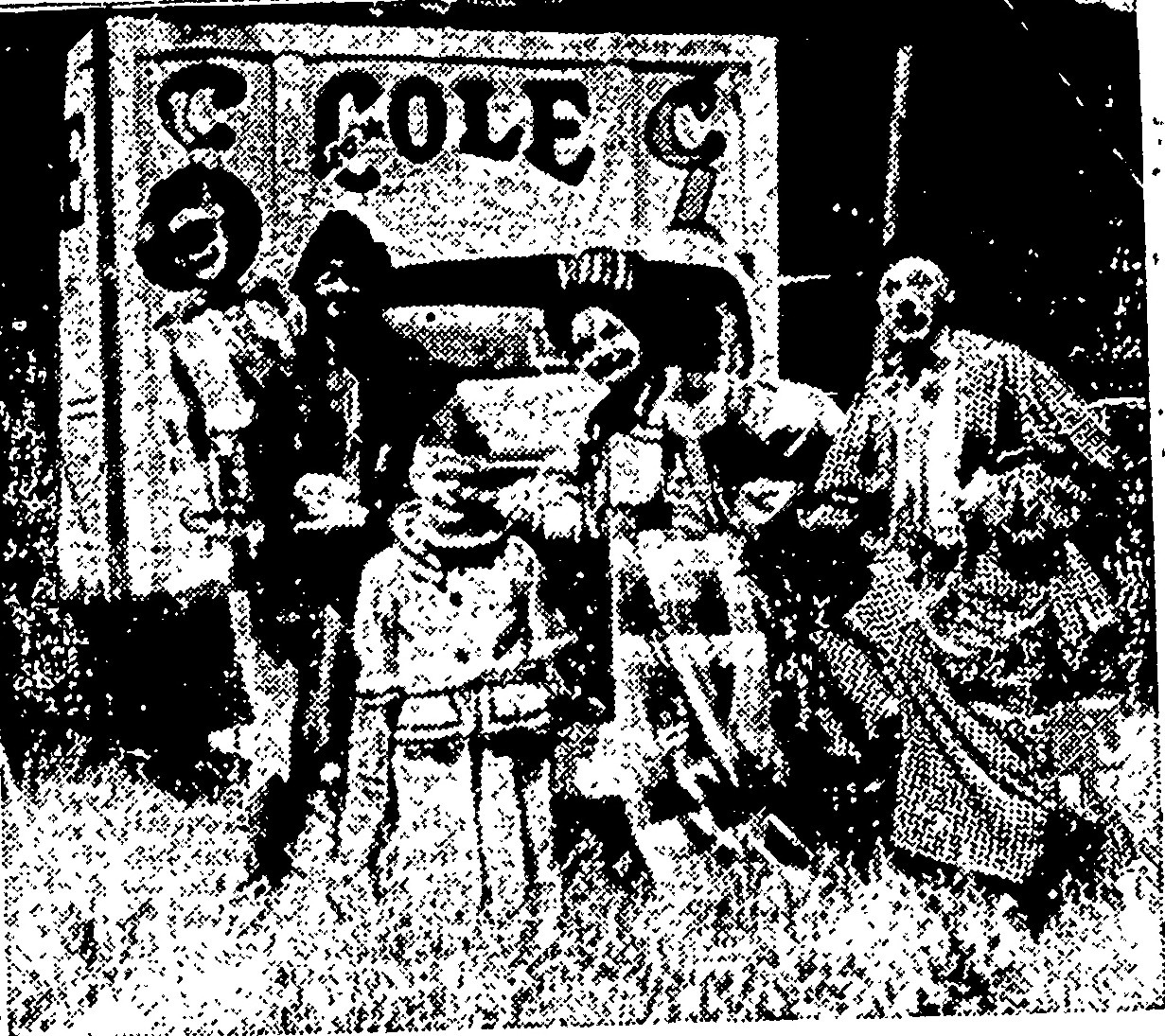
The August 14 paper laid out plans for the visit at Memorial Park. Alongside two scheduled circus performances, the community’s program included a pet parade, children’s contests, watermelon, a band concert and a dance. Local Scouts were to sell advance tickets, with a share of those sales going to their organization. The circus was being fitted into a full day of local activity. [5]
The planned day combined a traveling circus with activities that local residents could help organize and take part in. That combination runs through the earlier record as well: outside entertainers brought their attractions, while Hooper supplied streets, gathering places and the people who turned a visit into a community occasion. [1],[2],[3],[4],[5]