A woman holds up a catch at Fish Lake. An angler stands beside the water. A family spreads out a picnic near the Elkhorn. Above town, an early golf course lies on open ground with Hooper visible in the distance. The centennial book preserves these quieter scenes alongside its accounts of floods, business and public celebrations. [1]
They tell another part of Hooper’s outdoor history: how residents used the river, nearby lakes and open land for leisure. The photographs reach back to 1900 and 1901, while newspaper reports trace golfers organizing courses and friendly matches in the 1920s. A later community project, Elkhorn Valley Golf Course, began in 1963. [1],[2],[3]
The river and lakes before organized golf
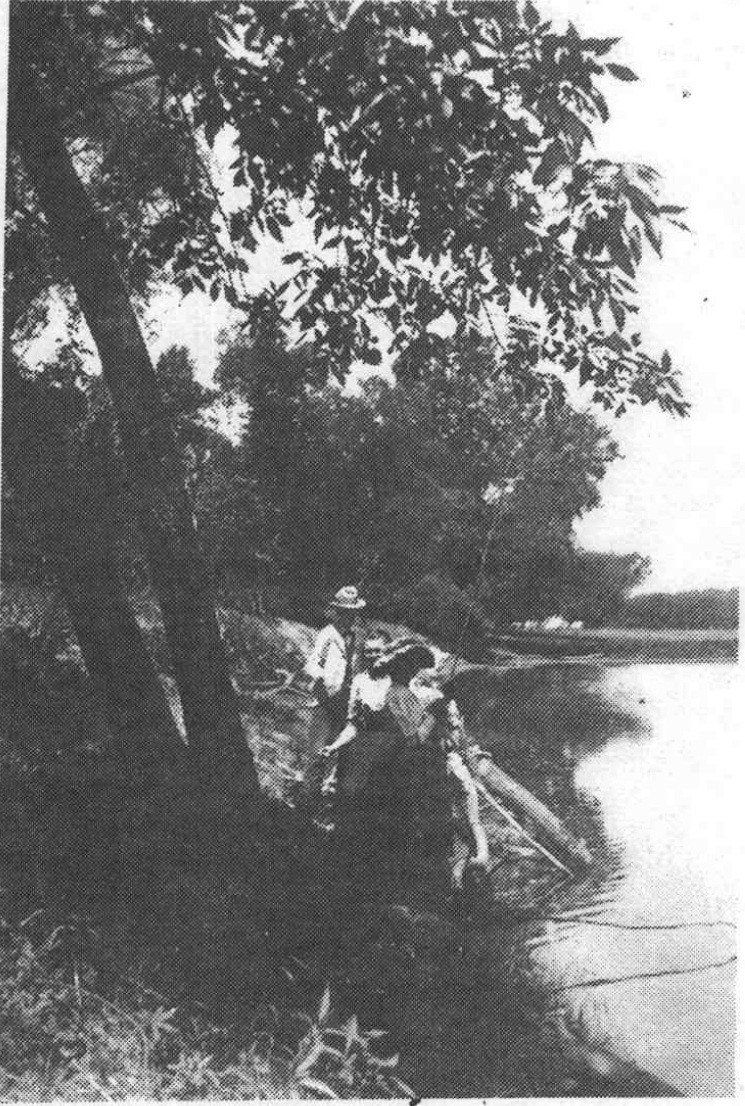
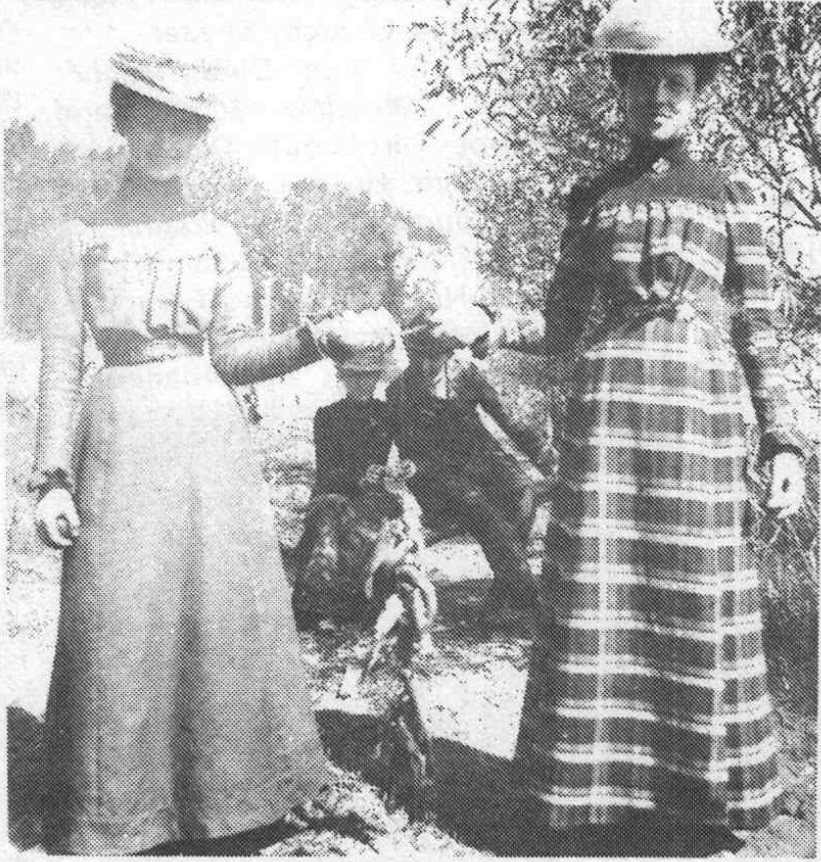
The book’s recreation photographs include a Wagners Lake view from June 1, 1900, and a Fish Lake outing from May 25, 1901. At Wagners Lake, a person sits near the water on a fallen tree. In the Fish Lake photograph, two women stand together with their catch, dressed for an outing that included more than a passing walk along the shore. [1]
Fishing was only one seasonal use. The centennial history recounts a December 1894 skating party at Fish Lake, with a group of local young people named in the account. In July 1896, C. J. Hahn, Ed Sharrar, Peck Schrade and Pete Peterson went out in a boat on the Elkhorn. When the boat grounded on a shoal, an attempt to push it free sent Hahn into the water; his companions helped him out. [1]
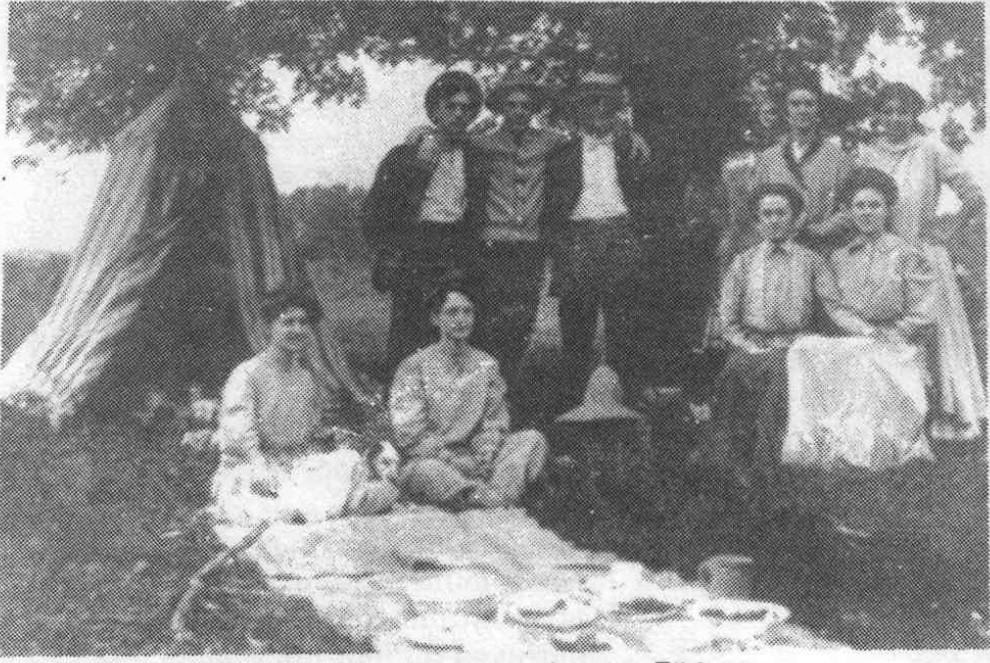
That small mishap sits beside a much more relaxed view in the photographs: a family picnic under the trees beside the river. Adults and children gather around a cloth spread on the ground. The scene shows the riverbank as a place for food, company and an outing, as well as fishing and boating. [1]
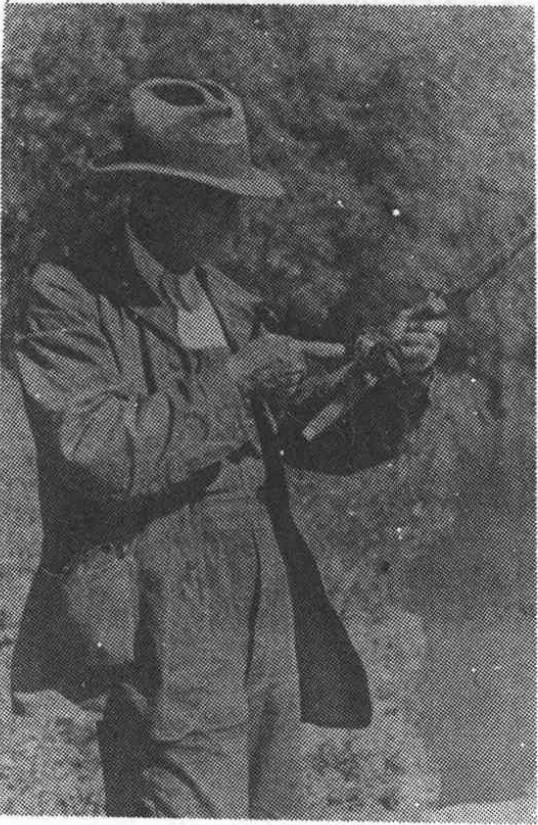
Another picture identifies August Hecker at a fishing spot. The centennial book credits Hugh Rangeler for the portrait, preserving the names of both the angler and the photographer. Its close view of Hecker at the water complements the wider scenes of group outings and family gatherings. [1]
The first golf-club years
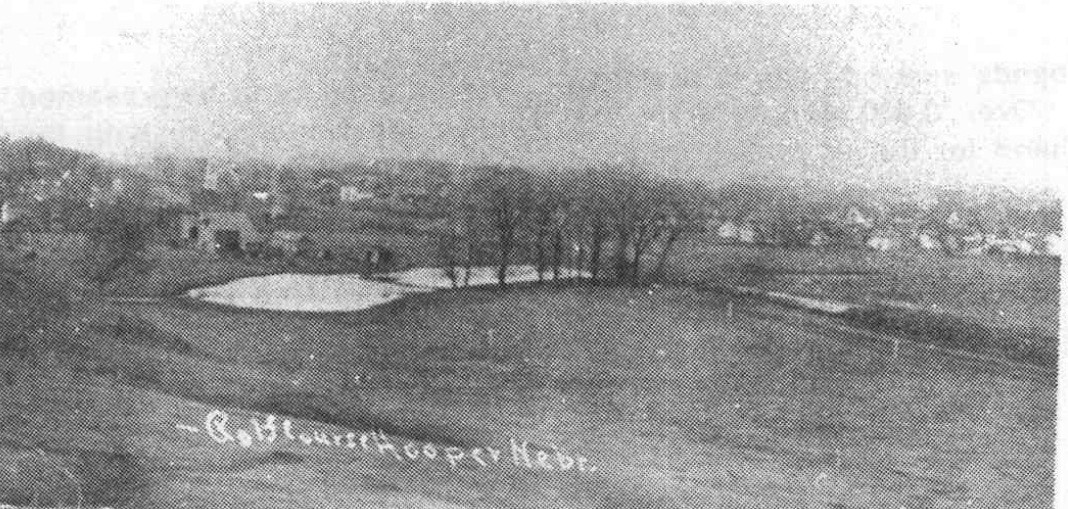
Hooper’s golf story began with a small club and modest grounds. The centennial book places a twenty-member club at the fairgrounds and pasture north of the ball grounds in 1923. Dr. H. A. Howard served as president, with H. E. Schemmel as secretary-treasurer. It then describes a move in June 1924 to a nine-hole layout extending around the bluffs after the fairground setting became too crowded. [1]
A separate entry in the same book dates the leasing of land east of town for a nine-hole course to May 28, 1924. Together, the entries trace the club from a fairground and pasture setting to a larger layout. Golf was already prompting local residents to organize, secure land and make room for their growing sport. [1]
The surviving course photograph shows open ground with a view toward Hooper. The written account traces the work behind the playing grounds: finding enough space, arranging a course and maintaining it. In the 1920s, those tasks depended heavily on the people who wanted to play. [1],[2]
1928: a new course west of Hooper
The original Sentinel report of April 26, 1928, gives a firmer location for a later move: Parkert land west of Hooper. At a meeting in the Hooper State Bank parlors, members elected C. H. Dahl president and F. H. Crisman secretary-treasurer. William Meyer and G. H. Looschen, the previous officers, declined another term. [2]
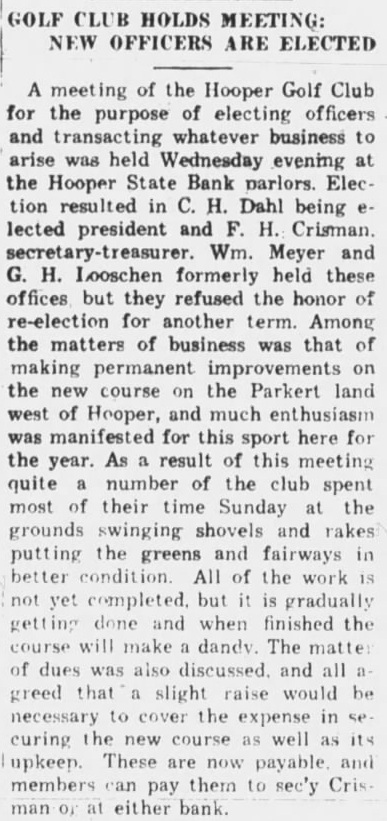
The discussion centered on permanent improvements to the new course. Members had already spent Sunday working with shovels and rakes to put greens and fairways into better condition, although more work remained. They agreed to a slight increase in dues to help cover the course and its upkeep. Payments could go to Crisman or either bank. [2]
The account gives golf a very local scale. This was an organized club with officers and financial decisions, but its playing grounds still depended on volunteers turning up to work. The banker’s meeting room and the Sunday work party were as much a part of the course’s development as the golfers’ scorecards. [2]
A game shared with neighboring towns
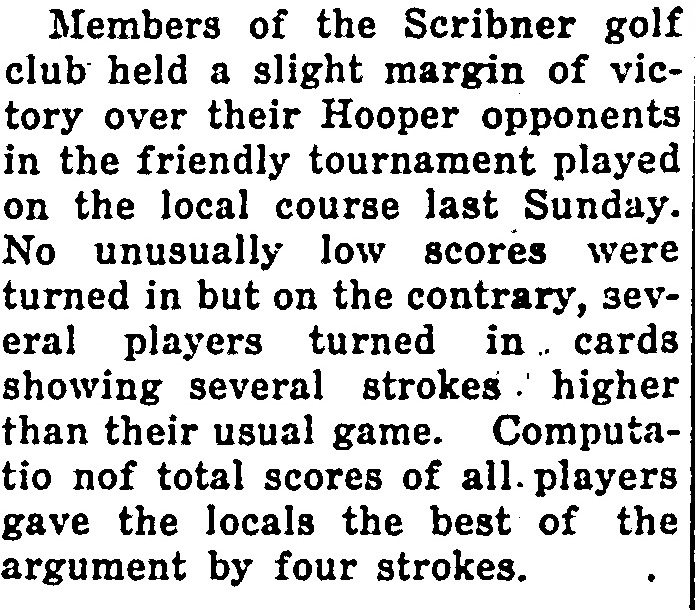
A month later, the Scribner Rustler reported a friendly tournament between golfers from Scribner and Hooper on the Scribner course. The results were close: on the combined scores, Scribner finished four strokes ahead. The newspaper remarked that the day produced no unusually low scores and that several players did worse than their customary rounds. [3]
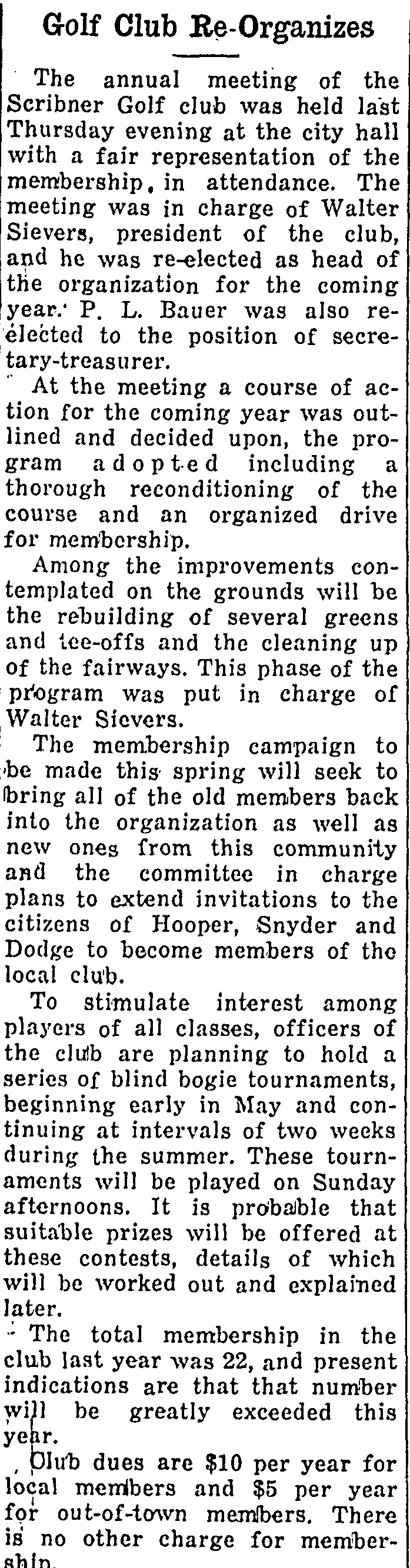
The report is a useful reminder that local golf connected communities rather than ending at a town boundary. In April 1930, Scribner’s reorganized club planned a membership drive that expressly invited residents of Hooper, Snyder and Dodge. Its proposed season included blind-bogey tournaments on Sunday afternoons at two-week intervals. [4]
Scribner’s proposed membership drive offered a practical way to broaden participation. Its club planned to rebuild several greens and teeing areas and clean up the fairways. The annual dues were ten dollars for local members and five dollars for out-of-town members. The newspaper placed Hooper golfers within this wider network of courses, invitations and weekend matches. [1],[3],[4]
1963: building Elkhorn Valley Golf Course
A new chapter began in 1963, when twenty-seven local men each contributed $100 to start Elkhorn Valley Golf Course. The centennial history describes the first work as clearing the grounds and removing a slaughterhouse owned by Collins McMaster. By the second year, the course had six sand greens; it later expanded to nine sand greens before grass greens were developed. [1]
The land was initially leased from five owners. The group subsequently used a three-year FHA loan to buy the property. In the book’s 1976 account, the course was incorporated with twenty-five stockholders, and paid membership had reached as many as two hundred in some of the preceding years. Those figures describe the period covered by the centennial history, not current membership. [1]
The new course repeated an older pattern visible in the 1928 Sentinel: residents pooled money, organized the work and gradually improved a place to play. Across the wider recreation record, the setting changed from lake shore and riverbank to fairground pasture and prepared greens, but the photographs and reports keep the participants close to view. [1],[2]