Monday and Tuesday belonged to the men’s bowling league. Thursday was the women’s turn. In January 1941, Hooper had a weekly bowling schedule, a new manager and plans to give more people time on the lanes. The game was duck-pin bowling, played with smaller balls and pins in a converted downtown store. That small account in Hooper’s centennial history opens a window onto how residents spent their evenings together.[1]
A former electrical store becomes a bowling alley
The 1976 history says V. B. Wolken of Leigh leased the former Hoefner electric store in the south half of the Heine building and prepared it for bowling. It describes a formal opening planned for September 23, 1940, after several years when Hooper’s bowlers had been without an alley. R. L. Whitney, who had operated the movie machine at the Amusu for many years, became the local manager.[1]
This identifies the premises by their former business and building name. It does not provide a street number or enough evidence to identify a particular modern storefront with confidence. A dated business directory, property record or photograph could make that connection possible.
There is also a small date discrepancy worth keeping visible. The bowling account gives September 23, while the book’s events chronology connects the opening of the new alleys with the Fall Festival and School Fair on September 26, 1940. Those may describe different parts of the opening festivities, but the sources do not explain the difference.[1][2]
Hooper’s men’s and women’s leagues
An entry dated January 6, 1941, records Mrs. Sherman Wagner taking over from Whitney. The account describes good patronage and gives this schedule:[1]
- Monday and Tuesday evenings: men’s league play occupied most of the time.
- Thursday evening: the ladies’ league played.
- Friday evening: Wagner was trying to organize another league.
- Saturday and Sunday afternoons: she planned to offer open bowling.
So yes—organized bowling was part of Hooper’s community life. The 1941 account establishes men’s and women’s leagues, though it does not supply team names, sponsors, player rosters, scores or photographs of those early bowlers. Later newspaper coverage does put names to a Hooper team.
The management changed quickly. A February 24, 1941, entry says Wagner gave up the position and Wolken hoped to find another manager so bowling could continue. This is evidence of a search for a replacement, not a documented closing date for the alley.[1]
A memory of an earlier alley
The 1940 business was not necessarily Hooper’s first. In her reminiscences, Laura McGran remembered an earlier bowling alley owned by someone named Hartung. She supplied neither a first name nor a date or address. Her recollection preserves a useful lead, but it cannot yet establish exactly when the earlier alley operated or how it related to Wolken’s business.[3]
A named team in 1949: Farmers Union of Hooper
The Scribner Rustler of September 22, 1949, reported eight rural Dodge County teams beginning their season at Fremont Recreation Bowling Alleys. One was identified as Farmers Union, Hooper. The newspaper listed these bowlers and their first-week averages:[4]
- C. Hinely: 148
- J. Strese: 146
- E. Coulter: 139
- E. Lammers: 130
- M. Campbell: 120
Names and initials are retained as printed. The report cautioned that its team lists were incomplete and that some listed players were substitutes. These are therefore the bowlers named for that opening week, rather than a verified full-season roster. This report documents a Hooper team playing in Fremont in 1949; it does not establish continuity with the town’s 1940–1941 duck-pin leagues.[4]
Church teams join the lanes in 1951
Immanuel and St. John’s of Hooper also fielded bowling teams. The Sentinel announced that Lutheran Laymen’s League play would begin September 7, 1951, at Giant Bowling Alleys in Fremont. A meeting in Scribner had set the fall schedule.[5]

Roller skating returns to the dance pavilion
Bowling was one of several efforts to bring recreation close to home. The centennial history also describes Steve Guinnan, then operating a rink at Beemer, leasing Hooper’s dance pavilion for the winter. The plan called for a temporary floor over the permanent dance floor, allowing the building to return to dancing in spring.[1]
The report anticipated an opening after Thanksgiving, around December 1. The events chronology carries a December 4, 1941, announcement that a rink would open for the winter. These are opening plans and announcements; they do not establish an exact first night of skating. The writer recalled a much earlier rink in the old Tilson opera house around 1910, explicitly presenting that date as a memory.[1][2]
The practical attraction was clear in the account: young people could skate in Hooper instead of traveling to Fremont, Scribner or Dodge. A familiar community building could serve a different activity when the dancing season ended.[1]
Games, handicrafts and a park full of children
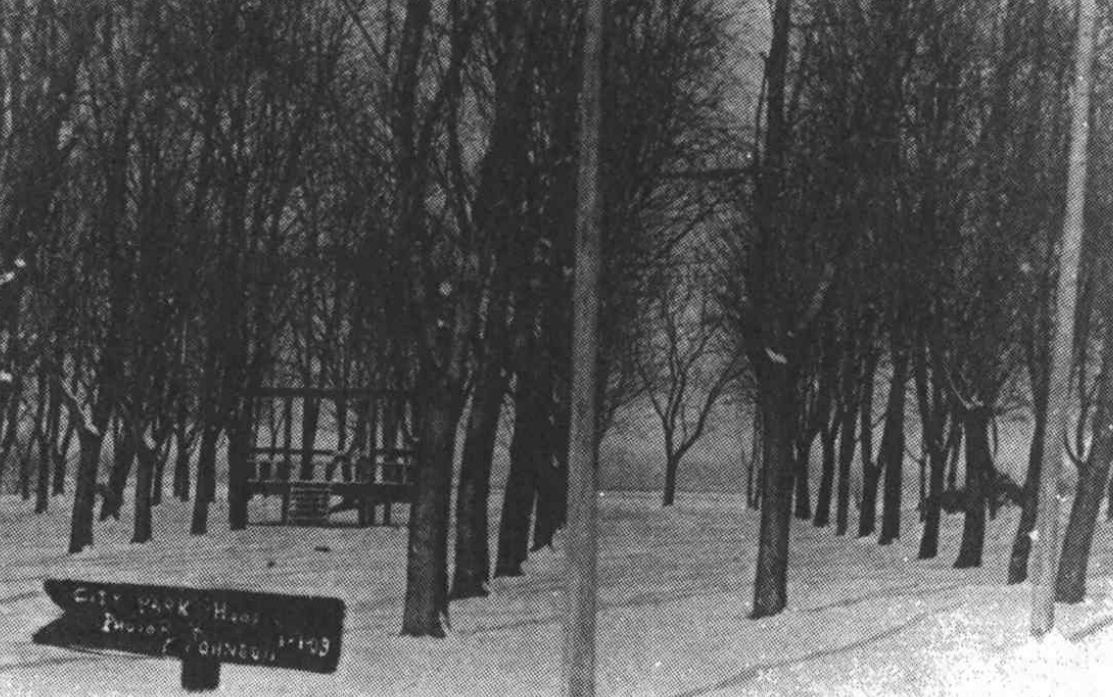
Another account on the same page describes a supervised recreation program directed by H. R. Pierce, with Mrs. Alta Whitcomb working with the younger children. Fifty children attended its first Monday. Sports, games, handicrafts and hobbies were part of the plan, and the school park served as the playground while organizers looked for an indoor location.[1]
The town board and a citizens’ committee sponsored the program, with county and state supervision. Federal funds paid the directors; the town provided facilities and some equipment. The account even proposed an archery class if twelve or more young people were interested. No year is attached to this passage in the compilation, so it should not be assigned to 1940 or 1941 simply because it sits beside the bowling and skating accounts.[1]
A Hooper team caught on camera
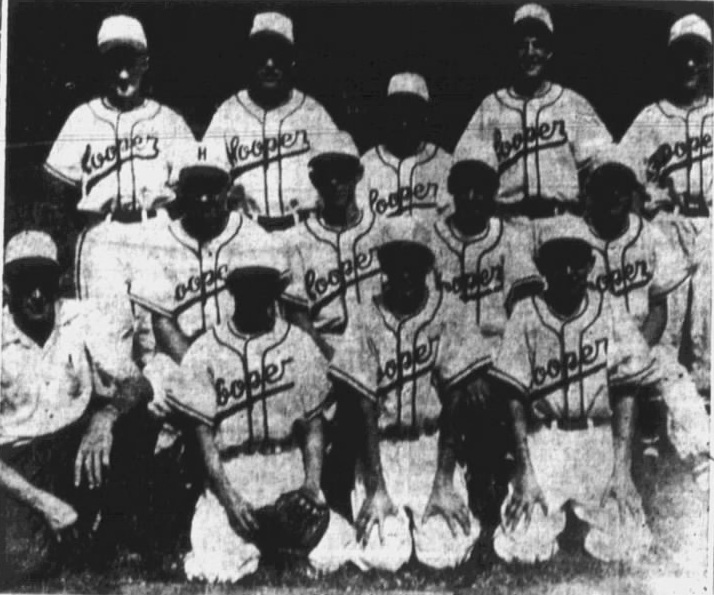
Summer recreation had its own teams. On July 14, 1955, the Sentinel published this photograph of Hooper’s youth baseball players and reported their ninth consecutive win, a 20–2 victory over Creston. The accompanying roster identifies Marion Havekost as coach. These are baseball players; a verified photograph of the early bowling teams is still being sought.[6]
Help put names to the bowling story
League standings, team photographs, advertisements, score sheets or a memory tied to a date could add an entirely new chapter. We would especially like to identify the 1941 teams, add full names and photographs for the 1949 Farmers Union bowlers, locate the former alley precisely and learn what happened after February 1941. Please share what you have with Celebrate Hooper so that names and sources can become part of the Hooper History Database.
Continue with Hooper’s school history and student teams, or search the database for Hooper clubs and organizations.