Hooper had churches, a school, waterworks, electric lights and even a curfew bell. What more could an improvement society possibly do?
In 1897, Ella Hills had an answer: take a walk. Look at the loose sidewalk planks, the standing water on Main Street, the steep approach to the school and the park without benches. The town could have all the signs of progress and still need attention to the places people used every day.
Centennial History of Hooper, 1876–1976 preserves that argument on page 7. It identifies a March 11, 1897 Sentinel article calling for a Community Improvement Club, supported by women belonging to Hooper’s first Woman’s Club, and names Hills as the writer of the program presented.
A walk through town, with complaints
The description begins with sidewalks in poor condition and a “frog pond” at the head of Main Street. Standing water offended both the eye and the nose. Crossing toward Hecker’s Corner became an occasion to wonder what had happened to the street commissioner.
Loose planks made walking an exercise in watching one’s feet. A board might tip up, or a pedestrian might step into a gap. The account even suggests that country roads were better than the routes through town. The narrow, steep walk up to the school hill was another place that needed work. These were everyday concerns about getting safely from one place to another. [Centennial History, p. 7]
A park people could actually enjoy
Hills also looked beyond the business street. The city park had a fine stand of timber, according to the book’s account, but it was poorly kept. There were no benches where women could sit in the afternoon.
That small detail makes the appeal easy to picture. Having a park on the town map was only the beginning; people also needed a comfortable place to spend time. Hills’s list extended to home grounds, where shade trees could be planted and rubbish removed. Public improvements and care for private property belonged in the same conversation. [Centennial History, p. 7]
What the record can tell us
The centennial book says the requested improvements were eventually made. It does not supply a completion schedule, a membership roll for the proposed society, or evidence assigning each finished project to the club.
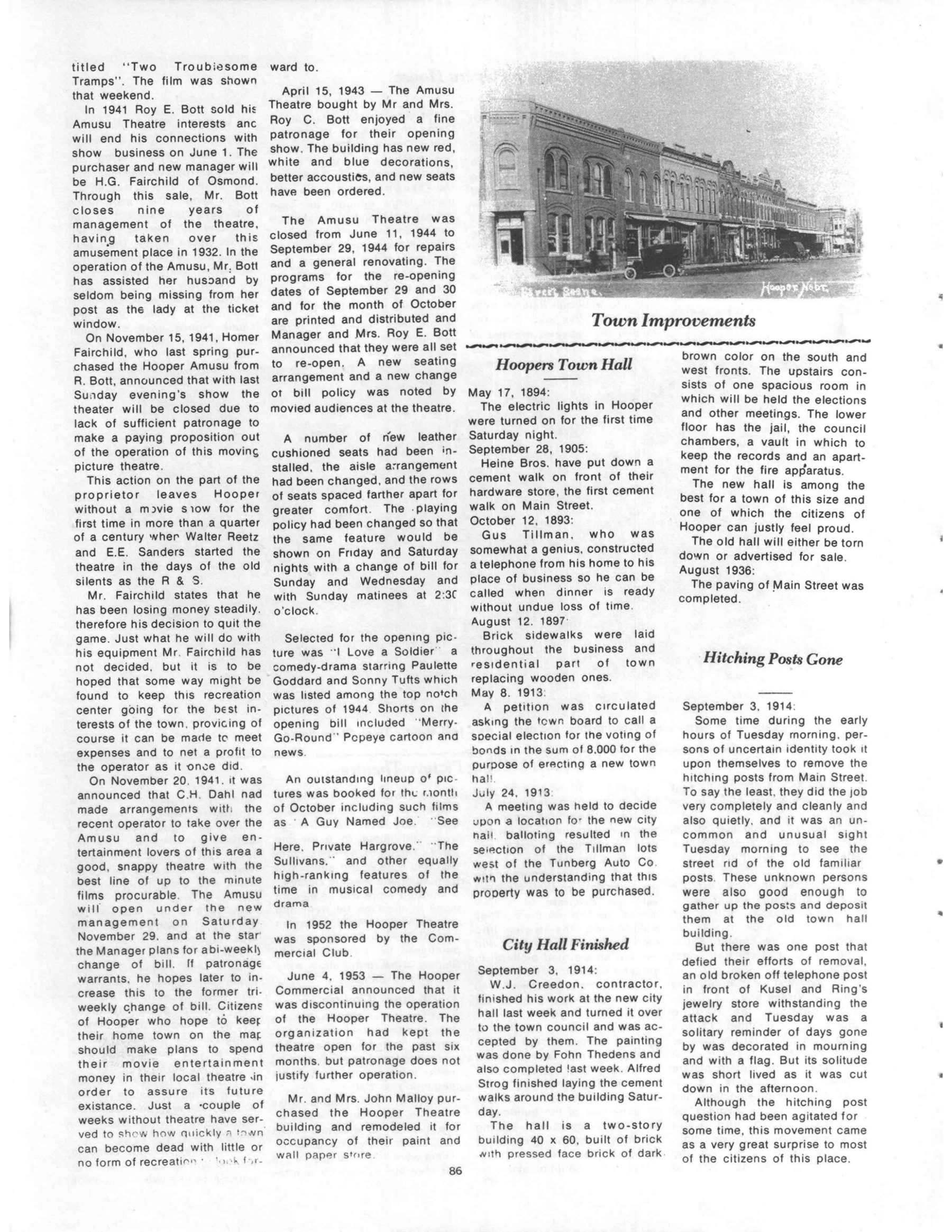
Elsewhere, its town-improvement chronology records brick sidewalks replacing wooden ones in the business and residential parts of Hooper on August 12, 1897. That gives us a separate record of sidewalk work later that year, but it does not establish that Hills’s appeal caused it. [Centennial History, p. 86]
What the appeal does preserve is a practical way of getting involved: notice a problem, describe it clearly, and ask neighbors to help make the town better. In this case, the list included dry feet, safer walks, shade and somewhere to sit.
An open meeting at Tunberg’s Hall in 1900
A separate original newspaper shows the Woman’s Club bringing people together three years later. In its April 14, 1900 issue, Lincoln’s Courier printed a Hooper report dated April 3. It described an open meeting at Tunberg’s Hall attended by about 100 guests, including members’ husbands and friends. Belle M. Stoutenborough of Plattsmouth, identified as a former state-federation president, spoke about mothers’ influence.[3]
The program included a vocal duet and piano solos by Dora Tunberg and Mrs. Pope. Club members served ice cream and cake, and Mr. Spielburg supplied a short concert on his new graphophone. This is evidence of the Woman’s Club’s public social life. It does not establish that the proposed Community Improvement Club had organized or that Hills’s requested projects were completed.[3]

Read the preserved account
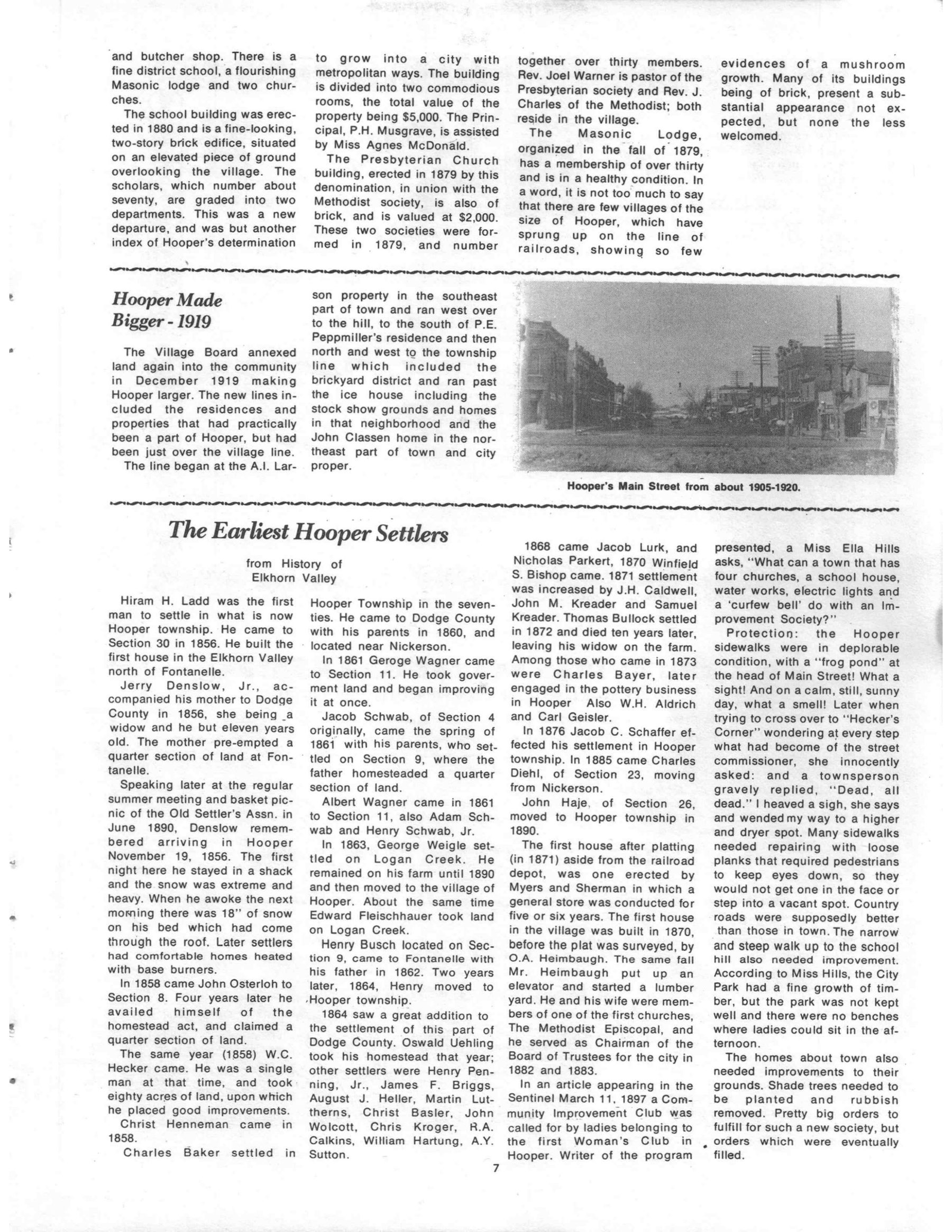
Photo note: The Main Street photograph used with this story is dated approximately 1905–1920 by the centennial book. It shows the town in a later period; it does not document the street conditions of March 1897.
Research note: The March 11, 1897 Sentinel account is known here through the supplied centennial book’s attribution; its original issue remains unlocated for comparison. The separate 1900 club meeting above was checked against the original Courier page.
Do you have records of Hooper’s women’s clubs, a dated park photograph or a family account of a community project? Share it with the Hooper History Project.